
Species
Swallow-tailed kite
Elanoides forficatus
An elegant black-and-white kite with a deeply forked tail, which eats insects and lizards in flight over southern river swamps.
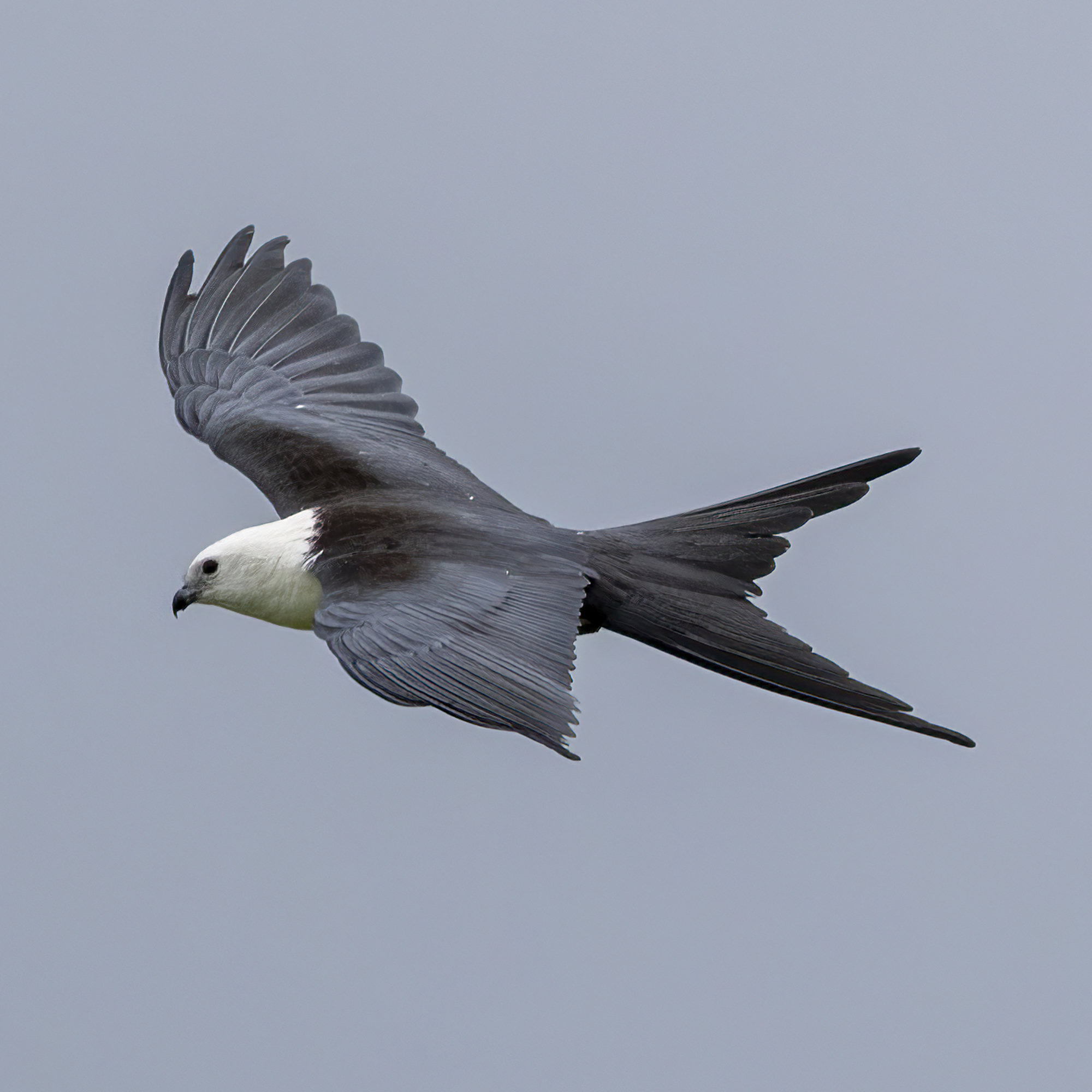
Photo Dan Vickers (opens in a new tab) / iNaturalist, CC BY 4.0 (opens in a new tab)
At a glance
- Size
- About 50 to 64 cm long; wingspan about 1.2 to 1.35 m
- Weight
- About 310 to 600 g
- Habitat
- River swamps, bottomland forest and open pine woods
- Diet
- Dragonflies, cicadas, lizards, tree frogs and nestling birds, caught in flight or snatched from treetops
- In Georgia
- A summer resident in the south and along the coast, March to August
- Voice
- A thin, high whistle
- Rabies vector
- No
Identification
- Key marks
- White head and body; black wings and a very long, deeply forked black tail
- Told apart from
- Mississippi kite, which is grey with a square tail
- Where to look
- Soaring over river swamps and pine woods, especially along the Altamaha and Satilla
Behaviour
Swallow-tailed kites spend much of the day in the air, eating and even drinking on the wing by skimming water. They gather in large groups before migrating to South America.
Why they matter
Swallow-tailed kites once nested as far north as Minnesota but disappeared from most of their range. Today they nest mainly in Florida, Georgia and South Carolina, and the river swamps of southeast Georgia are among their strongholds.
Reproduction and lifecycle
Nest — A cup of sticks and moss high in the top of a tall tree
Eggs — Usually two
Incubation — About 28 days
Chicks — Fed by both parents
Flight — At about five to six weeks
Lifespan — Several years
Living around people
- Tall trees along rivers are their nest sites; keeping them standing helps.
Misconceptions
- Kites are rare tropical birds. Swallow-tailed kites nest in Georgia every summer.
Related species
Seasonal activity
When this species is breeding, and when there are nests on the ground. Mowing during the shaded months is how most nests are found.
| Jan | Feb | Mar | Apr | May | Jun | Jul | Aug | Sep | Oct | Nov | Dec | |
|---|---|---|---|---|---|---|---|---|---|---|---|---|
| Breeding | Jan: no | Feb: no | Mar: no | Apr: no | May: no | Jun: no | Jul: no | Aug: no | Sep: no | Oct: no | Nov: no | Dec: no |
| Active nests | Jan: no | Feb: no | Mar: no | Apr: no | May: no | Jun: no | Jul: no | Aug: no | Sep: no | Oct: no | Nov: no | Dec: no |
| Notes | In South America | In South America | Arriving | Nesting | Nesting | Chicks | Young flying; gathering in groups | Leaving for South America | Last birds | In South America | In South America | In South America |
Where it lives
Recorded in 16 states and provinces. Each one links to the other animals there, and to the rehabilitators licensed for them.
United States
If you found one
Answer a few questions and you will get a specific answer for what you are looking at.
I found an animal