
Species
Mississippi kite
Ictinia mississippiensis
A graceful grey kite that catches dragonflies and cicadas in the air, often above southern towns in summer.
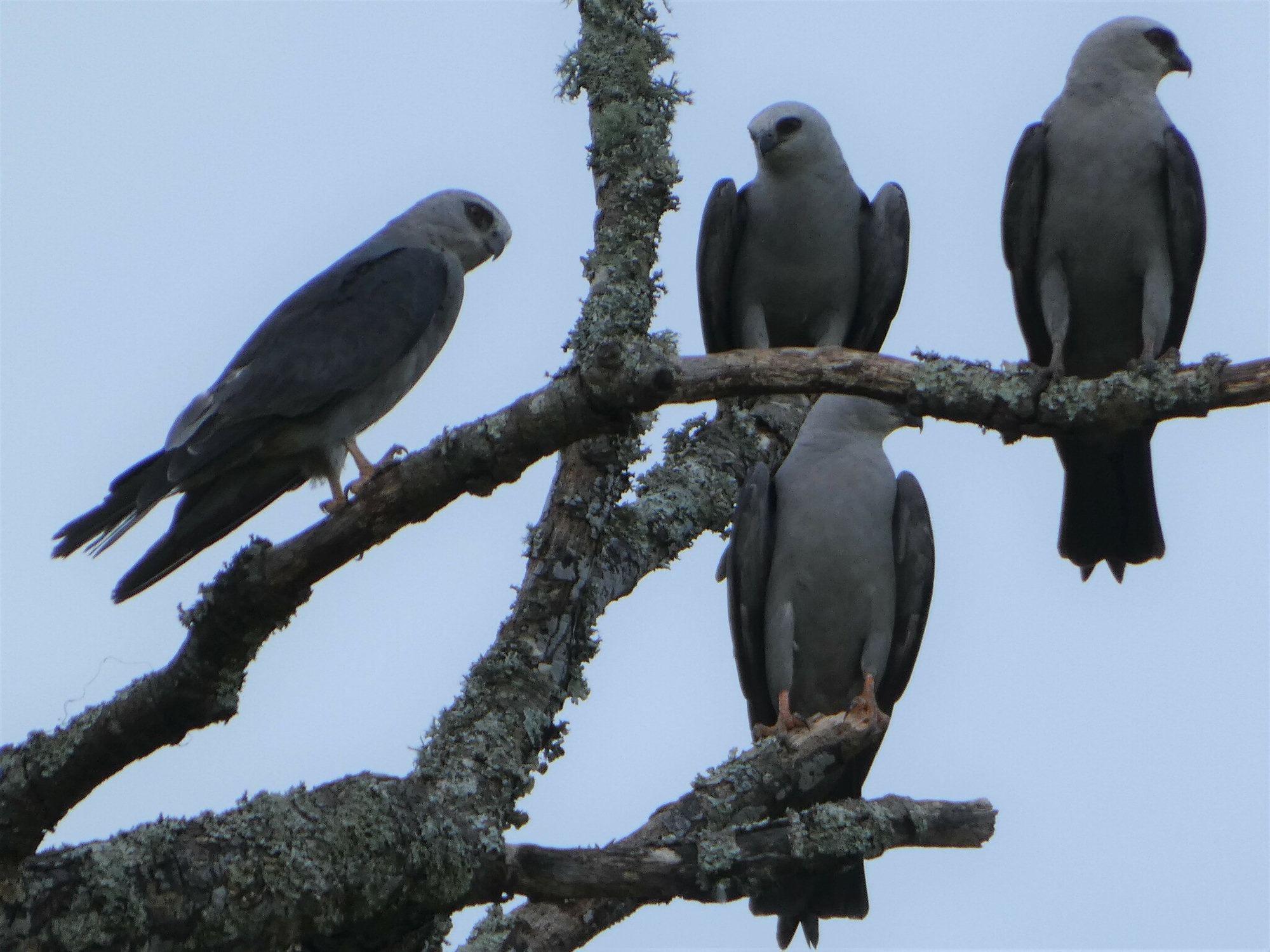
Photo Unknown photographer (opens in a new tab) / iNaturalist, CC0 1.0 (opens in a new tab)
At a glance
- Size
- About 31 to 37 cm long; wingspan about 90 cm
- Weight
- About 215 to 400 g
- Habitat
- Woodland edges, river bottoms, towns and parks
- Diet
- Large flying insects such as cicadas, dragonflies and grasshoppers
- In Georgia
- A summer resident, April to September, especially in the south and along rivers
- Voice
- A thin, whistled "pee-tee"
- Rabies vector
- No
Identification
- Key marks
- Grey with a paler head; black tail; long, pointed wings; buoyant flight
- Told apart from
- Swallow-tailed kite, which is black and white with a forked tail
- Told apart from
- Peregrine falcon, which is heavier with a moustache mark
- Where to look
- Circling high over towns, fields and rivers in summer
Behaviour
Mississippi kites catch insects in flight with their feet and eat them on the wing. They often nest in towns and parks and gather in groups to hunt.
Why they matter
Mississippi kites eat vast numbers of cicadas, dragonflies and grasshoppers. Their graceful flight above summer towns is a sign of a healthy insect population.
Reproduction and lifecycle
Nest — A small platform of sticks in a tree
Eggs — Usually two
Incubation — About 30 to 32 days
Chicks — Fed by both parents
Flight — At about five weeks
Lifespan — Wild birds over ten years are recorded
Living around people
- Kites nesting in towns may swoop at people near the nest; giving the area a wide berth for a few weeks ends it.
Misconceptions
- A hawk circling over town is hunting pets. Mississippi kites eat insects.
Related species
Seasonal activity
When this species is breeding, and when there are nests on the ground. Mowing during the shaded months is how most nests are found.
| Jan | Feb | Mar | Apr | May | Jun | Jul | Aug | Sep | Oct | Nov | Dec | |
|---|---|---|---|---|---|---|---|---|---|---|---|---|
| Breeding | Jan: no | Feb: no | Mar: no | Apr: no | May: no | Jun: no | Jul: no | Aug: no | Sep: no | Oct: no | Nov: no | Dec: no |
| Active nests | Jan: no | Feb: no | Mar: no | Apr: no | May: no | Jun: no | Jul: no | Aug: no | Sep: no | Oct: no | Nov: no | Dec: no |
| Notes | In South America | In South America | In South America | Arriving | Nesting | Nesting | Chicks | Young flying | Leaving | In South America | In South America | In South America |
Where it lives
Recorded in 34 states and provinces. Each one links to the other animals there, and to the rehabilitators licensed for them.
United States
- Alabamabreeding
- Arizonabreeding
- Arkansasbreeding
- Coloradobreeding
- Connecticutbreeding
- Floridabreeding
- Georgiabreeding
- Illinoisbreeding
- Indianabreeding
- Iowabreeding
- Kansasbreeding
- Kentuckybreeding
- Louisianabreeding
- Marylandbreeding
- Mississippibreeding
- Missouribreeding
- Nebraskabreeding
- New Hampshirebreeding
- New Jerseybreeding
- New Mexicobreeding
- North Carolinabreeding
- Ohiobreeding
- Oklahomabreeding
- South Carolinabreeding
- Tennesseebreeding
- Texasbreeding
- Virginiabreeding
If you found one
Answer a few questions and you will get a specific answer for what you are looking at.
I found an animal