
Species
Striped newt
Notophthalmus perstriatus
A rare newt of south Georgia's sandhills, marked with bright red stripes.
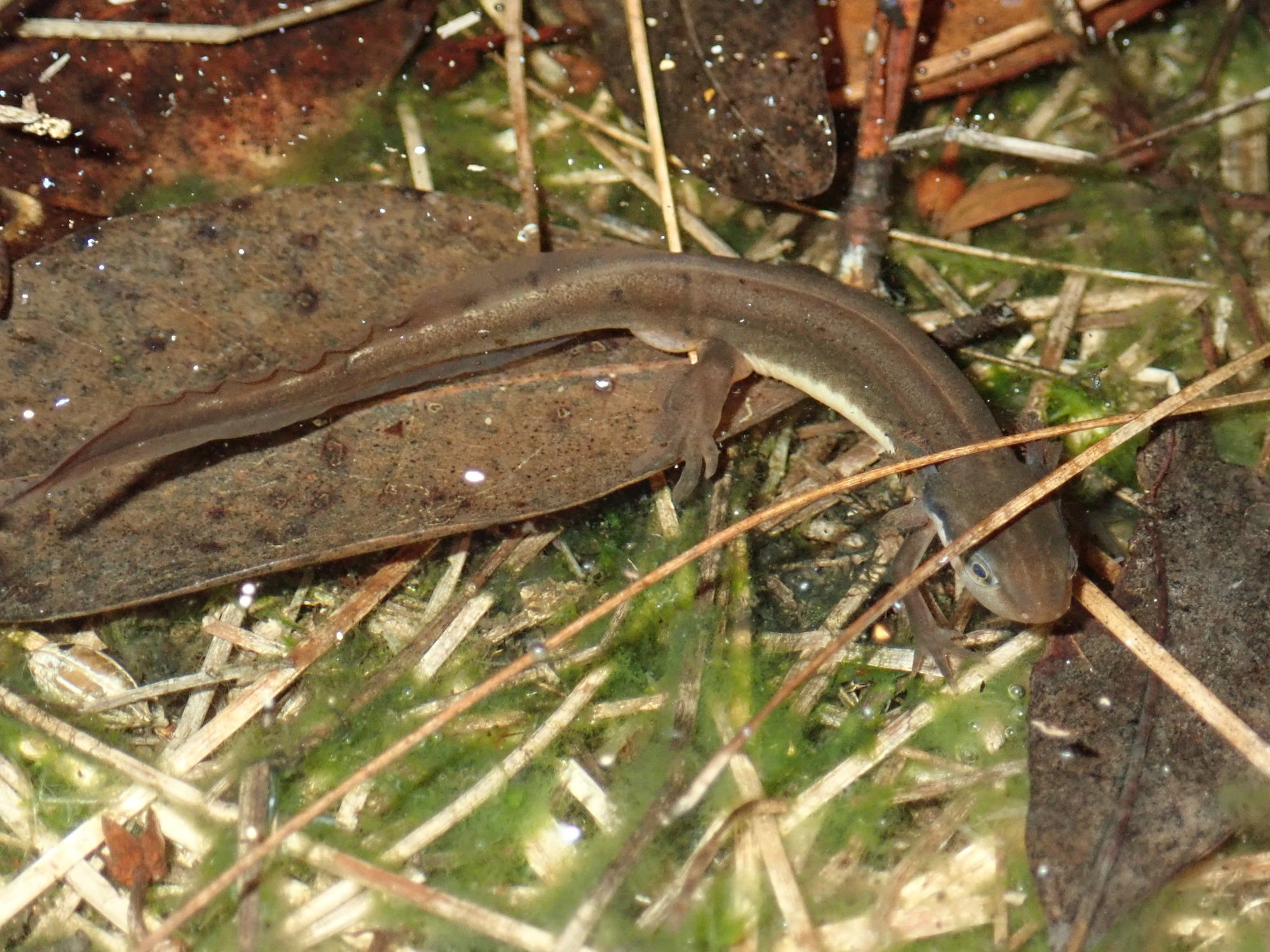
Photo Daniel Folds (opens in a new tab) / iNaturalist, CC BY-NC 4.0 (opens in a new tab)
At a glance
- Size
- Usually 5 to 10 cm long
- Habitat
- Sandhills and flatwoods with seasonal, fishless ponds
- Diet
- Small insects and crustaceans
- In Georgia
- Scattered in the Coastal Plain; rare
- Rabies vector
- No
Identification
- Key marks
- Olive to brown with a broken red stripe along each side of the back
- Told apart from
- Eastern newt, which has red spots rather than stripes
- Where to look
- Almost never seen
Behaviour
It breeds in seasonal ponds in sandhills and lives in the surrounding uplands. Like the eastern newt it may pass through a land stage as an eft.
Why they matter
It has declined with the loss of sandhills and their ponds, and is one of the rarest salamanders of the Southeast.
Reproduction and lifecycle
Eggs — Laid singly on plants
Hatching — In a few weeks
Larvae — Some keep gills and breed as larvae
Maturity — Within one to two years
Lifespan — Several years
Habits — Moves between ponds and uplands
Living around people
- Seasonal ponds in sandhills are what it needs.
Misconceptions
- All newts have spots. This one has stripes.
Related species
Seasonal activity
When this species is breeding, and when there are nests on the ground. Mowing during the shaded months is how most nests are found.
| Jan | Feb | Mar | Apr | May | Jun | Jul | Aug | Sep | Oct | Nov | Dec | |
|---|---|---|---|---|---|---|---|---|---|---|---|---|
| Breeding | Jan: no | Feb: no | Mar: no | Apr: no | May: no | Jun: no | Jul: no | Aug: no | Sep: no | Oct: no | Nov: no | Dec: no |
| Active nests | Jan: no | Feb: no | Mar: no | Apr: no | May: no | Jun: no | Jul: no | Aug: no | Sep: no | Oct: no | Nov: no | Dec: no |
| Notes | Breeding | Breeding | Breeding | Larvae | Larvae | Young leaving ponds | On land | On land | On land | On land | Returning to ponds | Breeding begins |
Where it lives
Recorded in 2 states and provinces. Each one links to the other animals there, and to the rehabilitators licensed for them.
If you found one
Answer a few questions and you will get a specific answer for what you are looking at.
I found an animal