
Species
Southern two-lined salamander
Eurycea cirrigera
A slender yellow salamander with two dark stripes, one of the commonest animals along Georgia's streams.
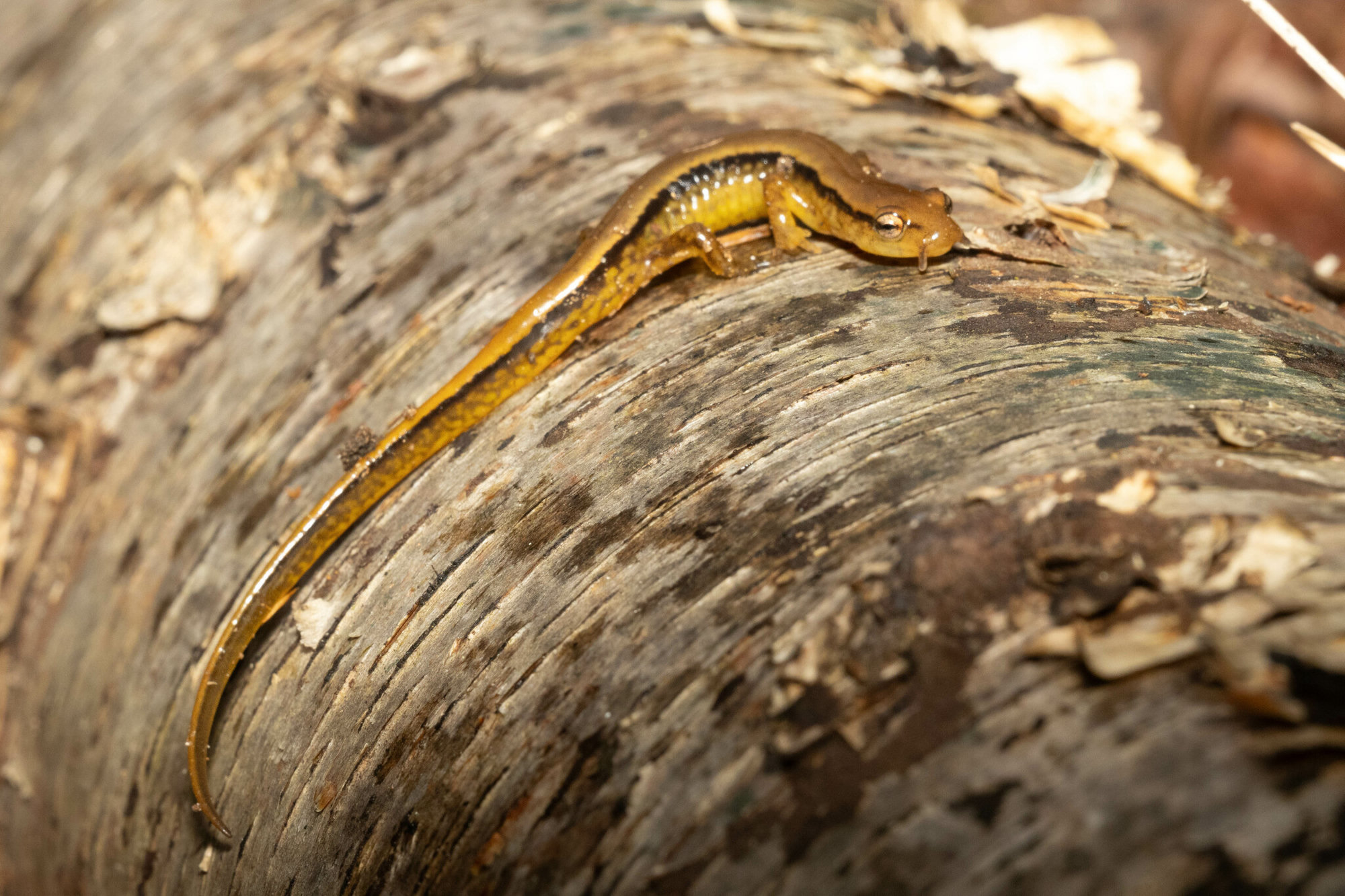
Photo Alex Stach (opens in a new tab) / iNaturalist, CC BY 4.0 (opens in a new tab)
At a glance
- Size
- Usually 6 to 10 cm long
- Habitat
- Streams, seeps and springs and the woods beside them
- Diet
- Tiny insects, worms and other invertebrates
- In Georgia
- Most of the state except the far south-east
- Rabies vector
- No
Identification
- Key marks
- Slim, yellow to orange-yellow, with a dark stripe down each side of the back; long tail
- Told apart from
- Three-lined salamander, which has a third dark stripe down the middle
- Where to look
- Under rocks and logs at the edges of streams
Behaviour
Two-lined salamanders live along streams and wander into nearby woods on wet nights. They have no lungs and breathe through their skin.
Why they matter
They are among the most numerous vertebrates in many streams, and their larvae are a good sign of clean water.
Reproduction and lifecycle
Eggs — Attached singly under rocks in streams, guarded by the female
Hatching — In one to two months
Larvae — Aquatic for one to three years
Maturity — At two to three years
Lifespan — Several years
Breathing — Through the skin; no lungs
Living around people
- Keep silt, pesticides and fertiliser out of streams.
- Leave stream rocks where they are.
Misconceptions
- Salamanders in a stream mean dirty water. It is the reverse; they need clean water.
Related species
Seasonal activity
When this species is breeding, and when there are nests on the ground. Mowing during the shaded months is how most nests are found.
| Jan | Feb | Mar | Apr | May | Jun | Jul | Aug | Sep | Oct | Nov | Dec | |
|---|---|---|---|---|---|---|---|---|---|---|---|---|
| Breeding | Jan: no | Feb: no | Mar: no | Apr: no | May: no | Jun: no | Jul: no | Aug: no | Sep: no | Oct: no | Nov: no | Dec: no |
| Active nests | Jan: no | Feb: no | Mar: no | Apr: no | May: no | Jun: no | Jul: no | Aug: no | Sep: no | Oct: no | Nov: no | Dec: no |
| Notes | Under rocks in streams | Laying eggs | Laying eggs | Larvae hatching | Active | Active | Active on wet nights | Active on wet nights | Active | Active | Active | Under rocks |
Where it lives
Recorded in 15 states and provinces. Each one links to the other animals there, and to the rehabilitators licensed for them.
If you found one
Answer a few questions and you will get a specific answer for what you are looking at.
I found an animal