
Species
Southern gray-cheeked salamander
Plethodon metcalfi
A plain slate-grey salamander of cool, high mountain forests in north-east Georgia.
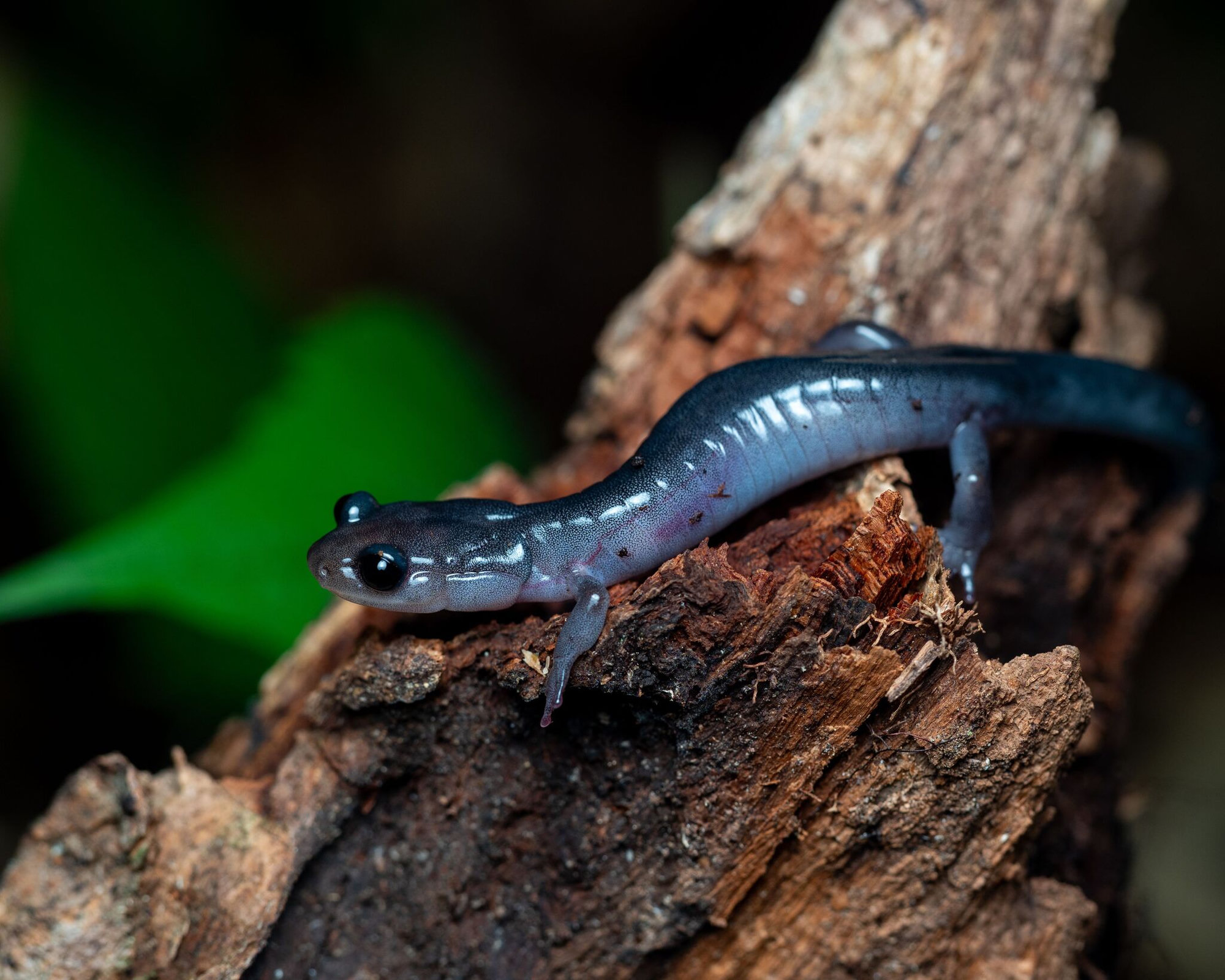
Photo Zachary Dankowicz (opens in a new tab) / iNaturalist, CC BY 4.0 (opens in a new tab)
At a glance
- Size
- Usually 10 to 17 cm long
- Habitat
- Cool, moist high-elevation forests
- Diet
- Small invertebrates
- In Georgia
- The high mountains of north-east Georgia; rare
- Rabies vector
- No
Identification
- Key marks
- Plain slate-grey with no spots or red; pale cheeks
- Told apart from
- Southern Appalachian salamander, which has white spots
- Where to look
- Under logs and moss in high forests
Behaviour
It lives on cool, damp mountain slopes and hunts on the forest floor on wet nights.
Why they matter
It needs cool, wet mountain forest, so it is one of the salamanders most at risk as the climate warms.
Reproduction and lifecycle
Eggs — Laid underground and guarded by the female
Hatching — As tiny copies of the adults
Young — No aquatic stage
Maturity — At a few years
Lifespan — Many years
Breathing — Through the skin; no lungs
Living around people
- Keep to trails in high mountain forests.
Misconceptions
- A plain salamander is a young one. This species is plain grey all its life.
Related species
Seasonal activity
When this species is breeding, and when there are nests on the ground. Mowing during the shaded months is how most nests are found.
| Jan | Feb | Mar | Apr | May | Jun | Jul | Aug | Sep | Oct | Nov | Dec | |
|---|---|---|---|---|---|---|---|---|---|---|---|---|
| Breeding | Jan: no | Feb: no | Mar: no | Apr: no | May: no | Jun: no | Jul: no | Aug: no | Sep: no | Oct: no | Nov: no | Dec: no |
| Active nests | Jan: no | Feb: no | Mar: no | Apr: no | May: no | Jun: no | Jul: no | Aug: no | Sep: no | Oct: no | Nov: no | Dec: no |
| Notes | Underground | Underground | Active on wet nights | Active | Active | Laying eggs | Active on wet nights | Active on wet nights | Young hatching | Active on wet nights | Underground in cold weather | Underground |
Where it lives
Recorded in 3 states and provinces. Each one links to the other animals there, and to the rehabilitators licensed for them.
United States
If you found one
Answer a few questions and you will get a specific answer for what you are looking at.
I found an animal