
Species
Red-throated loon
Gavia stellata
The smallest loon, a slender grey diver that winters in small numbers off Georgia's beaches.
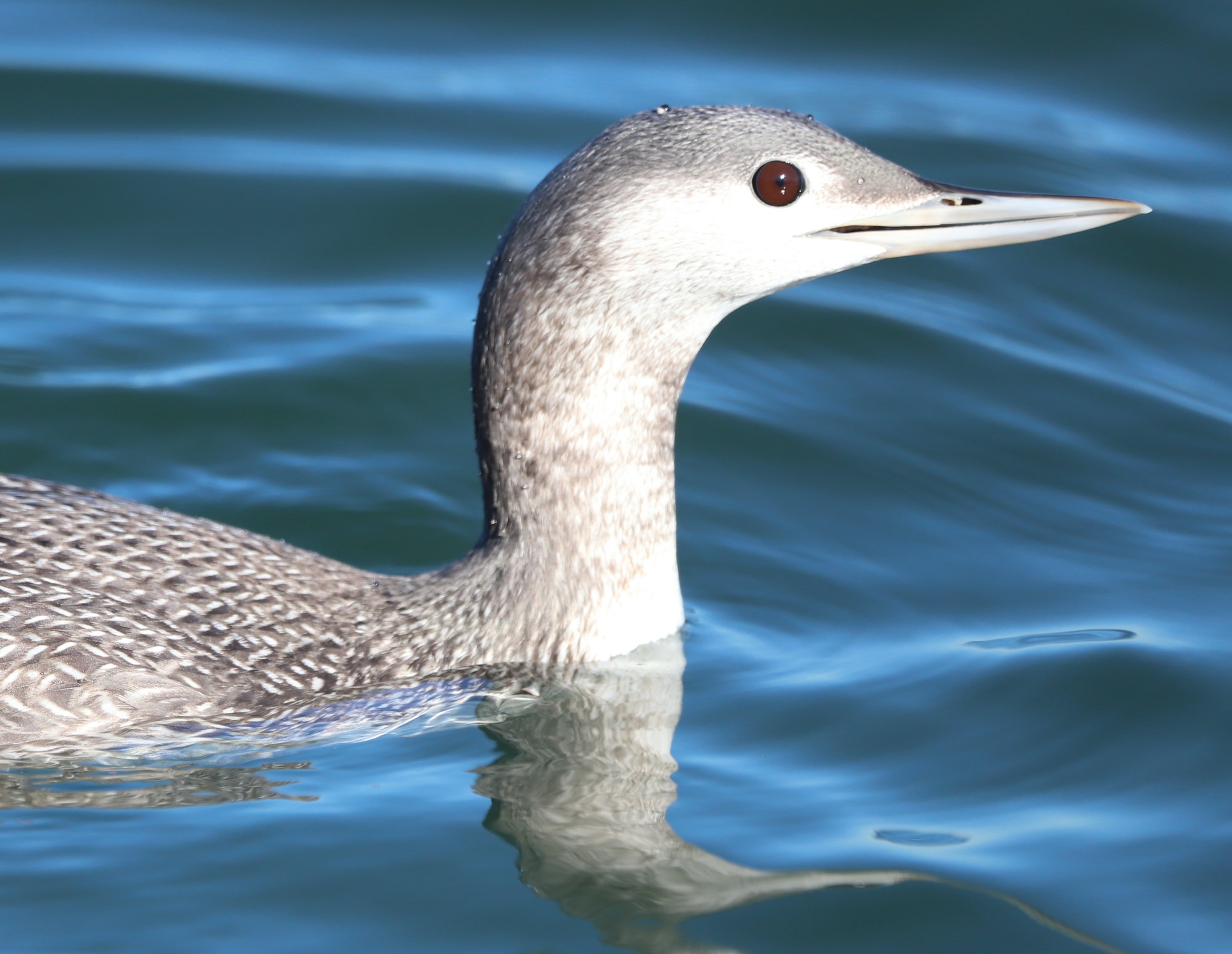
Photo Steven Bodzin (opens in a new tab) / iNaturalist, CC BY 4.0 (opens in a new tab)
At a glance
- Size
- About 53 to 69 cm long
- Weight
- About 1 to 2.7 kg
- Habitat
- Nearshore ocean and inlets in winter
- Diet
- Fish
- In Georgia
- An uncommon winter visitor on the coast
- Voice
- Mostly silent in winter
- Rabies vector
- No
Identification
- Key marks
- Slim bill, often held tilted upward; pale grey upperparts speckled with white; white face in winter
- Told apart from
- Common loon, which is larger and darker with a heavy bill held level
- Told apart from
- Cormorants, which are black with hooked bills
- Where to look
- Nearshore waters and sounds, November to March
Behaviour
Red-throated loons dive for fish near the shore. Unlike other loons, they can take off from land and from small pools, which lets them nest on tiny tundra ponds.
Why they matter
This loon breeds across the Arctic and winters along both coasts of North America. Its fish diet and time spent on the sea make it vulnerable to oil and to fishing nets, and its numbers help show the health of nearshore waters.
Reproduction and lifecycle
Nest — A mound of mud and plants at the edge of a small tundra pond
Eggs — Usually two
Incubation — About 24 to 29 days
Chicks — Leave the nest soon after hatching
Flight — At about seven weeks
Lifespan — Wild birds over twenty years are recorded
Living around people
- A loon on a beach cannot walk or take off from sand; it needs a rehabilitator.
Misconceptions
- A loon on the beach is resting. Loons almost never come ashore except to nest.
Related species
Seasonal activity
When this species is breeding, and when there are nests on the ground. Mowing during the shaded months is how most nests are found.
| Jan | Feb | Mar | Apr | May | Jun | Jul | Aug | Sep | Oct | Nov | Dec | |
|---|---|---|---|---|---|---|---|---|---|---|---|---|
| Breeding | Jan: no | Feb: no | Mar: no | Apr: no | May: no | Jun: no | Jul: no | Aug: no | Sep: no | Oct: no | Nov: no | Dec: no |
| Active nests | Jan: no | Feb: no | Mar: no | Apr: no | May: no | Jun: no | Jul: no | Aug: no | Sep: no | Oct: no | Nov: no | Dec: no |
| Notes | Wintering | Wintering | Migrating north | Moving north along the coast | Arriving in the Arctic | Nesting | Chicks | Chicks | Young flying | Migration begins | Arriving on the Atlantic coast | Wintering |
Where it lives
Recorded in 34 states and provinces. Each one links to the other animals there, and to the rehabilitators licensed for them.
United States
- Alaskabreeding
- Californiain winter
- Connecticutin winter
- Delawarein winter
- Georgiain winter
- Indianain winter
- Mainein winter
- Marylandin winter
- Massachusettsin winter
- Michiganin winter
- New Hampshirein winter
- New Jerseyin winter
- New Yorkin winter
- North Carolinain winter
- Oregonin winter
- Rhode Islandin winter
- South Carolinain winter
- Vermontin winter
- Virginiain winter
- Washingtonin winter
- Wisconsinin winter
Canada
If you found one
Answer a few questions and you will get a specific answer for what you are looking at.
I found an animal