
Species
Razorbill
Alca torda
A black-and-white auk with a thick, blade-like bill, which some winters reaches Georgia's waters.
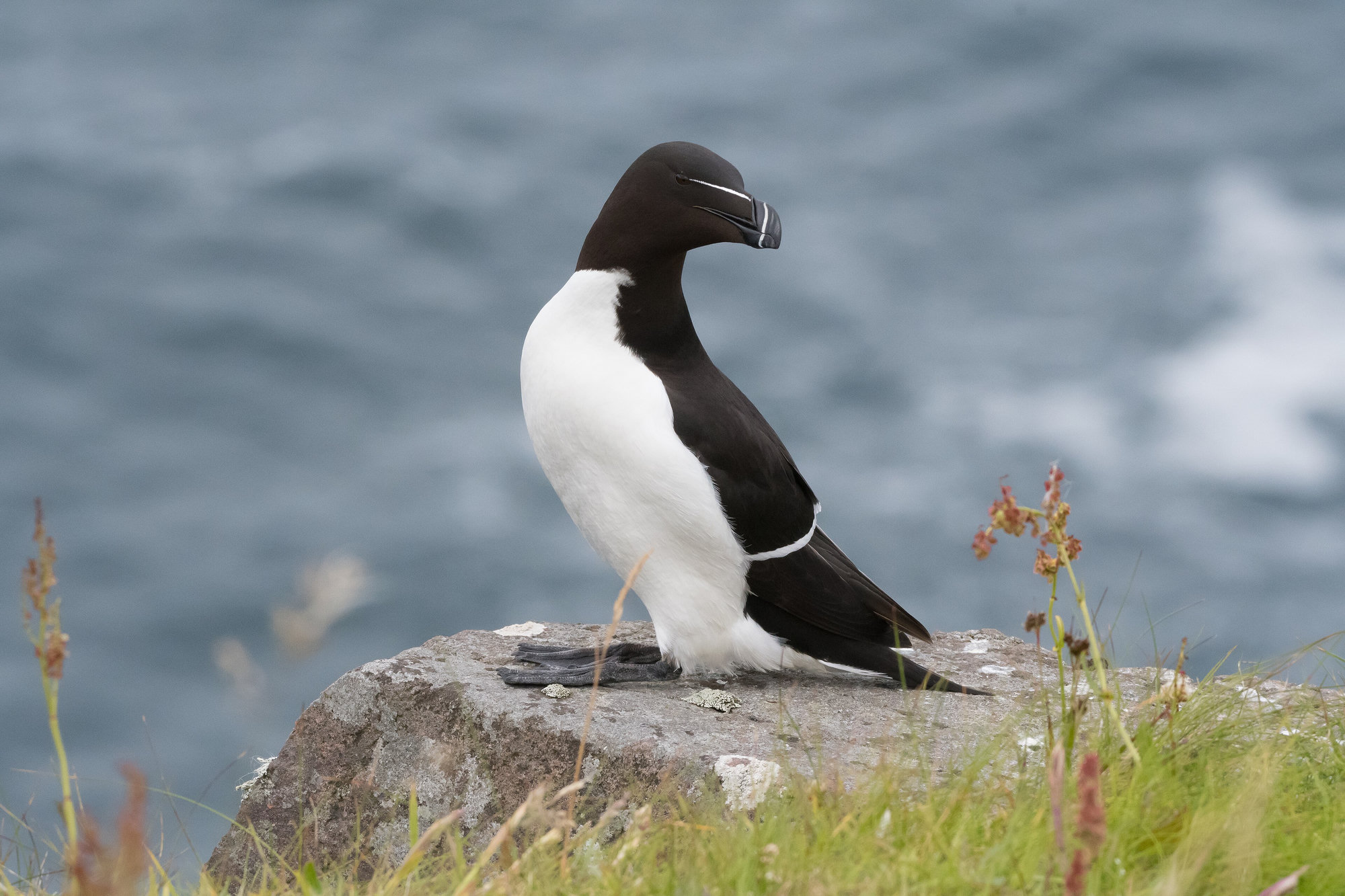
Photo Chme82 (opens in a new tab) / Wikimedia Commons, CC BY-SA 4.0 (opens in a new tab)
At a glance
- Size
- About 37 to 39 cm long
- Weight
- About 500 to 900 g
- Habitat
- Cold ocean waters
- Diet
- Small fish
- In Georgia
- A rare to occasionally common winter visitor offshore, in irruption years
- Voice
- Mostly silent at sea
- Rabies vector
- No
Identification
- Key marks
- Black above, white below; thick, flattened black bill crossed by a white line; long, pointed tail
- Told apart from
- Common murre, a very rare visitor, which has a slim, pointed bill
- Where to look
- Offshore and around inlets in winters when many move south
Behaviour
Razorbills dive for fish using their wings to swim underwater. They are close relatives of the extinct great auk.
Why they matter
Razorbills are the closest living relatives of the great auk, which was hunted to extinction in 1844. In some winters, when fish are scarce to the north, large numbers move south to the Southeast coast, sometimes arriving thin and weak.
Reproduction and lifecycle
Nest — A crevice on a sea cliff
Eggs — Usually one
Incubation — About 35 days
Chick — Leaves the cliff before it can fly, accompanied by its father at sea
Lifespan — Wild birds over forty years are recorded
Living around people
- A razorbill on a beach is usually starving or ill; it needs a rehabilitator and should not be put back in the water.
Misconceptions
- A seabird on the beach is resting. Healthy auks rarely come ashore outside nesting.
Related species
Seasonal activity
When this species is breeding, and when there are nests on the ground. Mowing during the shaded months is how most nests are found.
| Jan | Feb | Mar | Apr | May | Jun | Jul | Aug | Sep | Oct | Nov | Dec | |
|---|---|---|---|---|---|---|---|---|---|---|---|---|
| Breeding | Jan: no | Feb: no | Mar: no | Apr: no | May: no | Jun: no | Jul: no | Aug: no | Sep: no | Oct: no | Nov: no | Dec: no |
| Active nests | Jan: no | Feb: no | Mar: no | Apr: no | May: no | Jun: no | Jul: no | Aug: no | Sep: no | Oct: no | Nov: no | Dec: no |
| Notes | Offshore in irruption years | Offshore | Leaving | Returning to northern colonies | Nesting on northern sea cliffs | Nesting | Chicks leave colonies | At sea | At sea | At sea | Moving south in some years | Offshore in some years |
Where it lives
Recorded in 18 states and provinces. Each one links to the other animals there, and to the rehabilitators licensed for them.
United States
If you found one
Answer a few questions and you will get a specific answer for what you are looking at.
I found an animal