
Species
Purple martin
Progne subis
North America's largest swallow, which in the East now nests almost entirely in houses people put up for it.
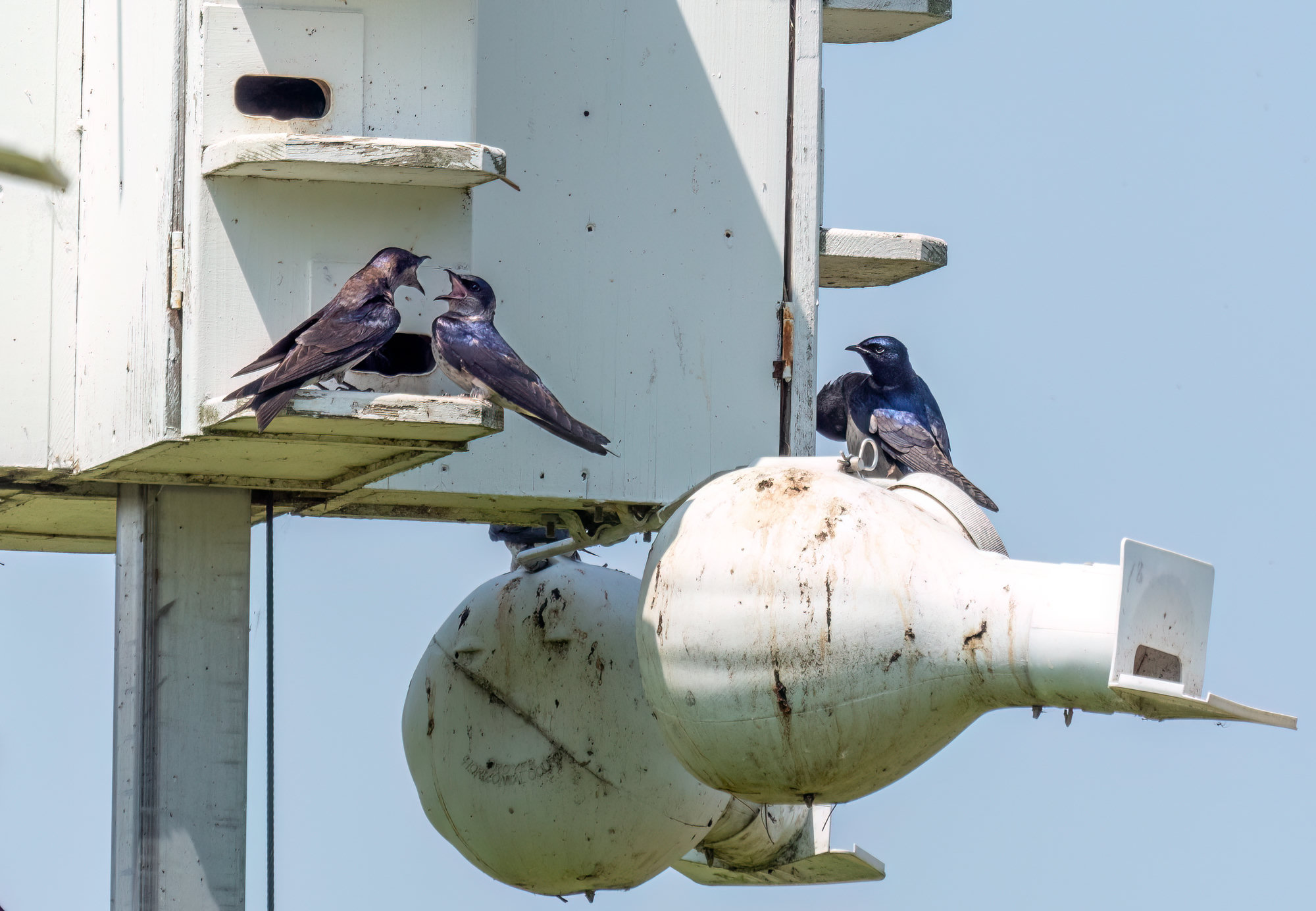
Photo Rhododendrites (opens in a new tab) / Wikimedia Commons, CC BY-SA 4.0 (opens in a new tab)
At a glance
- Size
- About 19 to 22 cm long
- Weight
- About 45 to 60 g
- Habitat
- Open country near water; towns and farms with martin houses
- Diet
- Flying insects, especially dragonflies, beetles and moths
- In Georgia
- A common summer resident, February to September
- Voice
- Rich, gurgling chirps
- Rabies vector
- No
Identification
- Key marks
- Large swallow; males glossy dark purple-blue all over; females grey-brown below
- Told apart from
- European starling, which has a short tail and flies with triangular wings
- Told apart from
- Tree swallow, which is white below
- Where to look
- Around martin houses and gourds; feeding high in the air
Behaviour
Purple martins catch insects high in the sky. In the East they nest almost entirely in colonies of gourds and multi-room houses put up by people, a tradition that goes back to Native Americans hanging hollow gourds.
Why they matter
The eastern purple martin depends almost completely on people for nest sites, making it one of the most striking partnerships between a wild bird and humans. Before migrating, martins gather in enormous roosts, sometimes of hundreds of thousands of birds.
Reproduction and lifecycle
Nest — A cup of mud, grass and green leaves in a gourd or martin house
Eggs — Usually four or five
Incubation — About 15 to 18 days
Chicks — Fed by both parents
Flight — At about 27 to 36 days
Lifespan — Several years
Living around people
- Martin houses need to be checked for house sparrows and starlings, which take them over.
- Martins do not eat mosquitoes in large numbers, despite the popular belief; they eat larger flying insects.
Misconceptions
- Purple martins control mosquitoes. Mosquitoes make up very little of their diet.
- Scouts arrive first and send for the others. The first birds to arrive are older adults returning to their colonies.
Related species
Seasonal activity
When this species is breeding, and when there are nests on the ground. Mowing during the shaded months is how most nests are found.
| Jan | Feb | Mar | Apr | May | Jun | Jul | Aug | Sep | Oct | Nov | Dec | |
|---|---|---|---|---|---|---|---|---|---|---|---|---|
| Breeding | Jan: no | Feb: no | Mar: no | Apr: no | May: no | Jun: no | Jul: no | Aug: no | Sep: no | Oct: no | Nov: no | Dec: no |
| Active nests | Jan: no | Feb: no | Mar: no | Apr: no | May: no | Jun: no | Jul: no | Aug: no | Sep: no | Oct: no | Nov: no | Dec: no |
| Notes | In South America | First scouts arriving in south Georgia | Arriving | Nesting | Nesting | Chicks | Young fledging; roosts forming | Migrating south | Last birds | In South America | In South America | In South America |
Where it lives
Recorded in 62 states and provinces. Each one links to the other animals there, and to the rehabilitators licensed for them.
United States
- Alabamabreeding
- Arizonabreeding
- Arkansasbreeding
- Californiabreeding
- Coloradobreeding
- Connecticutbreeding
- Delawarebreeding
- District of Columbiabreeding
- Florida
- Georgiabreeding
- Illinoisbreeding
- Indianabreeding
- Iowabreeding
- Kansasbreeding
- Kentuckybreeding
- Louisianabreeding
- Mainebreeding
- Marylandbreeding
- Massachusettsbreeding
- Michiganbreeding
- Minnesotabreeding
- Mississippibreeding
- Missouribreeding
- Nebraskabreeding
- New Hampshirebreeding
- New Jerseybreeding
- New Mexicobreeding
- New Yorkbreeding
- North Carolinabreeding
- North Dakotabreeding
- Ohiobreeding
- Oklahomabreeding
- Oregonbreeding
- Pennsylvaniabreeding
- Rhode Islandbreeding
- South Carolinabreeding
- South Dakotabreeding
- Tennesseebreeding
- Texasbreeding
- Utahbreeding
- Vermontbreeding
- Virginiabreeding
- Washingtonbreeding
- West Virginiabreeding
- Wisconsinbreeding
Canada
If you found one
Answer a few questions and you will get a specific answer for what you are looking at.
I found an animal