
Species
Barn swallow
Hirundo rustica
A glossy blue swallow with a deeply forked tail that builds mud nests under eaves, bridges and barns.
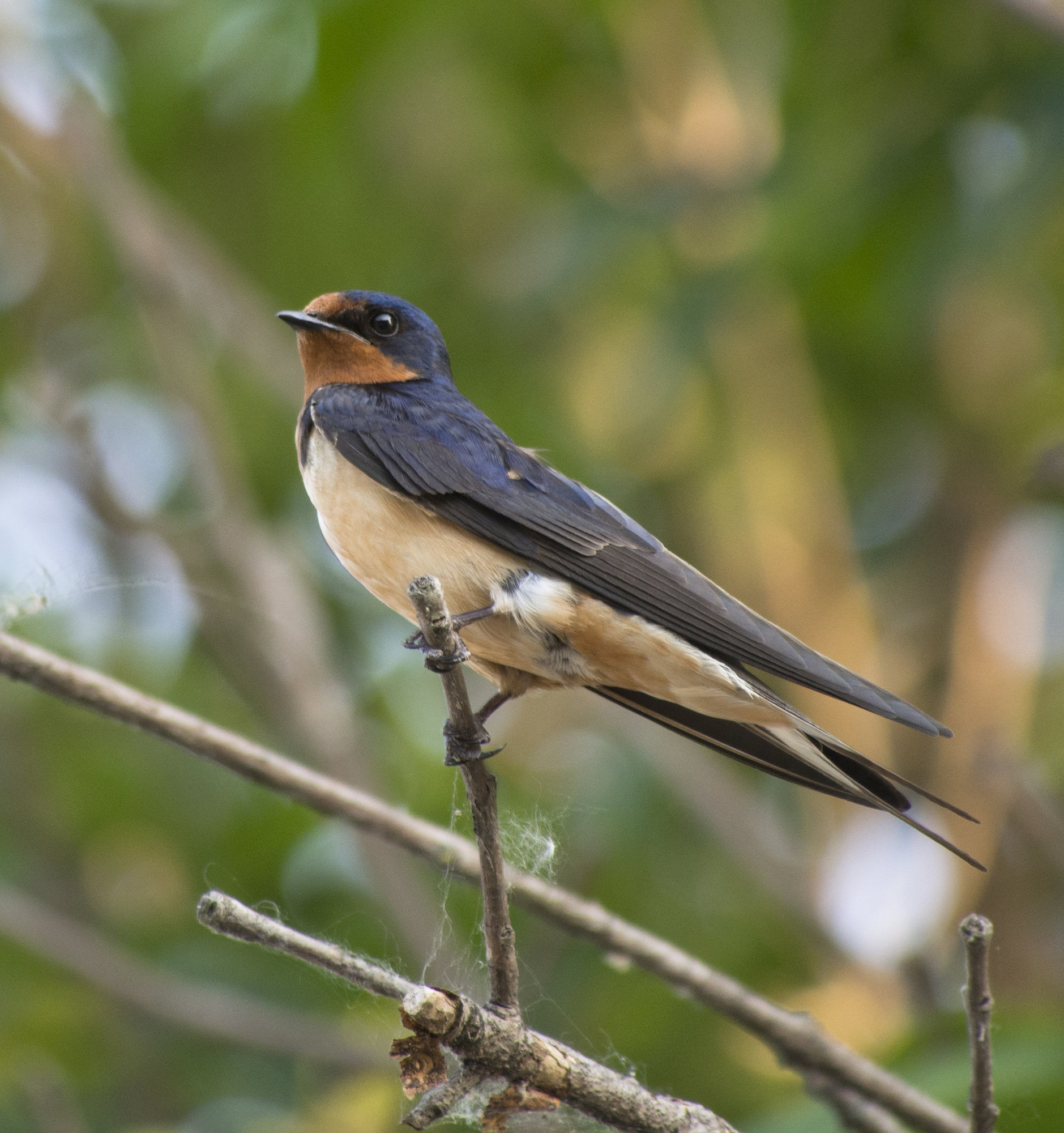
Photo Unknown photographer (opens in a new tab) / iNaturalist, CC0 1.0 (opens in a new tab)
At a glance
- Size
- About 15 to 19 cm long
- Weight
- About 17 to 20 g
- Habitat
- Farms, fields, bridges, docks and towns near open ground
- Diet
- Flying insects
- In Georgia
- A common summer resident, March to October
- Voice
- A cheerful twittering
- Rabies vector
- No
Identification
- Key marks
- Glossy dark blue back; rusty throat and forehead; buff underparts; long, deeply forked tail
- Told apart from
- Cliff swallow, which has a square tail and a pale rump
- Told apart from
- Tree swallow, which is white below with a short tail
- Where to look
- Swooping low over fields and water; nesting under eaves and bridges
Behaviour
Barn swallows fly low and fast over fields and water, catching insects. They build cup nests of mud pellets under eaves, bridges and in barns.
Why they matter
The barn swallow is the most widespread swallow in the world. It has nested on human structures for so long that it now rarely uses natural sites, and it eats huge numbers of flying insects around farms.
Reproduction and lifecycle
Nest — A cup of mud pellets and grass on a ledge or wall
Eggs — Usually four or five
Incubation — About 13 to 17 days
Chicks — Fed by both parents; young from earlier broods sometimes help
Flight — At about 18 to 23 days
Lifespan — Several years
Living around people
- A nest under a porch or eave lasts only a few weeks; a board under it catches droppings.
- Barn swallows are protected; active nests may not be removed.
Misconceptions
- Swallows swooping low mean rain. They follow insects, which fly lower in humid weather.
Related species
Seasonal activity
When this species is breeding, and when there are nests on the ground. Mowing during the shaded months is how most nests are found.
| Jan | Feb | Mar | Apr | May | Jun | Jul | Aug | Sep | Oct | Nov | Dec | |
|---|---|---|---|---|---|---|---|---|---|---|---|---|
| Breeding | Jan: no | Feb: no | Mar: no | Apr: no | May: no | Jun: no | Jul: no | Aug: no | Sep: no | Oct: no | Nov: no | Dec: no |
| Active nests | Jan: no | Feb: no | Mar: no | Apr: no | May: no | Jun: no | Jul: no | Aug: no | Sep: no | Oct: no | Nov: no | Dec: no |
| Notes | In South America | In South America | Arriving | Nesting | Chicks | Second broods | Young fledging | Flocks gathering | Migrating south | Last birds | In South America | In South America |
Where it lives
Recorded in 95 states and provinces. Each one links to the other animals there, and to the rehabilitators licensed for them.
United States
- Alabamabreeding
- Alaskabreeding
- Arizonabreeding
- Arkansasbreeding
- Californiabreeding
- Coloradobreeding
- Connecticutbreeding
- Delawarebreeding
- District of Columbiabreeding
- Floridabreeding
- Georgiabreeding
- Idahobreeding
- Illinoisbreeding
- Indianabreeding
- Iowabreeding
- Kansasbreeding
- Kentuckybreeding
- Louisianabreeding
- Mainebreeding
- Marylandbreeding
- Massachusettsbreeding
- Michiganbreeding
- Minnesotabreeding
- Mississippibreeding
- Missouribreeding
- Montanabreeding
- Nebraskabreeding
- Nevadabreeding
- New Hampshirebreeding
- New Jerseybreeding
- New Mexicobreeding
- New Yorkbreeding
- North Carolinabreeding
- North Dakotabreeding
- Ohiobreeding
- Oklahomabreeding
- Oregonbreeding
- Pennsylvaniabreeding
- Rhode Islandbreeding
- South Carolinabreeding
- South Dakotabreeding
- Tennesseebreeding
- Texasbreeding
- Utahbreeding
- Vermontbreeding
- Virginiabreeding
- Washingtonbreeding
- West Virginiabreeding
- Wisconsinbreeding
- Wyomingbreeding
Canada
Mexico
- Aguascalientesbreeding
- Baja California
- Baja California Surin winter
- Campechein winter
- Chiapas
- Chihuahuabreeding
- Coahuilabreeding
- Colima
- Durangobreeding
- Guanajuatobreeding
- Guerrero
- Hidalgobreeding
- Jalisco
- Mexico Citybreeding
- Michoacanbreeding
- Morelos
- Nayaritbreeding
- Nuevo Leonbreeding
- Oaxaca
- Pueblabreeding
- Queretarobreeding
- Quintana Roopassing through
- San Luis Potosibreeding
- Sinaloa
- Sonora
- State of Mexico
- Tabascoin winter
- Tamaulipasbreeding
- Tlaxcala
- Veracruzbreeding
- Yucatanin winter
- Zacatecasbreeding
If you found one
Answer a few questions and you will get a specific answer for what you are looking at.
I found an animal