
Species
Purple finch
Haemorhous purpureus
A raspberry-red finch of northern woods that visits Georgia's feeders in some winters.
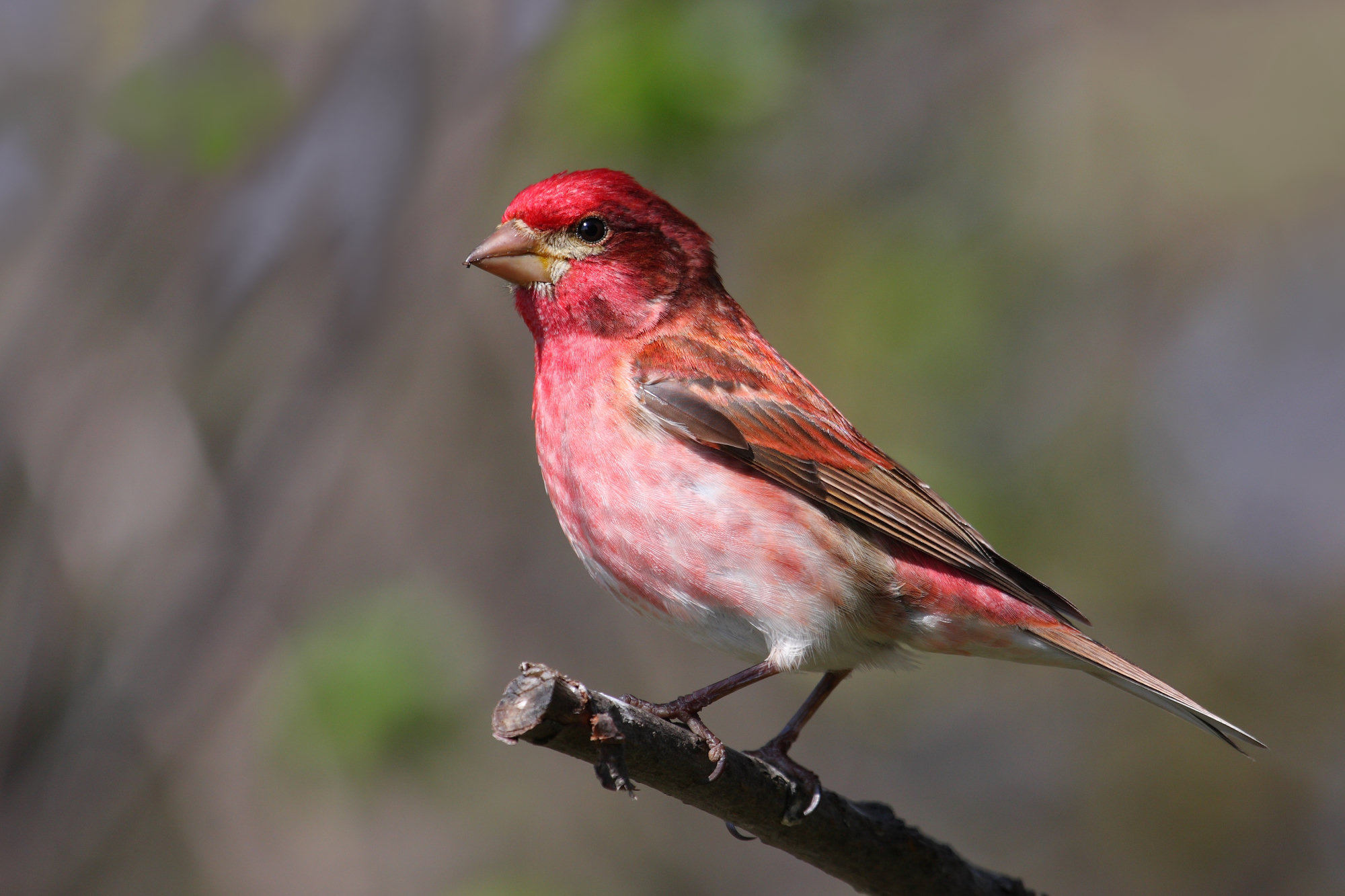
Photo Cephas (opens in a new tab) / Wikimedia Commons, CC BY-SA 3.0 (opens in a new tab)
At a glance
- Size
- About 12 to 16 cm long
- Weight
- About 18 to 32 g
- Habitat
- Woods and feeders in winter
- Diet
- Seeds, buds and fruit
- In Georgia
- An irregular winter visitor
- Voice
- A sharp "tick" call
- Rabies vector
- No
Identification
- Male
- Raspberry-red head and breast; unstreaked sides
- Female
- Brown and white with a bold face pattern and crisp streaks
- Told apart from
- House finch, which has streaked sides and a plainer female
- Where to look
- Feeders in winter, especially in irruption years
Behaviour
Purple finches move south in large numbers in winters when northern seed crops fail.
Why they matter
Purple finches are one of the "winter finches" whose irruptions track seed crops across northern forests. Their numbers in Georgia vary greatly from year to year.
Reproduction and lifecycle
Nest — A cup in a conifer
Eggs — Usually four
Incubation — About 13 days
Chicks — Fed by both parents
Lifespan — Several years
Living around people
- Clean feeders reduce the spread of disease in winter flocks.
Misconceptions
- All red finches are house finches. In some winters, purple finches visit too.
Related species
Seasonal activity
When this species is breeding, and when there are nests on the ground. Mowing during the shaded months is how most nests are found.
| Jan | Feb | Mar | Apr | May | Jun | Jul | Aug | Sep | Oct | Nov | Dec | |
|---|---|---|---|---|---|---|---|---|---|---|---|---|
| Breeding | Jan: no | Feb: no | Mar: no | Apr: no | May: no | Jun: no | Jul: no | Aug: no | Sep: no | Oct: no | Nov: no | Dec: no |
| Active nests | Jan: no | Feb: no | Mar: no | Apr: no | May: no | Jun: no | Jul: no | Aug: no | Sep: no | Oct: no | Nov: no | Dec: no |
| Notes | Wintering in irruption years | Wintering | Leaving | Nesting farther north | Nesting | Chicks | Young fledging | Present in the north | Moving south in some years | Arriving | Wintering | Wintering |
Where it lives
Recorded in 51 states and provinces. Each one links to the other animals there, and to the rehabilitators licensed for them.
United States
- Alabamain winter
- Arkansasin winter
- California
- Connecticut
- Delawarein winter
- District of Columbiain winter
- Georgiain winter
- Illinoisin winter
- Indianain winter
- Iowain winter
- Kansasin winter
- Kentuckyin winter
- Louisianain winter
- Mainebreeding
- Marylandin winter
- Massachusetts
- Michigan
- Minnesota
- Mississippiin winter
- Missouriin winter
- Nebraskain winter
- New Hampshire
- New Jerseyin winter
- New York
- North Carolinain winter
- North Dakotain winter
- Ohioin winter
- Oklahomain winter
- Oregonbreeding
- Pennsylvania
- Rhode Island
- South Carolinain winter
- South Dakotain winter
- Tennesseein winter
- Vermont
- Virginiain winter
- Washingtonbreeding
- West Virginia
- Wisconsin
If you found one
Answer a few questions and you will get a specific answer for what you are looking at.
I found an animal