
Species
Prothonotary warbler
Protonotaria citrea
A golden-orange warbler of flooded swamps that nests in tree holes, rare among warblers.
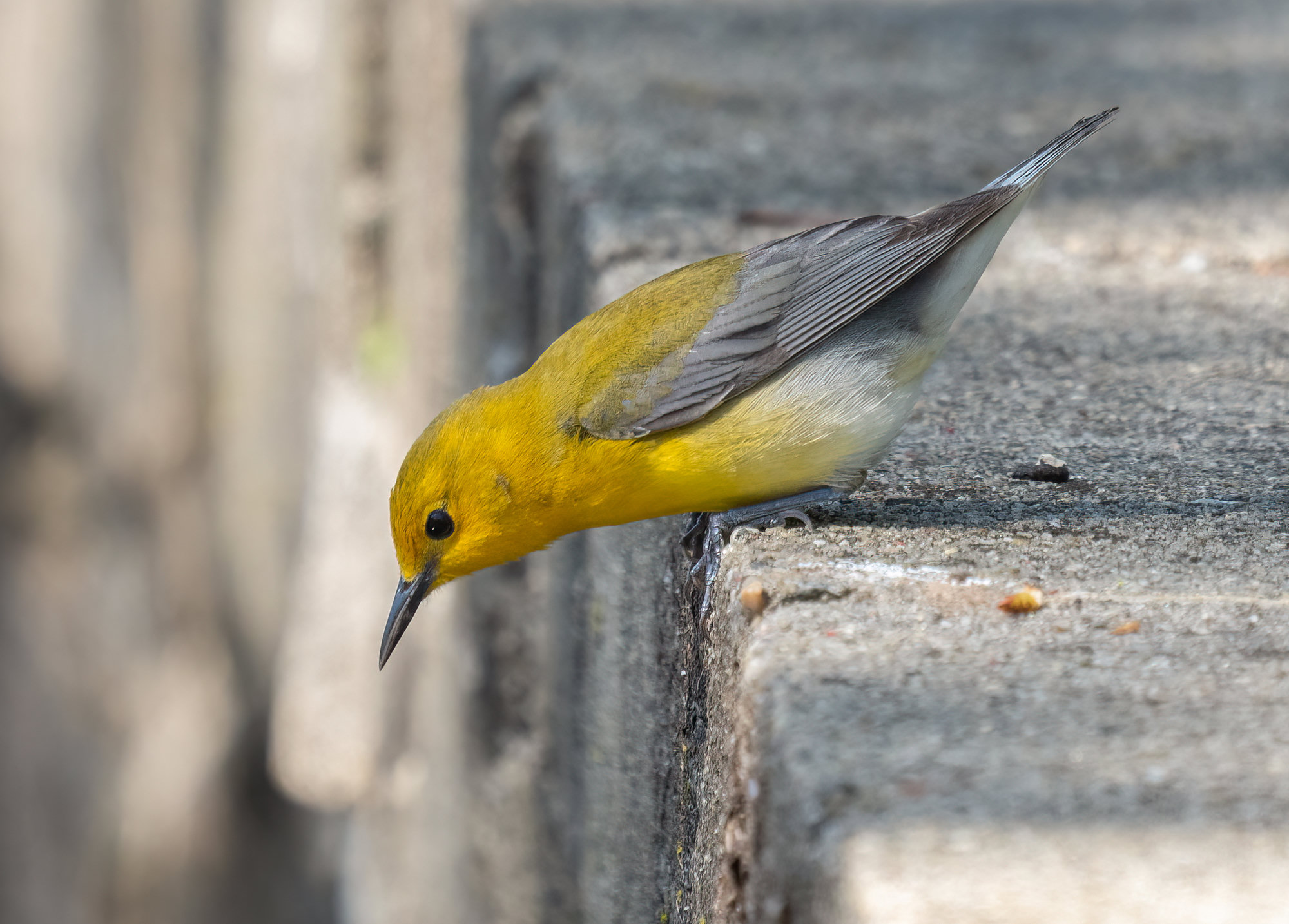
Photo Rhododendrites (opens in a new tab) / Wikimedia Commons, CC BY-SA 4.0 (opens in a new tab)
At a glance
- Size
- About 13 cm long
- Weight
- About 12 to 17 g
- Habitat
- Flooded swamps and bottomland forests
- Diet
- Insects and snails
- In Georgia
- A common summer resident, especially in the south
- Voice
- A loud "sweet-sweet-sweet"
- Rabies vector
- No
Identification
- Key marks
- Golden-orange head and breast; blue-grey wings with no bars; black eye
- Told apart from
- Blue-winged warbler, which has a black eye-line and white wing bars
- Where to look
- Swamps and flooded woods along rivers
Behaviour
Prothonotary warblers nest in tree cavities over water, including old woodpecker holes and nest boxes.
Why they matter
This is the only eastern warbler that nests in cavities. It depends on flooded bottomland forests, which have been widely cleared.
Reproduction and lifecycle
Nest — A cup of moss in a tree cavity or nest box over water
Eggs — Usually four to six
Incubation — About 12 to 14 days
Chicks — Fed by both parents
Lifespan — Several years
Living around people
- Nest boxes over water in swamps are readily used.
Misconceptions
- Warblers do not nest in holes. The prothonotary warbler does.
Related species
Seasonal activity
When this species is breeding, and when there are nests on the ground. Mowing during the shaded months is how most nests are found.
| Jan | Feb | Mar | Apr | May | Jun | Jul | Aug | Sep | Oct | Nov | Dec | |
|---|---|---|---|---|---|---|---|---|---|---|---|---|
| Breeding | Jan: no | Feb: no | Mar: no | Apr: no | May: no | Jun: no | Jul: no | Aug: no | Sep: no | Oct: no | Nov: no | Dec: no |
| Active nests | Jan: no | Feb: no | Mar: no | Apr: no | May: no | Jun: no | Jul: no | Aug: no | Sep: no | Oct: no | Nov: no | Dec: no |
| Notes | In Central and South America | In the tropics | Arriving late in the month | Nesting | Nesting | Second broods | Young fledging | Leaving | Last birds | In the tropics | In the tropics | In the tropics |
Where it lives
Recorded in 36 states and provinces. Each one links to the other animals there, and to the rehabilitators licensed for them.
United States
- Alabamabreeding
- Arkansasbreeding
- Delawarebreeding
- District of Columbiabreeding
- Floridabreeding
- Georgiabreeding
- Illinoisbreeding
- Indianabreeding
- Iowabreeding
- Kansasbreeding
- Kentuckybreeding
- Louisianabreeding
- Marylandbreeding
- Michiganbreeding
- Minnesotabreeding
- Mississippibreeding
- Missouribreeding
- Nebraskabreeding
- New Jerseybreeding
- New Yorkbreeding
- North Carolinabreeding
- Ohiobreeding
- Oklahomabreeding
- Pennsylvaniabreeding
- South Carolinabreeding
- Tennesseebreeding
- Texasbreeding
- Virginiabreeding
- West Virginiabreeding
- Wisconsinbreeding
Canada
If you found one
Answer a few questions and you will get a specific answer for what you are looking at.
I found an animal