
Species
Piping plover
Charadrius melodus
A pale, sand-coloured plover that winters on Georgia's beaches and is protected as threatened.
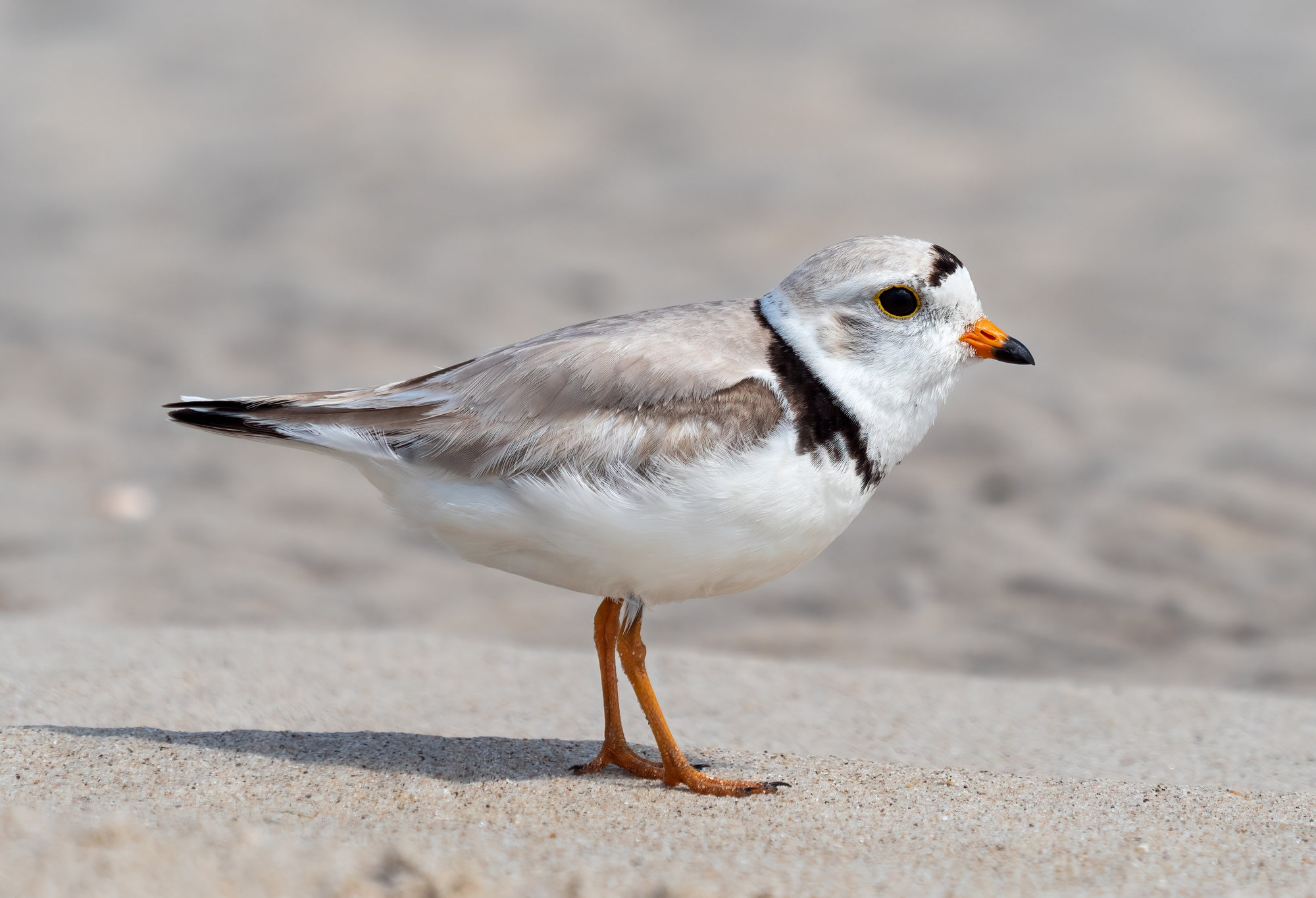
Photo Rhododendrites (opens in a new tab) / Wikimedia Commons, CC BY-SA 4.0 (opens in a new tab)
At a glance
- Size
- About 17 to 18 cm long
- Weight
- About 45 to 65 g
- Habitat
- Sandy beaches, sandflats and inlets
- Diet
- Marine worms, insects and small crustaceans
- In Georgia
- An uncommon winter visitor on the coast
- Voice
- A soft, whistled "peep-lo"
- Rabies vector
- No
Identification
- Key marks
- Very pale, the colour of dry sand; short orange bill with a black tip in summer; orange legs; a thin breast band, often incomplete in winter
- Told apart from
- Semipalmated plover, which is darker brown
- Told apart from
- Snowy plover, a rare visitor, which has dark legs
- Where to look
- Sandflats near inlets on the barrier islands, August to April
Behaviour
Piping plovers blend almost perfectly into dry sand. They feed along the tide line and rest in hollows in the sand, where they are easy to overlook.
Why they matter
Piping plovers are federally listed as threatened or endangered, depending on the population, and every one counts. Birds from the Great Lakes, the northern plains and the Atlantic coast all winter in the Southeast, and Georgia's quiet inlets and sandbars are part of what keeps them alive.
Reproduction and lifecycle
Nest — A scrape in sand or shell on beaches
Eggs — Usually four
Incubation — About 25 to 28 days
Chicks — Leave the nest within hours and feed themselves
Flight — At about four weeks
Lifespan — Several years
Living around people
- Dogs running on beaches flush resting plovers; keeping dogs on lead where shorebirds gather helps.
- Leaving a wide berth around resting birds on sandflats lets them keep the energy they need for migration.
Misconceptions
- A bird that lets you walk close is tame. Plovers crouch and freeze to avoid being seen; they are stressed, not tame.
Related species
Seasonal activity
When this species is breeding, and when there are nests on the ground. Mowing during the shaded months is how most nests are found.
| Jan | Feb | Mar | Apr | May | Jun | Jul | Aug | Sep | Oct | Nov | Dec | |
|---|---|---|---|---|---|---|---|---|---|---|---|---|
| Breeding | Jan: no | Feb: no | Mar: no | Apr: no | May: no | Jun: no | Jul: no | Aug: no | Sep: no | Oct: no | Nov: no | Dec: no |
| Active nests | Jan: no | Feb: no | Mar: no | Apr: no | May: no | Jun: no | Jul: no | Aug: no | Sep: no | Oct: no | Nov: no | Dec: no |
| Notes | Wintering | Wintering | Leaving for breeding beaches | Last birds leave | Nesting farther north | Nesting | Chicks; first adults return south | Arriving | Wintering birds arrive | Wintering | Wintering | Wintering |
Where it lives
Recorded in 42 states and provinces. Each one links to the other animals there, and to the rehabilitators licensed for them.
United States
- Alabamain winter
- Arkansaspassing through
- Connecticutbreeding
- Delawarebreeding
- Floridain winter
- Georgiain winter
- Illinoisbreeding
- Kansasbreeding
- Louisianain winter
- Mainebreeding
- Marylandbreeding
- Massachusettsbreeding
- Michiganbreeding
- Mississippiin winter
- Montanabreeding
- Nebraskabreeding
- New Hampshirebreeding
- New Jerseybreeding
- New Yorkbreeding
- North Carolina
- North Dakotabreeding
- Ohiobreeding
- Oklahomapassing through
- Pennsylvaniabreeding
- Rhode Islandbreeding
- South Carolinain winter
- South Dakotabreeding
- Texasin winter
- Virginiabreeding
Canada
If you found one
Answer a few questions and you will get a specific answer for what you are looking at.
I found an animal