
Species
Olive-sided flycatcher
Contopus cooperi
A big-headed flycatcher of northern forests that calls 'quick, three beers!' from dead treetops on migration.
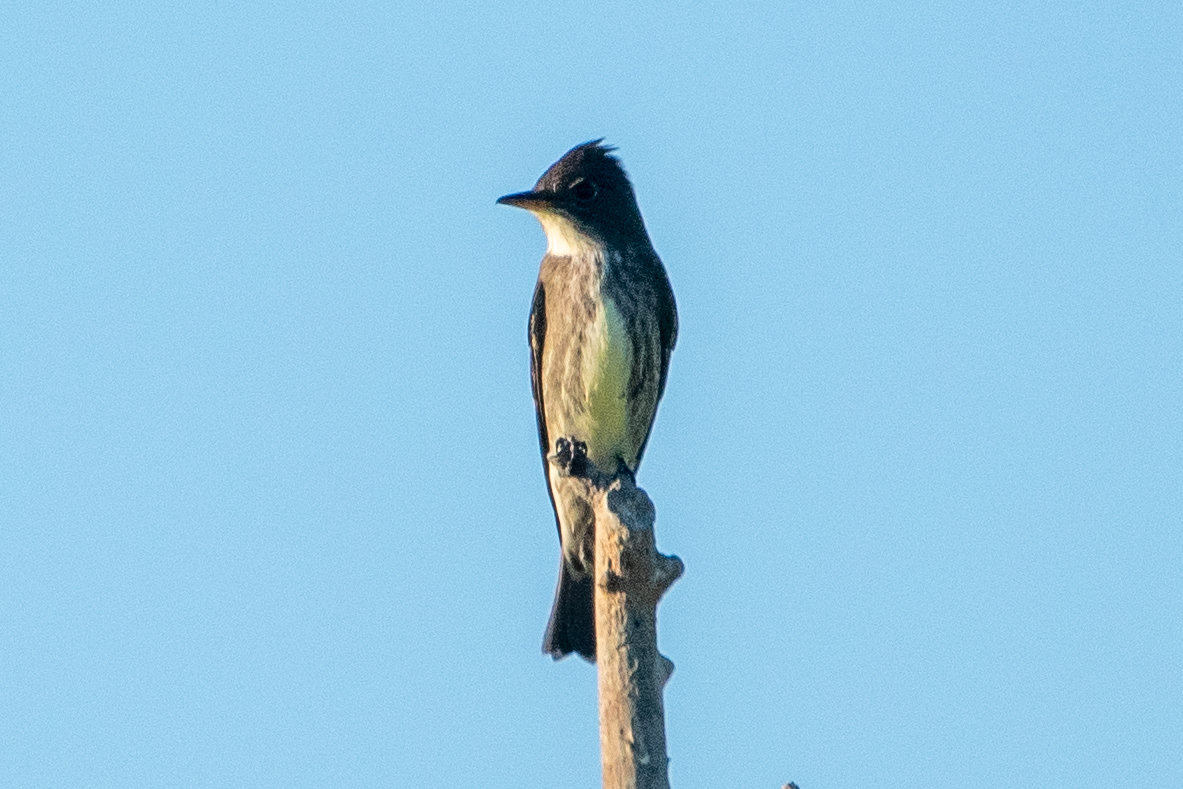
Photo Jonathan Eisen (opens in a new tab) / iNaturalist, CC BY 4.0 (opens in a new tab)
At a glance
- Size
- About 18 to 20 cm long
- Weight
- About 28 to 36 g
- Habitat
- Forest edges with dead trees; on migration, treetops anywhere
- Diet
- Flying insects, especially bees and wasps
- In Georgia
- An uncommon migrant, May and August to September
- Voice
- A whistled "quick-THREE-BEERS" and "pip-pip-pip"
- Rabies vector
- No
Identification
- Key marks
- Large head; dark sides with a white stripe down the centre of the breast, like an unbuttoned vest; often perches on the very top of dead trees
- Told apart from
- Eastern wood-pewee, which is smaller with a paler breast
- Where to look
- The tops of dead trees during migration
Behaviour
Olive-sided flycatchers perch on the highest dead branches and fly out to catch bees, wasps and other flying insects, returning to the same perch.
Why they matter
Olive-sided flycatchers make one of the longest migrations of any North American flycatcher, to the Andes of South America, and have declined steeply. They depend on forest openings with dead trees, often created by fire.
Reproduction and lifecycle
Nest — A cup of twigs and lichen high in a conifer
Eggs — Usually three
Incubation — About 15 to 16 days
Chicks — Fed by both parents
Flight — At about 15 to 19 days
Lifespan — Several years
Living around people
- Dead treetops left standing are perches for migrants.
Misconceptions
- It is asking for beer. The phrase is just a way to remember its song.
Related species
Seasonal activity
When this species is breeding, and when there are nests on the ground. Mowing during the shaded months is how most nests are found.
| Jan | Feb | Mar | Apr | May | Jun | Jul | Aug | Sep | Oct | Nov | Dec | |
|---|---|---|---|---|---|---|---|---|---|---|---|---|
| Breeding | Jan: no | Feb: no | Mar: no | Apr: no | May: no | Jun: no | Jul: no | Aug: no | Sep: no | Oct: no | Nov: no | Dec: no |
| Active nests | Jan: no | Feb: no | Mar: no | Apr: no | May: no | Jun: no | Jul: no | Aug: no | Sep: no | Oct: no | Nov: no | Dec: no |
| Notes | In South America | In South America | In South America | Migrating north | Migrants in Georgia | Nesting in northern forests | Nesting | Migrating south | Migrants in Georgia | In South America | In South America | In South America |
Where it lives
Recorded in 83 states and provinces. Each one links to the other animals there, and to the rehabilitators licensed for them.
United States
- Alaskabreeding
- Arizonabreeding
- Arkansaspassing through
- Californiabreeding
- Coloradobreeding
- Connecticutpassing through
- Delawarepassing through
- District of Columbiapassing through
- Georgiapassing through
- Idahobreeding
- Illinoispassing through
- Indianapassing through
- Iowapassing through
- Kansaspassing through
- Kentuckypassing through
- Louisianapassing through
- Mainebreeding
- Marylandpassing through
- Massachusettsbreeding
- Michiganbreeding
- Minnesotabreeding
- Mississippipassing through
- Missouripassing through
- Montanabreeding
- Nebraskapassing through
- Nevadabreeding
- New Hampshirebreeding
- New Jerseypassing through
- New Mexicobreeding
- New Yorkbreeding
- North Dakotapassing through
- Ohiopassing through
- Oklahomapassing through
- Oregonbreeding
- Pennsylvaniapassing through
- South Dakotabreeding
- Tennesseepassing through
- Texaspassing through
- Utahbreeding
- Vermontbreeding
- Virginiapassing through
- Washingtonbreeding
- West Virginiabreeding
- Wisconsinbreeding
- Wyomingbreeding
Canada
Mexico
- Aguascalientespassing through
- Baja Californiabreeding
- Chiapasin winter
- Chihuahuapassing through
- Coahuilapassing through
- Colimapassing through
- Durangopassing through
- Guanajuatopassing through
- Guerreropassing through
- Hidalgopassing through
- Jaliscoin winter
- Mexico Citypassing through
- Michoacanin winter
- Morelospassing through
- Nayaritpassing through
- Nuevo Leonpassing through
- Oaxacain winter
- Pueblapassing through
- Queretaropassing through
- Quintana Rooin winter
- San Luis Potosipassing through
- Sinaloain winter
- Sonorapassing through
- State of Mexicopassing through
- Tamaulipaspassing through
- Veracruzpassing through
If you found one
Answer a few questions and you will get a specific answer for what you are looking at.
I found an animal