
Species
Eastern phoebe
Sayornis phoebe
A modest grey flycatcher that wags its tail, says its own name, and nests under bridges and porches.
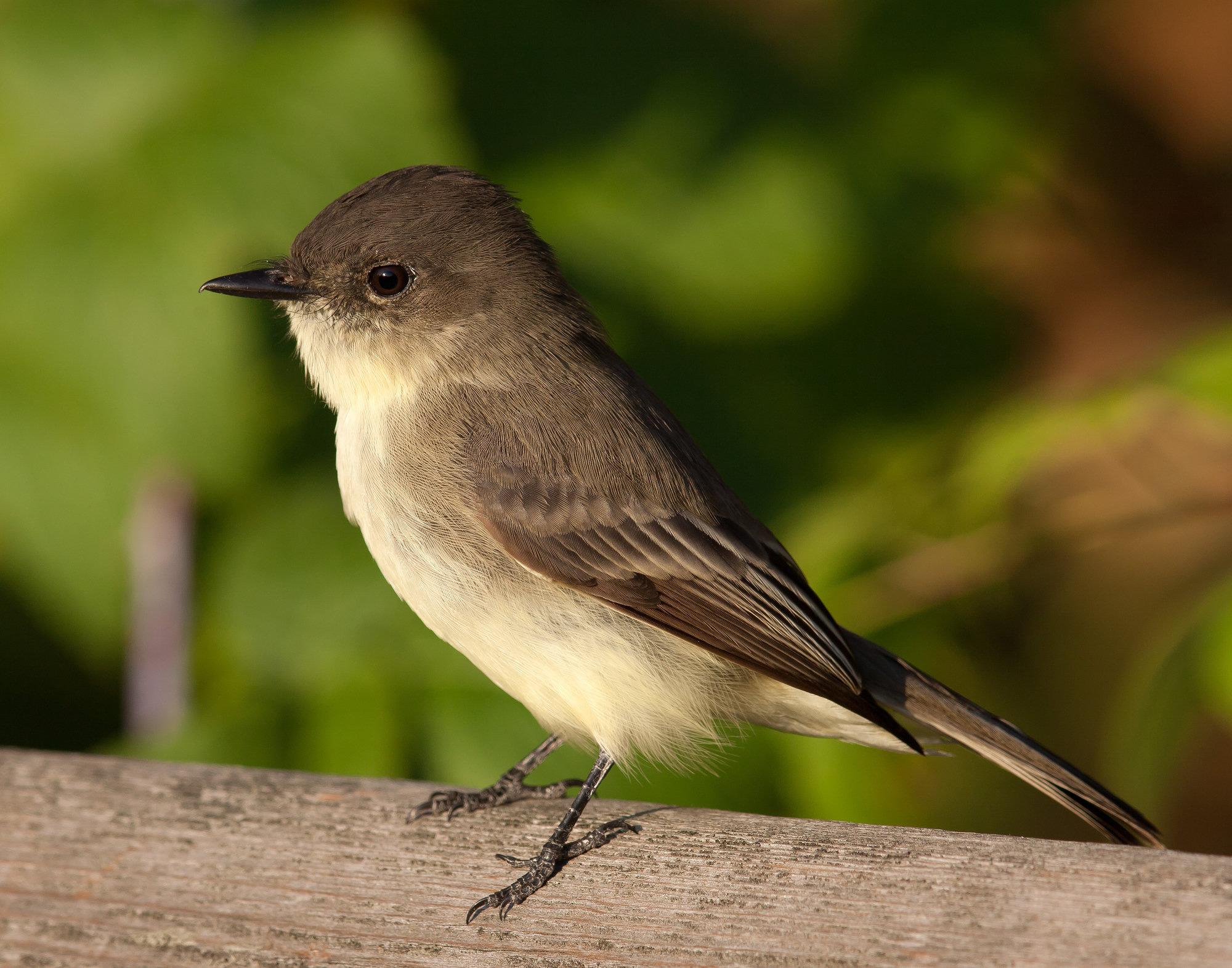
Photo John Benson (opens in a new tab) / Wikimedia Commons, CC BY 2.0 (opens in a new tab)
At a glance
- Size
- About 14 to 17 cm long
- Weight
- About 16 to 21 g
- Habitat
- Woodland edges, farms, yards, bridges and buildings near water
- Diet
- Flying insects; some berries in winter
- In Georgia
- Common all year; more numerous in winter
- Voice
- A raspy "FEE-bee"
- Rabies vector
- No
Identification
- Key marks
- Grey-brown above, whitish below; dark head; no strong wing bars; constantly wags its tail
- Told apart from
- Eastern wood-pewee, which has wing bars and does not wag its tail
- Where to look
- Perches near bridges, barns and porches
Behaviour
Eastern phoebes hunt from low perches, pumping their tails. They build mud-and-moss nests on ledges under bridges, eaves and porches.
Why they matter
The eastern phoebe was the first bird banded in North America: in 1804 John James Audubon tied thread to young phoebes' legs and saw them return the next year. Phoebes adapted early to nesting on buildings and bridges.
Reproduction and lifecycle
Nest — A cup of mud and moss on a ledge under a bridge, eave or porch
Eggs — Usually four or five
Incubation — About 15 to 16 days
Chicks — Fed by both parents
Flight — At about 16 to 18 days
Broods — Often two a year
Lifespan — Several years
Living around people
- A phoebe nest on a porch lasts only a few weeks; leaving it be is the kindest thing.
- Phoebes reuse the same ledges year after year.
Misconceptions
- Birds nesting on houses are a nuisance. Phoebes eat many insects around homes and are gone within weeks.
Related species
Seasonal activity
When this species is breeding, and when there are nests on the ground. Mowing during the shaded months is how most nests are found.
| Jan | Feb | Mar | Apr | May | Jun | Jul | Aug | Sep | Oct | Nov | Dec | |
|---|---|---|---|---|---|---|---|---|---|---|---|---|
| Breeding | Jan: no | Feb: no | Mar: no | Apr: no | May: no | Jun: no | Jul: no | Aug: no | Sep: no | Oct: no | Nov: no | Dec: no |
| Active nests | Jan: no | Feb: no | Mar: no | Apr: no | May: no | Jun: no | Jul: no | Aug: no | Sep: no | Oct: no | Nov: no | Dec: no |
| Notes | Wintering birds present | Singing | Nest building | Nesting | Chicks | Second broods | Young fledging | Present | Present | Migrants arriving | Present | Present |
Where it lives
Recorded in 59 states and provinces. Each one links to the other animals there, and to the rehabilitators licensed for them.
United States
- Alabama
- Arkansas
- Coloradobreeding
- Connecticutbreeding
- Delawarebreeding
- District of Columbiabreeding
- Floridain winter
- Georgia
- Illinoisbreeding
- Indianabreeding
- Iowabreeding
- Kansasbreeding
- Kentuckybreeding
- Louisianain winter
- Mainebreeding
- Marylandbreeding
- Massachusettsbreeding
- Michiganbreeding
- Minnesotabreeding
- Mississippiin winter
- Missouribreeding
- Nebraskabreeding
- New Hampshirebreeding
- New Jerseybreeding
- New Yorkbreeding
- North Carolina
- North Dakotabreeding
- Ohiobreeding
- Oklahoma
- Pennsylvaniabreeding
- Rhode Islandbreeding
- South Carolina
- South Dakotabreeding
- Tennessee
- Texas
- Vermontbreeding
- Virginia
- West Virginiabreeding
- Wisconsinbreeding
Canada
If you found one
Answer a few questions and you will get a specific answer for what you are looking at.
I found an animal