
Species
Manx shearwater
Puffinus puffinus
A black-and-white shearwater that crosses the Atlantic each year and is occasionally seen far off Georgia.
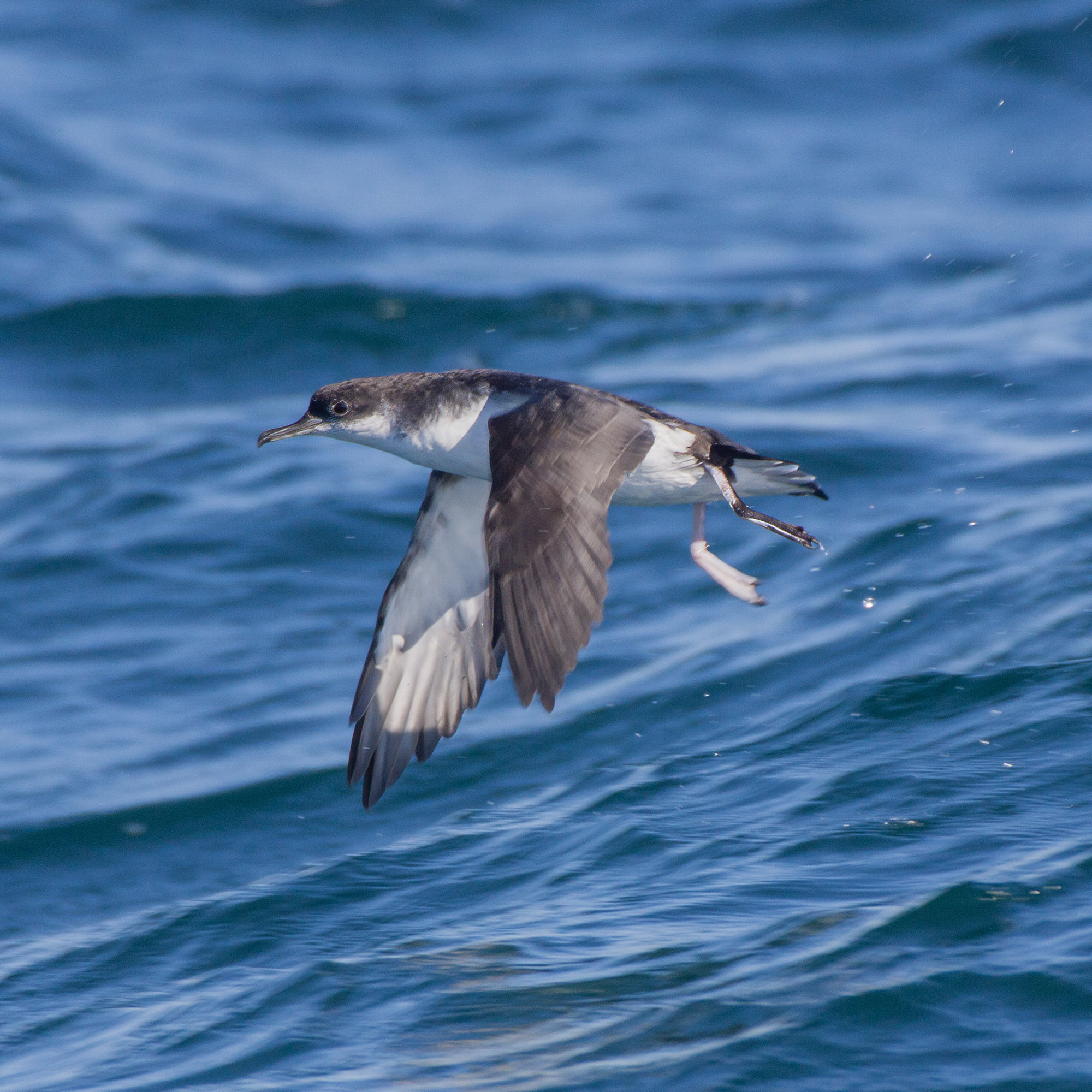
Photo Dan Vickers (opens in a new tab) / iNaturalist, CC BY 4.0 (opens in a new tab)
At a glance
- Size
- About 30 to 38 cm long; wingspan about 76 to 89 cm
- Weight
- About 350 to 575 g
- Habitat
- Open ocean
- Diet
- Small fish and squid
- In Georgia
- A rare but regular migrant far offshore
- Voice
- Silent at sea
- Rabies vector
- No
Identification
- Key marks
- Crisply black above and white below; white under the tail; stiff, fast wingbeats between long glides
- Told apart from
- Sargasso shearwater, which is smaller with dark under the tail and faster wingbeats
- Where to look
- Offshore in spring and autumn
Behaviour
Manx shearwaters breed in burrows on islands in the North Atlantic, mostly off Britain and Ireland, and winter off South America. They come ashore only at night.
Why they matter
Manx shearwaters are famous for their homing ability: birds carried far from their colonies have found their way back across the ocean. One ringed bird was recorded alive over fifty years after it was first ringed, having flown millions of kilometres.
Reproduction and lifecycle
Nest — A burrow on an island
Eggs — One
Incubation — About 50 days
Chick — Fed by both parents; left alone for its last week or so before it goes to sea
Lifespan — Wild birds over fifty years are recorded
Living around people
- A shearwater found on land cannot take off from flat ground and needs a rehabilitator.
Misconceptions
- A seabird on land will recover if left to rest. Shearwaters struggle to walk and cannot take off from flat ground.
Related species
Seasonal activity
When this species is breeding, and when there are nests on the ground. Mowing during the shaded months is how most nests are found.
| Jan | Feb | Mar | Apr | May | Jun | Jul | Aug | Sep | Oct | Nov | Dec | |
|---|---|---|---|---|---|---|---|---|---|---|---|---|
| Breeding | Jan: no | Feb: no | Mar: no | Apr: no | May: no | Jun: no | Jul: no | Aug: no | Sep: no | Oct: no | Nov: no | Dec: no |
| Active nests | Jan: no | Feb: no | Mar: no | Apr: no | May: no | Jun: no | Jul: no | Aug: no | Sep: no | Oct: no | Nov: no | Dec: no |
| Notes | Off South America | Off South America | Migrating north | Nesting on North Atlantic islands | Nesting | Chicks | Chicks | Young leaving burrows | Migrating south | Migrating south | Off South America | Off South America |
Where it lives
Recorded in 17 states and provinces. Each one links to the other animals there, and to the rehabilitators licensed for them.
United States
If you found one
Answer a few questions and you will get a specific answer for what you are looking at.
I found an animal