
Species
Louisiana waterthrush
Parkesia motacilla
A streaky, tail-bobbing warbler of clear, rushing streams, one of the first migrants to return each spring.
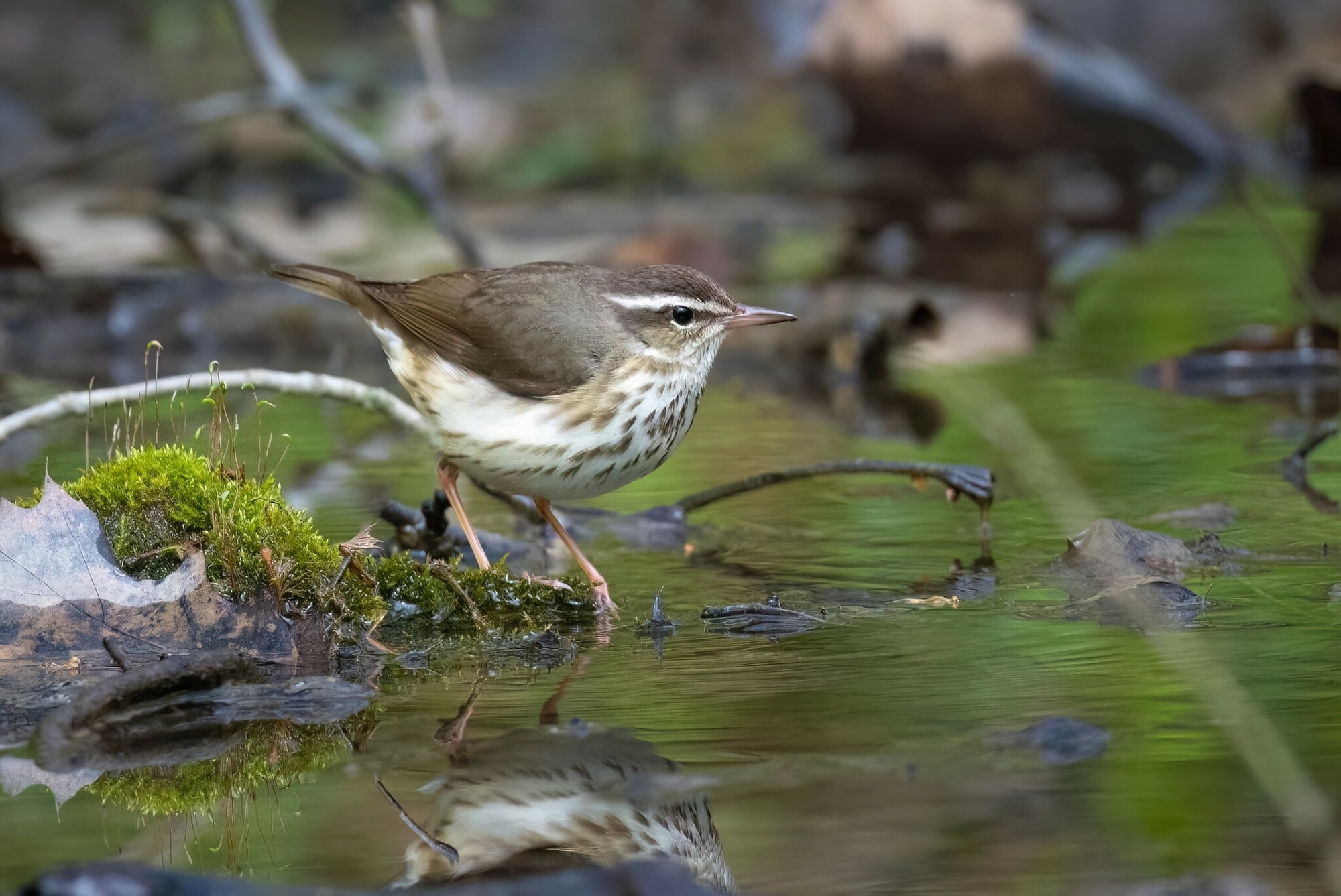
Photo Unknown photographer (opens in a new tab) / iNaturalist, CC0 1.0 (opens in a new tab)
At a glance
- Size
- About 15 cm long
- Weight
- About 18 to 25 g
- Habitat
- Clear, fast-flowing streams in wooded ravines
- Diet
- Aquatic insects, snails and small fish
- In Georgia
- A common summer resident, March to September
- Voice
- Clear, slurred whistles followed by a jumble
- Rabies vector
- No
Identification
- Key marks
- Brown above; white below with streaks; broad white eyebrow widening behind the eye; pink legs; bobs its tail
- Told apart from
- Northern waterthrush, which has a buffier, thinner eyebrow and streaked throat
- Where to look
- Rocky streams in wooded ravines
Behaviour
Louisiana waterthrushes walk along stream edges, bobbing their tails and picking insects from rocks and water.
Why they matter
Louisiana waterthrushes depend on clean, clear streams and are a good indicator of stream health. They arrive in March, among the earliest warblers.
Reproduction and lifecycle
Nest — A cup in a stream bank among roots
Eggs — Usually four to six
Incubation — About 12 to 14 days
Chicks — Fed by both parents
Lifespan — Several years
Living around people
- Keeping forested buffers along streams and preventing sediment runoff protects them.
Misconceptions
- Waterthrushes are thrushes. They are warblers.
Related species
Seasonal activity
When this species is breeding, and when there are nests on the ground. Mowing during the shaded months is how most nests are found.
| Jan | Feb | Mar | Apr | May | Jun | Jul | Aug | Sep | Oct | Nov | Dec | |
|---|---|---|---|---|---|---|---|---|---|---|---|---|
| Breeding | Jan: no | Feb: no | Mar: no | Apr: no | May: no | Jun: no | Jul: no | Aug: no | Sep: no | Oct: no | Nov: no | Dec: no |
| Active nests | Jan: no | Feb: no | Mar: no | Apr: no | May: no | Jun: no | Jul: no | Aug: no | Sep: no | Oct: no | Nov: no | Dec: no |
| Notes | In Central America | In Central America | Arriving | Nesting | Nesting | Young fledging | Leaving | Migrating | Last birds | In Central America | In Central America | In Central America |
Where it lives
Recorded in 64 states and provinces. Each one links to the other animals there, and to the rehabilitators licensed for them.
United States
- Alabamabreeding
- Arizonain winter
- Arkansasbreeding
- Connecticutbreeding
- Delawarebreeding
- District of Columbiabreeding
- Floridabreeding
- Georgiabreeding
- Illinoisbreeding
- Indianabreeding
- Iowabreeding
- Kansasbreeding
- Kentuckybreeding
- Louisianabreeding
- Mainebreeding
- Marylandbreeding
- Massachusettsbreeding
- Michiganbreeding
- Minnesotabreeding
- Mississippibreeding
- Missouribreeding
- Nebraskabreeding
- New Hampshirebreeding
- New Jerseybreeding
- New Yorkbreeding
- North Carolinabreeding
- Ohiobreeding
- Oklahomabreeding
- Pennsylvaniabreeding
- Rhode Islandbreeding
- South Carolinabreeding
- Tennesseebreeding
- Texasbreeding
- Vermontbreeding
- Virginiabreeding
- West Virginiabreeding
- Wisconsinbreeding
Canada
Mexico
- Campechein winter
- Chiapasin winter
- Coahuilapassing through
- Colimain winter
- Durangoin winter
- Guanajuatopassing through
- Guerreroin winter
- Hidalgoin winter
- Jaliscoin winter
- Mexico Cityin winter
- Michoacanin winter
- Morelosin winter
- Nayaritin winter
- Nuevo Leonin winter
- Oaxacain winter
- Pueblain winter
- Queretaroin winter
- Quintana Rooin winter
- San Luis Potosiin winter
- Sinaloain winter
- Sonorain winter
- State of Mexicoin winter
- Tabascoin winter
- Tamaulipasin winter
- Veracruzin winter
- Yucatanpassing through
If you found one
Answer a few questions and you will get a specific answer for what you are looking at.
I found an animal