
Species
Long-tailed duck
Clangula hyemalis
A pied sea duck with a long, needle tail that dives deeper than almost any other duck.
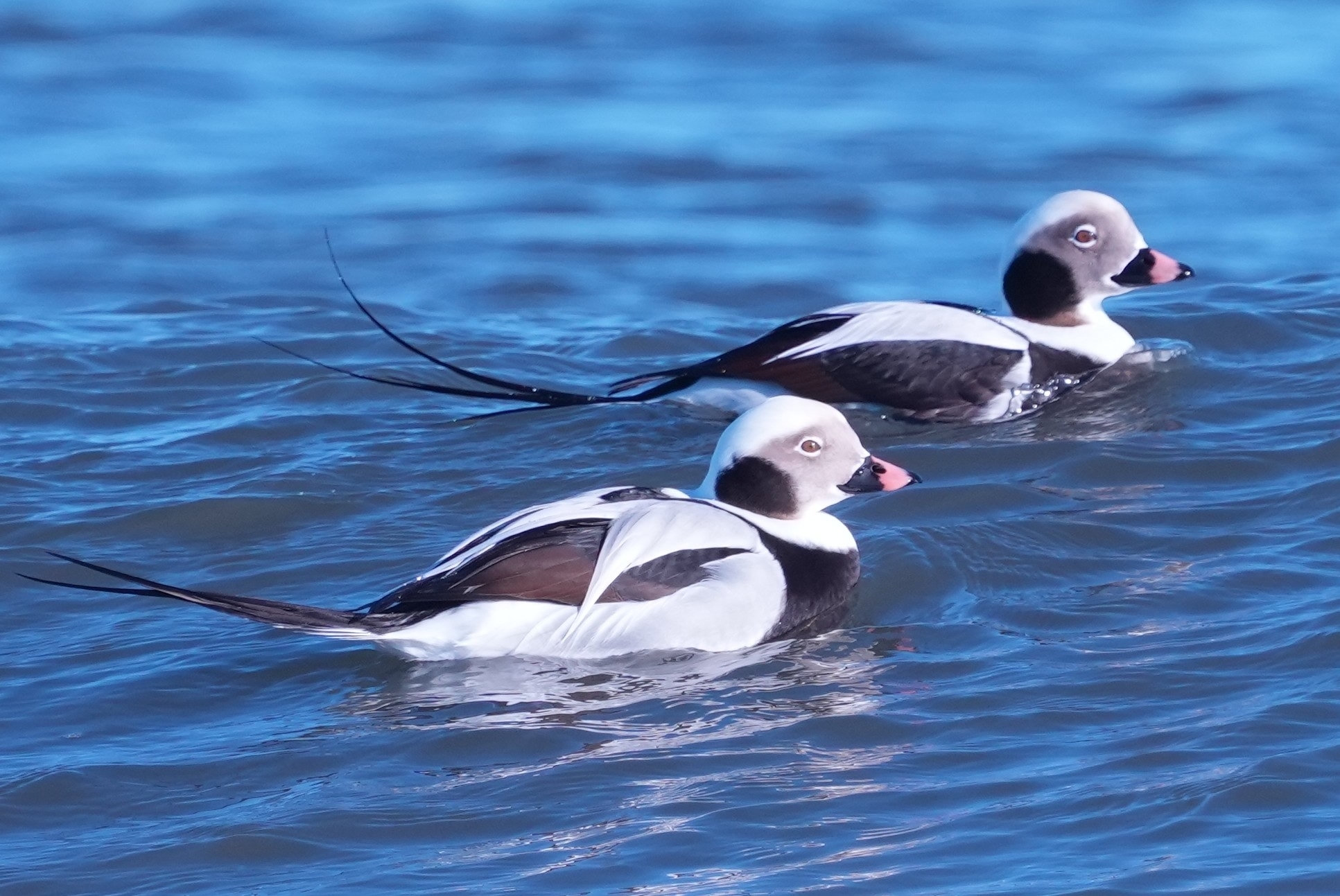
Photo carbenoid (opens in a new tab) / iNaturalist, CC BY 4.0 (opens in a new tab)
At a glance
- Size
- About 38 to 58 cm long, including the male's tail
- Weight
- About 500 to 1,000 g
- Habitat
- Ocean, sounds and large lakes in winter
- Diet
- Crustaceans, shellfish, fish and insect larvae
- In Georgia
- A rare winter visitor
- Voice
- Males give a loud, yodelling "ow-owdle-ow"
- Rabies vector
- No
Identification
- Male
- White and brown in intricate patterns that change through the year; long, slender black tail; pink band on a dark bill
- Female
- Brown and white with a dark cheek patch and no long tail
- Told apart from
- Northern pintail, a freshwater dabbling duck with a long tail but a brown head and grey body
- Where to look
- Coastal sounds and large reservoirs, December to March
Behaviour
Long-tailed ducks are remarkable divers, recorded feeding at depths of 60 m or more. They use their wings as well as their feet to swim underwater.
Why they matter
This duck breeds around the Arctic and spends the rest of the year at sea or on large lakes. Its deep dives let it feed where few other birds can, and large numbers die in fishing nets in some parts of the world, making it one of the sea ducks of most concern.
Reproduction and lifecycle
Nest — A down-lined hollow on Arctic tundra near water
Eggs — Usually 6 to 8
Incubation — About 24 to 29 days
Ducklings — Leave the nest within a day
Flight — At about five weeks
Lifespan — Wild birds over fifteen years are recorded
Living around people
- A long-tailed duck on a Georgia lake or beach is a long way from its usual winter range and worth watching from a distance.
Misconceptions
- Ducks cannot dive deep. This one reaches depths few seals would bother with.
Related species
Seasonal activity
When this species is breeding, and when there are nests on the ground. Mowing during the shaded months is how most nests are found.
| Jan | Feb | Mar | Apr | May | Jun | Jul | Aug | Sep | Oct | Nov | Dec | |
|---|---|---|---|---|---|---|---|---|---|---|---|---|
| Breeding | Jan: no | Feb: no | Mar: no | Apr: no | May: no | Jun: no | Jul: no | Aug: no | Sep: no | Oct: no | Nov: no | Dec: no |
| Active nests | Jan: no | Feb: no | Mar: no | Apr: no | May: no | Jun: no | Jul: no | Aug: no | Sep: no | Oct: no | Nov: no | Dec: no |
| Notes | Wintering | Wintering | Migrating north | Moving north | Arriving in the Arctic | Nesting | Ducklings hatching | Adults moulting | Young flying | Migration begins | Arriving on wintering waters | Wintering |
Where it lives
Recorded in 34 states and provinces. Each one links to the other animals there, and to the rehabilitators licensed for them.
United States
- Alaska
- Coloradoin winter
- Connecticutin winter
- Delawarein winter
- Georgiain winter
- Kansasin winter
- Mainein winter
- Marylandin winter
- Massachusettsin winter
- Michiganin winter
- Minnesotain winter
- New Hampshirein winter
- New Jerseyin winter
- New Yorkin winter
- North Carolinain winter
- Pennsylvaniain winter
- Rhode Islandin winter
- South Carolinain winter
- Tennesseein winter
- Vermontin winter
- Virginiain winter
- Washingtonin winter
- Wisconsinin winter
If you found one
Answer a few questions and you will get a specific answer for what you are looking at.
I found an animal