
Species
Loggerhead shrike
Lanius ludovicianus
A grey-and-black songbird that hunts like a hawk and impales its prey on thorns and barbed wire.
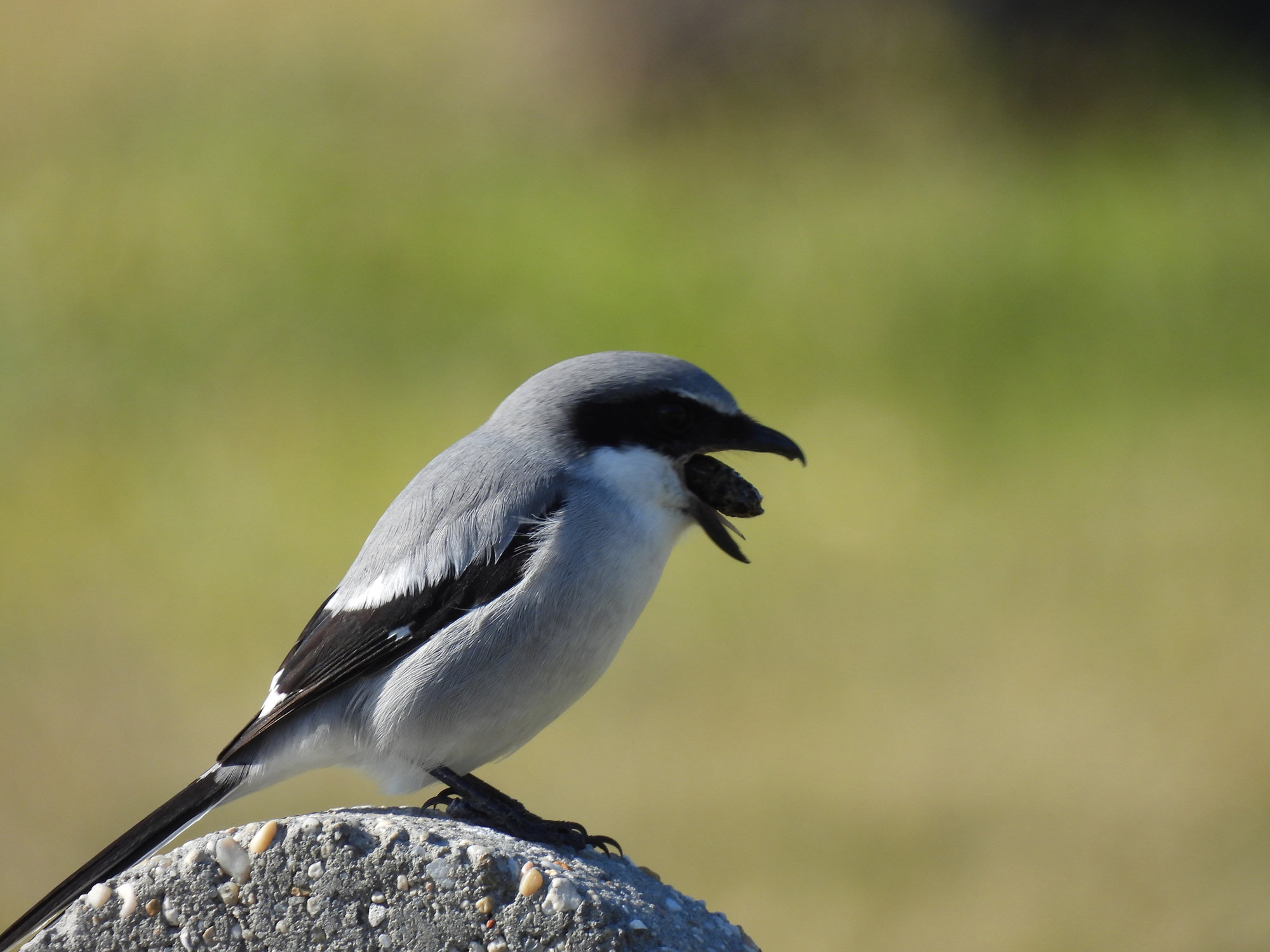
Photo ncb1221 (opens in a new tab) / iNaturalist, CC BY 4.0 (opens in a new tab)
At a glance
- Size
- About 20 to 23 cm long
- Weight
- About 45 to 60 g
- Habitat
- Open country with scattered shrubs, pastures and fence lines
- Diet
- Large insects, lizards, mice and small birds
- In Georgia
- An uncommon and declining resident, mostly in the south and centre
- Voice
- Harsh "shack" notes and a varied, quiet song
- Rabies vector
- No
Identification
- Key marks
- Grey body; black mask; black wings with a white patch; hooked bill
- Told apart from
- Northern mockingbird, which is slimmer with no mask and a longer tail
- Where to look
- Perched on wires and fences over open fields
Behaviour
Shrikes hunt from perches, catching insects, lizards and mice. Lacking talons, they impale prey on thorns or barbed wire to hold it while they eat, or to store it for later.
Why they matter
Loggerhead shrikes have declined by over 70 per cent in recent decades, probably because of pesticides, the loss of pastures and traffic on roadsides. They are one of the few songbirds that hunt vertebrates, filling a niche usually taken by small hawks.
Reproduction and lifecycle
Nest — A bulky cup in a thorny shrub or small tree
Eggs — Usually four to six
Incubation — About 15 to 17 days
Chicks — Fed by both parents
Flight — At about 17 to 20 days
Lifespan — Several years
Living around people
- Insecticides on pastures reduce their food and may poison them.
- They are often hit by cars when hunting along roadsides.
Misconceptions
- Impaled animals on a fence are a sign of cruelty by people. They are a shrike's larder.
Related species
Seasonal activity
When this species is breeding, and when there are nests on the ground. Mowing during the shaded months is how most nests are found.
| Jan | Feb | Mar | Apr | May | Jun | Jul | Aug | Sep | Oct | Nov | Dec | |
|---|---|---|---|---|---|---|---|---|---|---|---|---|
| Breeding | Jan: no | Feb: no | Mar: no | Apr: no | May: no | Jun: no | Jul: no | Aug: no | Sep: no | Oct: no | Nov: no | Dec: no |
| Active nests | Jan: no | Feb: no | Mar: no | Apr: no | May: no | Jun: no | Jul: no | Aug: no | Sep: no | Oct: no | Nov: no | Dec: no |
| Notes | Pairs on territory | Nest building | Nesting | Chicks | Young fledging | Second broods | Young independent | Present | Present | Present | Present | Present |
Where it lives
Recorded in 64 states and provinces. Each one links to the other animals there, and to the rehabilitators licensed for them.
United States
- Alabama
- Arizonain winter
- Arkansas
- California
- Colorado
- Florida
- Georgia
- Idahobreeding
- Illinois
- Indianabreeding
- Iowabreeding
- Kansas
- Kentucky
- Louisiana
- Minnesotabreeding
- Mississippi
- Missouri
- Montanabreeding
- Nebraskabreeding
- Nevada
- New Mexicoin winter
- North Carolina
- North Dakotabreeding
- Oklahomain winter
- Oregonbreeding
- South Carolina
- South Dakotabreeding
- Tennessee
- Texas
- Utah
- Virginia
- Washingtonbreeding
- Wyomingbreeding
Mexico
- Aguascalientes
- Baja California
- Baja California Sur
- Chihuahuain winter
- Coahuilain winter
- Colimain winter
- Durango
- Guanajuato
- Guerrerobreeding
- Hidalgo
- Jalisco
- Mexico City
- Michoacan
- Morelos
- Nayaritbreeding
- Nuevo Leon
- Oaxaca
- Puebla
- Queretaro
- San Luis Potosiin winter
- Sinaloain winter
- Sonora
- State of Mexico
- Tamaulipasin winter
- Tlaxcalain winter
- Veracruzin winter
- Zacatecas
If you found one
Answer a few questions and you will get a specific answer for what you are looking at.
I found an animal