
Species
Little brown skink
Scincella lateralis
A tiny, bronze lizard that slips through leaf litter in gardens and woods across Georgia.
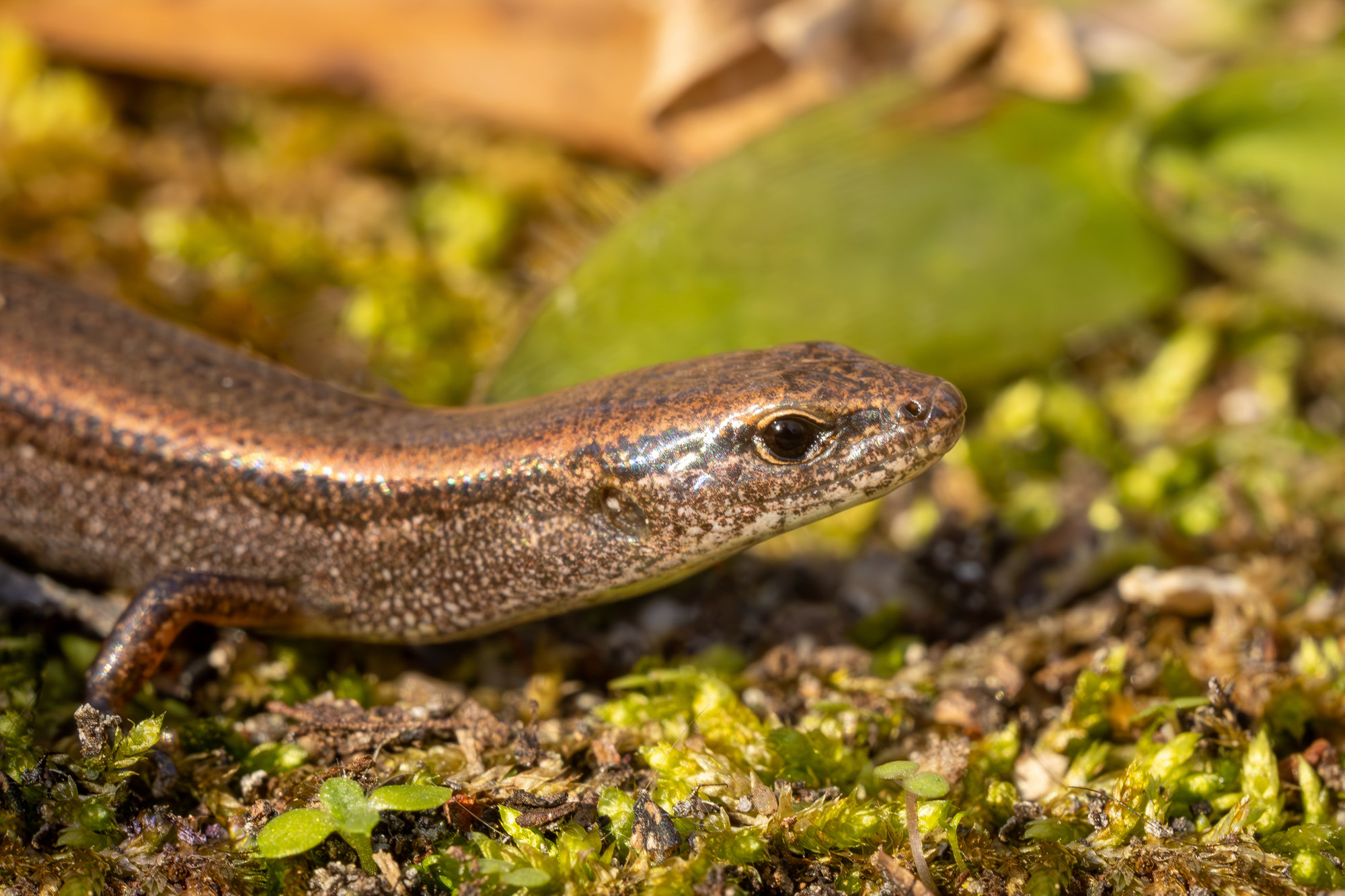
Photo Alex Stach (opens in a new tab) / iNaturalist, CC BY 4.0 (opens in a new tab)
At a glance
- Size
- About 7 to 14 cm long including the tail
- Habitat
- Leaf litter in woods, gardens and yards
- Diet
- Small insects, spiders and other invertebrates
- In Georgia
- Common statewide
- Rabies vector
- No
Identification
- Key marks
- Very small, smooth, bronze-brown lizard with a dark stripe along each side; short legs
- Told apart from
- Young five-lined skinks, which are black with cream stripes and blue tails
- Where to look
- Rustling through dry leaves in gardens and woods
Behaviour
Little brown skinks move with a side-to-side wriggle, almost like a snake, through leaf litter. They have a clear window in the lower eyelid, so they can see with their eyes closed.
Why they matter
They are one of the most abundant small predators of the leaf litter, eating tiny insects, and are food for snakes, birds and larger lizards.
Reproduction and lifecycle
Eggs — Usually 1 to 7, several clutches a year
Nest — Under logs, stones and leaf litter
Incubation — About 4 to 9 weeks
Hatchlings — Very small
Maturity — Within a year
Lifespan — A few years
Living around people
- Leaving some leaf litter in beds gives these skinks somewhere to live.
Misconceptions
- A lizard that moves like a snake is a snake. Little brown skinks have legs, even if they are small.
Related species
Seasonal activity
When this species is breeding, and when there are nests on the ground. Mowing during the shaded months is how most nests are found.
| Jan | Feb | Mar | Apr | May | Jun | Jul | Aug | Sep | Oct | Nov | Dec | |
|---|---|---|---|---|---|---|---|---|---|---|---|---|
| Breeding | Jan: no | Feb: no | Mar: no | Apr: no | May: no | Jun: no | Jul: no | Aug: no | Sep: no | Oct: no | Nov: no | Dec: no |
| Active nests | Jan: no | Feb: no | Mar: no | Apr: no | May: no | Jun: no | Jul: no | Aug: no | Sep: no | Oct: no | Nov: no | Dec: no |
| Notes | Active on warm days | Active on warm days | Active | Breeding | Laying | Laying | Laying | Hatchlings | Active | Active | Active on warm days | Sheltering in cold spells |
Where it lives
Recorded in 21 states and provinces. Each one links to the other animals there, and to the rehabilitators licensed for them.
If you found one
Answer a few questions and you will get a specific answer for what you are looking at.
I found an animal