
Species
Lesser yellowlegs
Tringa flavipes
A slim, elegant sandpiper on bright yellow legs, common at Georgia's ponds and impoundments in migration.
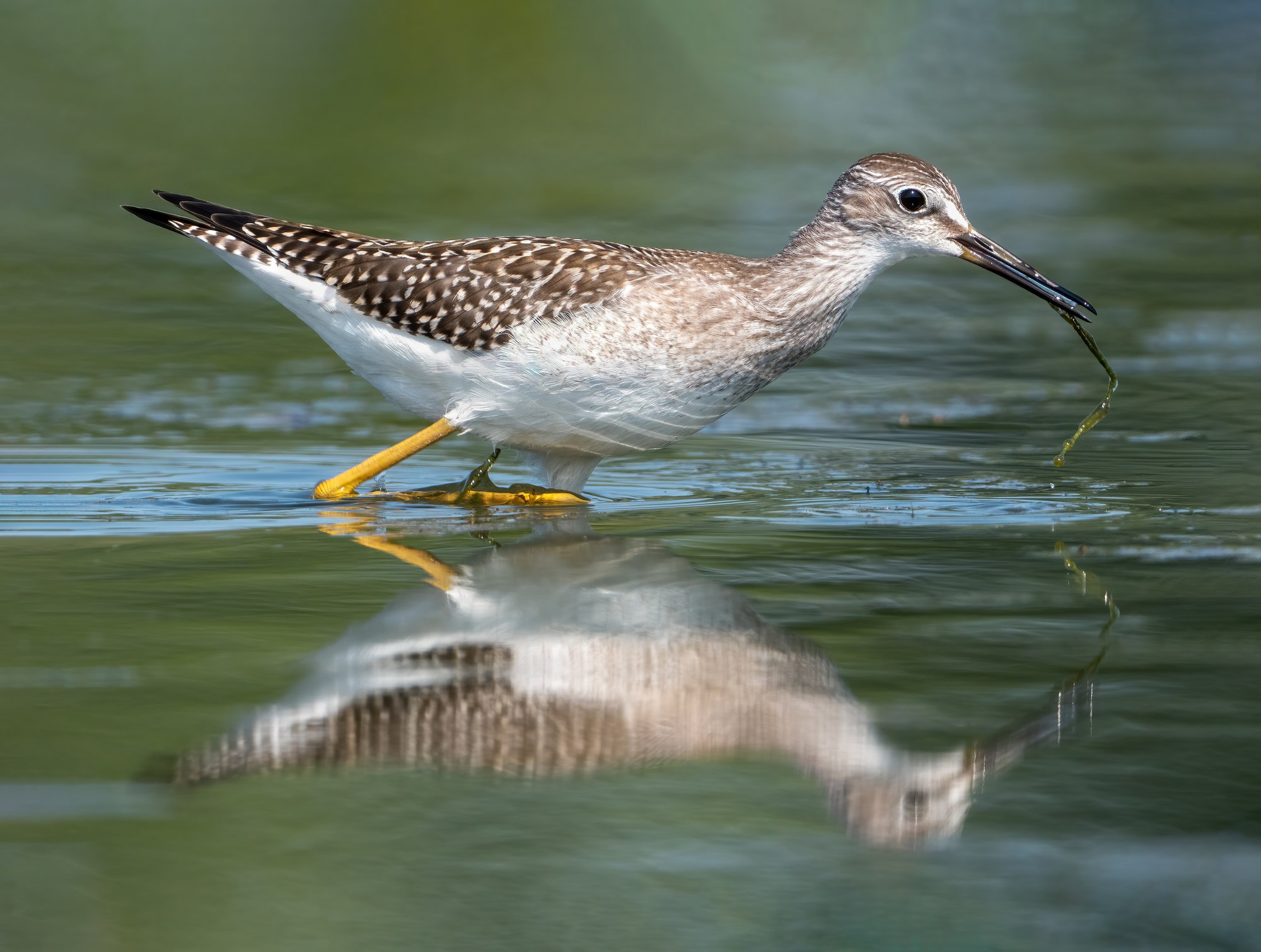
Photo Rhododendrites (opens in a new tab) / Wikimedia Commons, CC BY-SA 4.0 (opens in a new tab)
At a glance
- Size
- About 23 to 25 cm long
- Weight
- About 70 to 90 g
- Habitat
- Shallow ponds, marshes, impoundments and flooded fields
- Diet
- Aquatic insects, small fish and crustaceans
- In Georgia
- A common migrant and winter visitor
- Voice
- A soft "tu" or "tu-tu"
- Rabies vector
- No
Identification
- Key marks
- Bright yellow legs; slim, straight bill about the length of the head; grey, speckled back; white rump in flight
- Told apart from
- Greater yellowlegs, which is larger with a longer, slightly upturned bill and a louder three-note call
- Told apart from
- Solitary sandpiper, which has greenish legs and a dark rump
- Where to look
- Shallow water in impoundments, ponds and flooded fields
Behaviour
Lesser yellowlegs wade and pick at the surface, often running to chase small prey.
Why they matter
Lesser yellowlegs have declined steeply in recent decades, partly because of hunting on migration in the Caribbean and South America. They depend on shallow wetlands across the continent, including farm ponds and impoundments in Georgia.
Reproduction and lifecycle
Nest — A scrape in open boreal forest or muskeg
Eggs — Usually four
Incubation — About 22 to 23 days
Chicks — Leave the nest within a day
Flight — At about 18 to 20 days
Lifespan — Several years
Living around people
- Farm ponds and impoundments with shallow edges support migrants.
Misconceptions
- The two yellowlegs are the same bird at different ages. They are separate species.
Related species
Seasonal activity
When this species is breeding, and when there are nests on the ground. Mowing during the shaded months is how most nests are found.
| Jan | Feb | Mar | Apr | May | Jun | Jul | Aug | Sep | Oct | Nov | Dec | |
|---|---|---|---|---|---|---|---|---|---|---|---|---|
| Breeding | Jan: no | Feb: no | Mar: no | Apr: no | May: no | Jun: no | Jul: no | Aug: no | Sep: no | Oct: no | Nov: no | Dec: no |
| Active nests | Jan: no | Feb: no | Mar: no | Apr: no | May: no | Jun: no | Jul: no | Aug: no | Sep: no | Oct: no | Nov: no | Dec: no |
| Notes | Wintering | Wintering | Migrants passing | Peak spring migration | Last migrants | Nesting in northern forests | Adults returning | Migrants | Migrants | Migrants | Wintering | Wintering |
Where it lives
Recorded in 94 states and provinces. Each one links to the other animals there, and to the rehabilitators licensed for them.
United States
- Alabamain winter
- Alaskabreeding
- Arizonain winter
- Arkansaspassing through
- Californiain winter
- Coloradopassing through
- Connecticutpassing through
- Delawarepassing through
- District of Columbiapassing through
- Floridain winter
- Georgiain winter
- Idahopassing through
- Illinoispassing through
- Indianapassing through
- Iowapassing through
- Kansaspassing through
- Kentuckypassing through
- Louisianain winter
- Mainepassing through
- Marylandpassing through
- Massachusettspassing through
- Michiganpassing through
- Minnesotapassing through
- Mississippiin winter
- Missouripassing through
- Montanapassing through
- Nebraskapassing through
- Nevadapassing through
- New Hampshirepassing through
- New Jerseypassing through
- New Mexicopassing through
- New Yorkpassing through
- North Carolinain winter
- North Dakotapassing through
- Ohiopassing through
- Oklahomapassing through
- Oregonpassing through
- Pennsylvaniapassing through
- Rhode Islandpassing through
- South Carolinain winter
- South Dakotapassing through
- Tennesseepassing through
- Texasin winter
- Utahpassing through
- Vermontpassing through
- Virginiapassing through
- Washingtonpassing through
- West Virginiapassing through
- Wisconsinpassing through
- Wyomingpassing through
Canada
Mexico
- Aguascalientespassing through
- Baja Californiain winter
- Baja California Surin winter
- Campechein winter
- Chiapasin winter
- Chihuahuain winter
- Coahuilain winter
- Colimain winter
- Durangoin winter
- Guanajuatoin winter
- Guerreroin winter
- Hidalgoin winter
- Jaliscoin winter
- Mexico Cityin winter
- Michoacanin winter
- Morelosin winter
- Nayaritin winter
- Nuevo Leonin winter
- Oaxacain winter
- Pueblain winter
- Queretaroin winter
- Quintana Rooin winter
- San Luis Potosiin winter
- Sinaloain winter
- Sonorain winter
- State of Mexicoin winter
- Tabascoin winter
- Tamaulipasin winter
- Tlaxcalain winter
- Veracruzin winter
- Yucatanin winter
If you found one
Answer a few questions and you will get a specific answer for what you are looking at.
I found an animal