
Species
Gull-billed tern
Gelochelidon nilotica
A pale tern with a stout black bill that hunts insects and crabs over marshes rather than diving for fish.
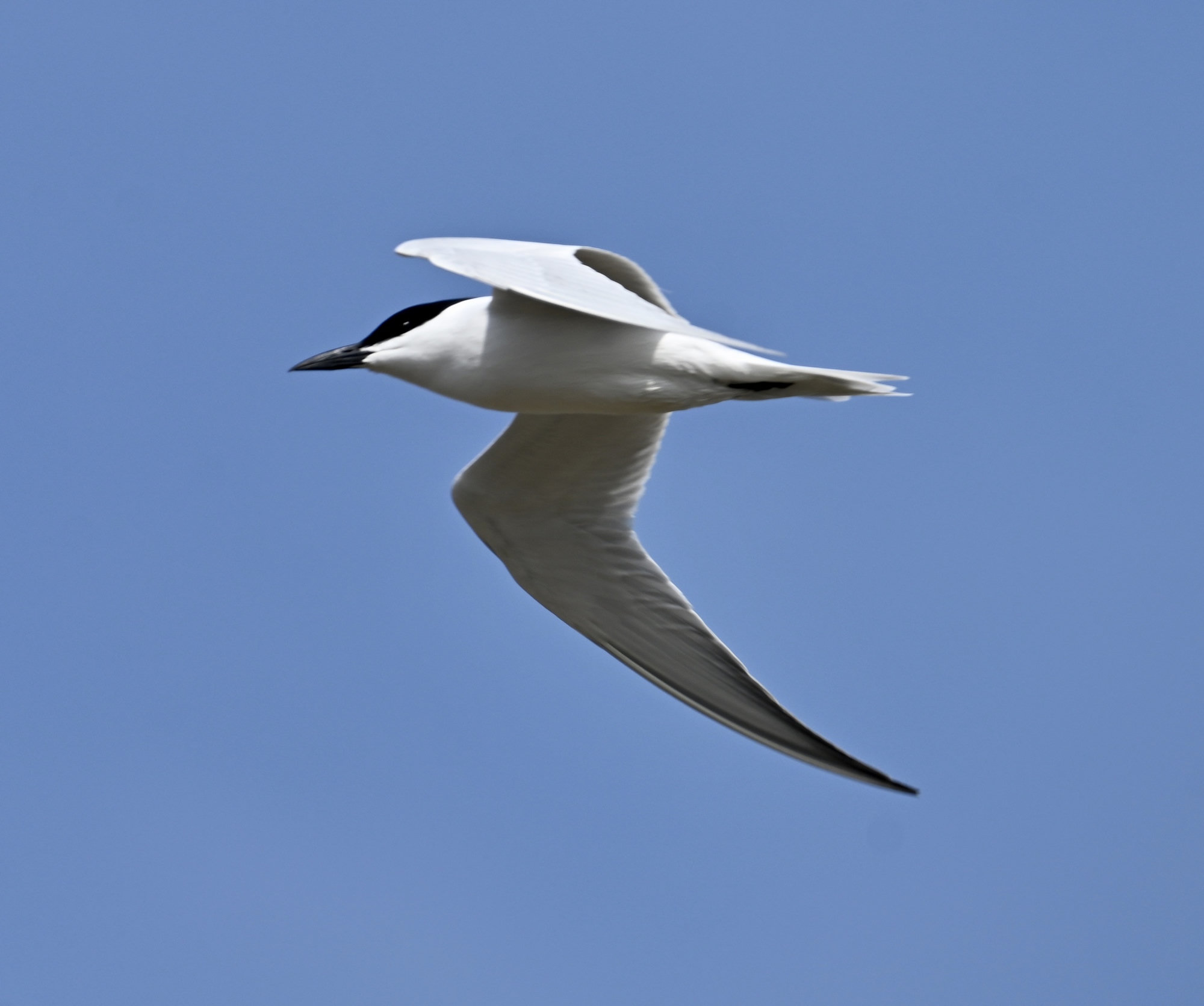
Photo Amber M. King (opens in a new tab) / iNaturalist, CC BY 4.0 (opens in a new tab)
At a glance
- Size
- About 33 to 43 cm long
- Weight
- About 170 to 290 g
- Habitat
- Salt marshes, beaches and fields near the coast
- Diet
- Insects, fiddler crabs, lizards and small fish
- In Georgia
- A summer resident on the coast
- Voice
- A raspy "kay-wek"
- Rabies vector
- No
Identification
- Key marks
- Pale grey and white; short, thick black bill; black cap in summer; long black legs
- Told apart from
- Sandwich tern, which has a thinner black bill with a yellow tip
- Told apart from
- Forster's tern, which has an orange bill
- Where to look
- Over marshes and beaches in summer
Behaviour
Gull-billed terns hawk insects in flight and swoop to snatch crabs and lizards from the ground, rarely diving into water.
Why they matter
Unlike most terns, this species lives largely on land animals. Its numbers on the Atlantic coast are small, and it depends on the same undisturbed nesting beaches as other terns.
Reproduction and lifecycle
Nest — A scrape on sand or shell, in colonies
Eggs — Usually two or three
Incubation — About 22 to 23 days
Chicks — Fed by both parents
Flight — At about four to five weeks
Lifespan — Several years
Living around people
- Beach nesting colonies are sensitive to disturbance from people and dogs.
Misconceptions
- All terns dive for fish. This one mostly catches insects and crabs.
Related species
Seasonal activity
When this species is breeding, and when there are nests on the ground. Mowing during the shaded months is how most nests are found.
| Jan | Feb | Mar | Apr | May | Jun | Jul | Aug | Sep | Oct | Nov | Dec | |
|---|---|---|---|---|---|---|---|---|---|---|---|---|
| Breeding | Jan: no | Feb: no | Mar: no | Apr: no | May: no | Jun: no | Jul: no | Aug: no | Sep: no | Oct: no | Nov: no | Dec: no |
| Active nests | Jan: no | Feb: no | Mar: no | Apr: no | May: no | Jun: no | Jul: no | Aug: no | Sep: no | Oct: no | Nov: no | Dec: no |
| Notes | Wintering farther south | Few present | Arriving | Nesting begins | Nesting | Chicks | Young flying | Leaving | Last birds | Farther south | Farther south | Farther south |
Where it lives
Recorded in 35 states and provinces. Each one links to the other animals there, and to the rehabilitators licensed for them.
United States
Canada
Mexico
If you found one
Answer a few questions and you will get a specific answer for what you are looking at.
I found an animal