
Species
Gray catbird
Dumetella carolinensis
A slate-grey mimic that mews like a cat from dense shrubs and sings long, jumbled songs.
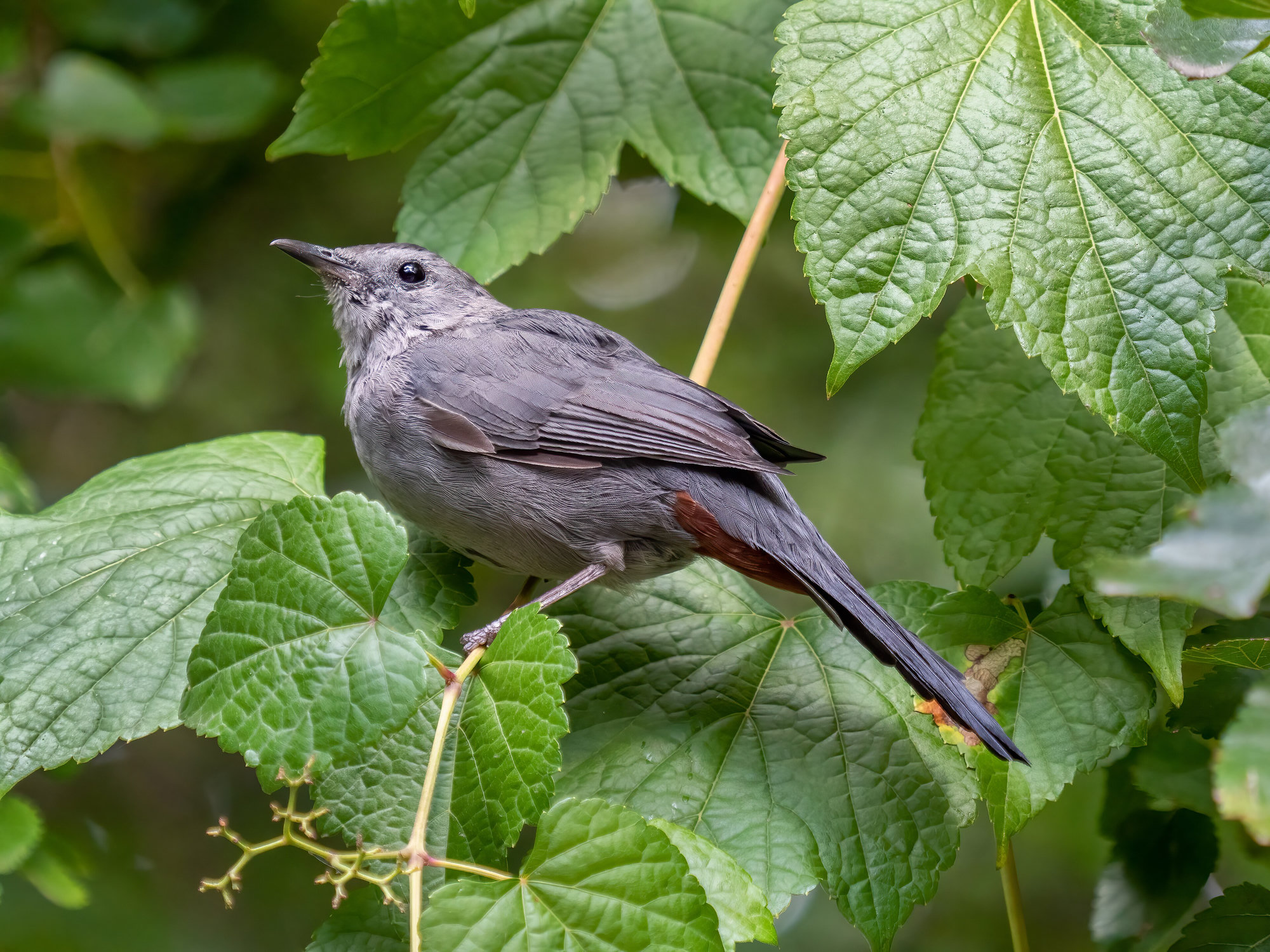
Photo Rhododendrites (opens in a new tab) / Wikimedia Commons, CC BY-SA 4.0 (opens in a new tab)
At a glance
- Size
- About 21 to 24 cm long
- Weight
- About 23 to 56 g
- Habitat
- Dense shrubs, thickets and gardens
- Diet
- Insects and berries
- In Georgia
- A common summer resident in the north; a winter visitor on the coast
- Voice
- A cat-like "mew" and long, jumbled songs
- Rabies vector
- No
Identification
- Key marks
- Slate grey; black cap; rusty patch under the tail
- Told apart from
- Northern mockingbird, which is paler with white wing patches
- Where to look
- Dense shrubs and thickets
Behaviour
Catbirds sing long, rambling songs mixing their own phrases with imitations of other birds. They eat many berries in autumn.
Why they matter
Gray catbirds are important seed dispersers of native shrubs. They can recognise and remove cowbird eggs from their nests.
Reproduction and lifecycle
Nest — A bulky cup in dense shrubs
Eggs — Usually three or four
Incubation — About 12 to 13 days
Chicks — Fed by both parents
Flight — At about 10 to 11 days
Lifespan — Several years
Living around people
- Dense native shrubs give them nest sites and berries.
- Window strikes are common on migration.
Misconceptions
- A mewing sound in the bushes is a lost cat. It may well be a catbird.
Related species
Seasonal activity
When this species is breeding, and when there are nests on the ground. Mowing during the shaded months is how most nests are found.
| Jan | Feb | Mar | Apr | May | Jun | Jul | Aug | Sep | Oct | Nov | Dec | |
|---|---|---|---|---|---|---|---|---|---|---|---|---|
| Breeding | Jan: no | Feb: no | Mar: no | Apr: no | May: no | Jun: no | Jul: no | Aug: no | Sep: no | Oct: no | Nov: no | Dec: no |
| Active nests | Jan: no | Feb: no | Mar: no | Apr: no | May: no | Jun: no | Jul: no | Aug: no | Sep: no | Oct: no | Nov: no | Dec: no |
| Notes | Wintering on the coast | Wintering | Wintering | Arriving in the north | Nesting | Chicks | Second broods | Young fledging | Migrants | Migrants | Wintering on the coast | Wintering on the coast |
Where it lives
Recorded in 70 states and provinces. Each one links to the other animals there, and to the rehabilitators licensed for them.
United States
- Alabama
- Arizona
- Arkansasbreeding
- Coloradobreeding
- Connecticutbreeding
- Delawarebreeding
- District of Columbiabreeding
- Floridain winter
- Georgia
- Idahobreeding
- Illinoisbreeding
- Indianabreeding
- Iowabreeding
- Kansasbreeding
- Kentuckybreeding
- Louisiana
- Mainebreeding
- Marylandbreeding
- Massachusettsbreeding
- Michiganbreeding
- Minnesotabreeding
- Mississippi
- Missouribreeding
- Montanabreeding
- Nebraskabreeding
- New Hampshirebreeding
- New Jerseybreeding
- New Mexico
- New Yorkbreeding
- North Carolinabreeding
- North Dakotabreeding
- Ohiobreeding
- Oklahomabreeding
- Oregonbreeding
- Pennsylvaniabreeding
- Rhode Islandbreeding
- South Carolina
- South Dakotabreeding
- Tennesseebreeding
- Texasin winter
- Utahbreeding
- Vermontbreeding
- Virginiabreeding
- Washingtonbreeding
- West Virginiabreeding
- Wisconsinbreeding
- Wyomingbreeding
Canada
If you found one
Answer a few questions and you will get a specific answer for what you are looking at.
I found an animal