
Species
Glaucous gull
Larus hyperboreus
A big, ghostly pale gull of the Arctic that very occasionally wanders to Georgia's coast in winter.
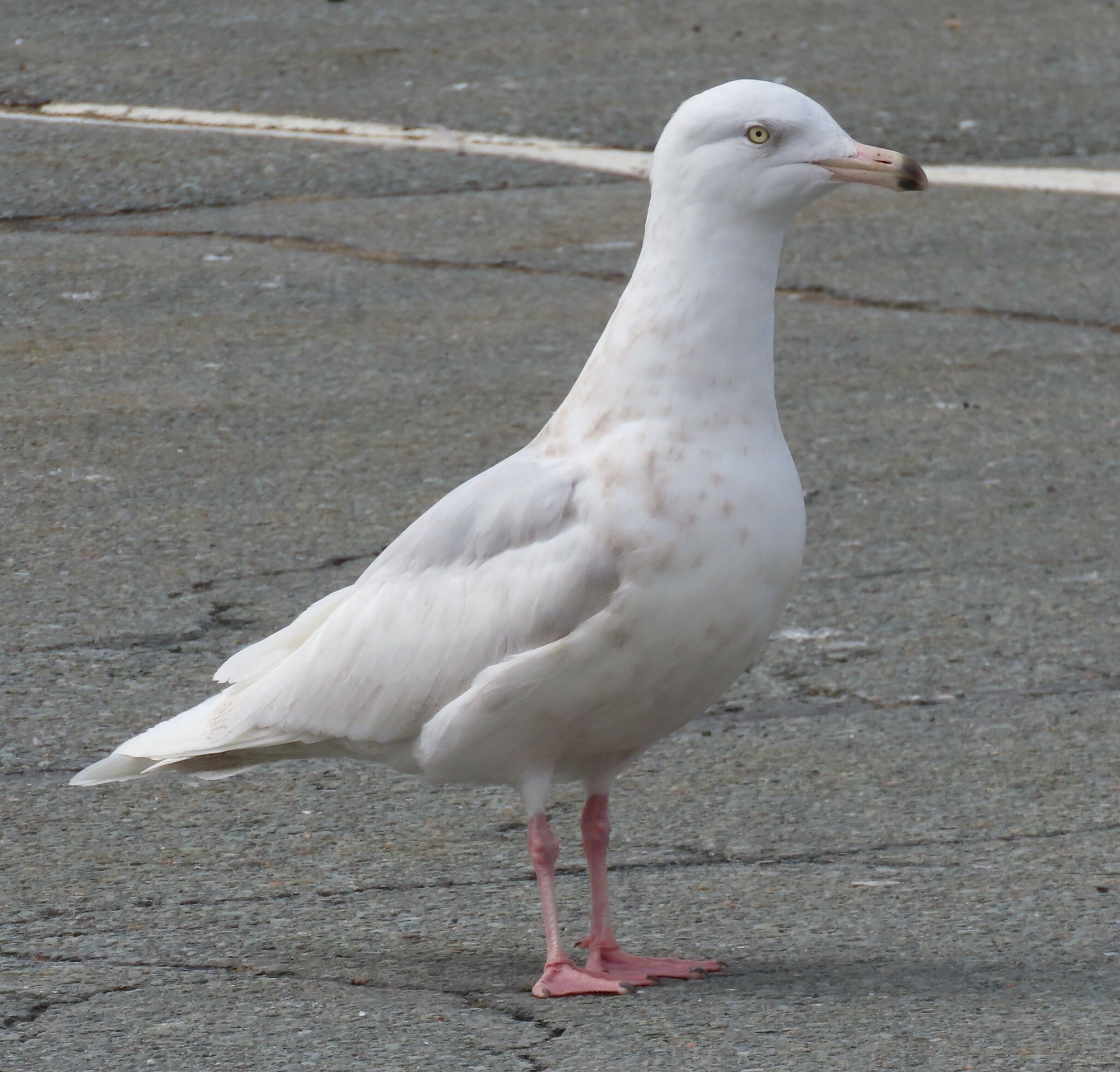
Photo mkkennedy (opens in a new tab) / iNaturalist, CC BY-NC 4.0 (opens in a new tab)
At a glance
- Size
- About 64 to 77 cm long
- Weight
- About 1 to 2.7 kg
- Habitat
- Beaches, harbours and landfills in winter
- Diet
- Fish, carrion, eggs, seabirds and scraps
- In Georgia
- A rare winter visitor
- Voice
- A hoarse "kyow"
- Rabies vector
- No
Identification
- Key marks
- Very large; very pale grey back; white wingtips with no black; young birds creamy white
- Told apart from
- Herring gull, which has black wingtips
- Where to look
- Among flocks of other gulls on beaches, January to March
Behaviour
Glaucous gulls are powerful predators and scavengers in the Arctic, taking eggs, chicks and fish. Wandering young birds sometimes travel far south in winter.
Why they matter
One of the largest gulls, the glaucous gull is a top predator in Arctic seabird colonies. Its rare visits to Georgia are a sign of the long winter movements of young gulls.
Reproduction and lifecycle
Nest — A mound of moss and grass on Arctic cliffs or islands
Eggs — Usually three
Incubation — About 27 to 28 days
Chicks — Fed by both parents
Maturity — Adult plumage at about four years
Lifespan — Wild birds over twenty years are recorded
Living around people
- A very pale gull on a Georgia beach is a rare visitor worth watching from a distance.
Misconceptions
- An all-white gull is an albino. Young glaucous gulls are naturally pale.
Related species
Seasonal activity
When this species is breeding, and when there are nests on the ground. Mowing during the shaded months is how most nests are found.
| Jan | Feb | Mar | Apr | May | Jun | Jul | Aug | Sep | Oct | Nov | Dec | |
|---|---|---|---|---|---|---|---|---|---|---|---|---|
| Breeding | Jan: no | Feb: no | Mar: no | Apr: no | May: no | Jun: no | Jul: no | Aug: no | Sep: no | Oct: no | Nov: no | Dec: no |
| Active nests | Jan: no | Feb: no | Mar: no | Apr: no | May: no | Jun: no | Jul: no | Aug: no | Sep: no | Oct: no | Nov: no | Dec: no |
| Notes | Rare visitor | Rare visitor | Rare visitor | Leaving | Nesting in the Arctic | Nesting | Chicks | Young flying | Moving south | Moving south | Moving south | Rare visitor |
Where it lives
Recorded in 16 states and provinces. Each one links to the other animals there, and to the rehabilitators licensed for them.
United States
If you found one
Answer a few questions and you will get a specific answer for what you are looking at.
I found an animal