
Species
Four-toed salamander
Hemidactylium scutatum
A small, coppery salamander with a pinched tail and a white, black-spotted belly, that nests in moss over water.
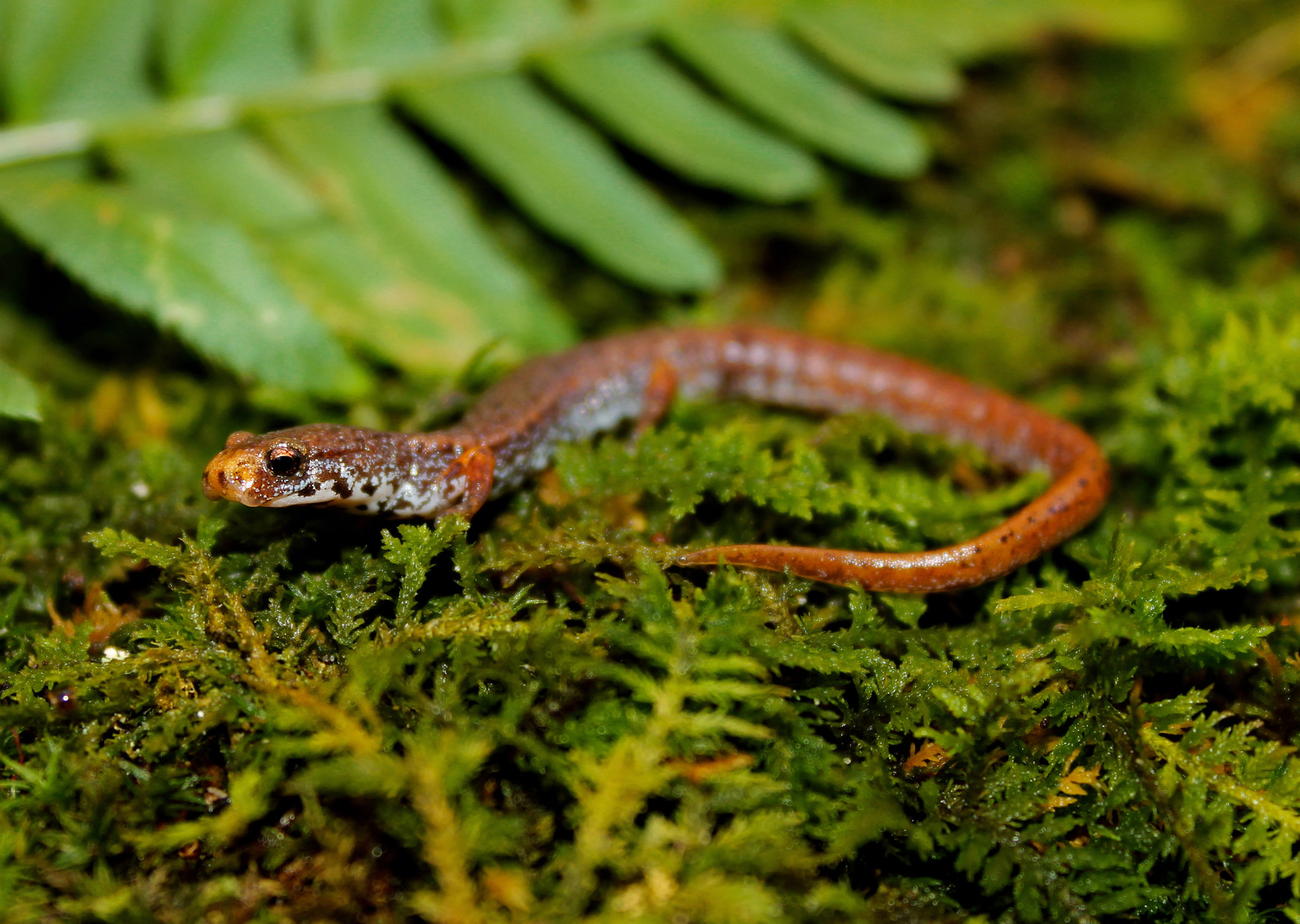
Photo Peter Paplanus from St. Louis, Missouri (opens in a new tab) / Wikimedia Commons, CC BY 2.0 (opens in a new tab)
At a glance
- Size
- Usually 5 to 9 cm long
- Habitat
- Forests around bogs, swamps and ponds with moss
- Diet
- Tiny invertebrates
- In Georgia
- Scattered statewide; uncommon
- Rabies vector
- No
Identification
- Key marks
- Small, coppery-brown; bright white belly with black spots; a narrow pinch at the base of the tail; four toes on each hind foot
- Told apart from
- Dwarf salamanders, which also have four toes but a plain belly
- Where to look
- In moss at the edges of bogs and woodland pools
Behaviour
When grabbed, it drops its tail at the pinch, and the tail keeps wriggling while the salamander escapes. It grows a new one.
Why they matter
It depends on mossy wetlands in forest, and several females often lay in the same nest, where one of them may stay on guard.
Reproduction and lifecycle
Eggs — Laid in moss just above water; several females may share a nest
Hatching — Larvae drop into the water below
Larvae — Aquatic for a few weeks
Maturity — At two to three years
Lifespan — Several years
Defence — Drops its tail
Living around people
- A dropped tail regrows; never grab a salamander by its tail.
Misconceptions
- Losing a tail kills a salamander. It grows a new one, though it costs energy.
Related species
Seasonal activity
When this species is breeding, and when there are nests on the ground. Mowing during the shaded months is how most nests are found.
| Jan | Feb | Mar | Apr | May | Jun | Jul | Aug | Sep | Oct | Nov | Dec | |
|---|---|---|---|---|---|---|---|---|---|---|---|---|
| Breeding | Jan: no | Feb: no | Mar: no | Apr: no | May: no | Jun: no | Jul: no | Aug: no | Sep: no | Oct: no | Nov: no | Dec: no |
| Active nests | Jan: no | Feb: no | Mar: no | Apr: no | May: no | Jun: no | Jul: no | Aug: no | Sep: no | Oct: no | Nov: no | Dec: no |
| Notes | Underground | Moving to breeding sites | Laying eggs in moss | Females guarding eggs | Larvae entering water | Larvae | Young leaving water | Active | Active | Active on wet nights | Underground | Underground |
Where it lives
Recorded in 32 states and provinces. Each one links to the other animals there, and to the rehabilitators licensed for them.
United States
If you found one
Answer a few questions and you will get a specific answer for what you are looking at.
I found an animal