
Species
Coastal plain dwarf salamander
Eurycea quadridigitata
A tiny, four-toed salamander of Coastal Plain ponds and wet pine flatwoods.
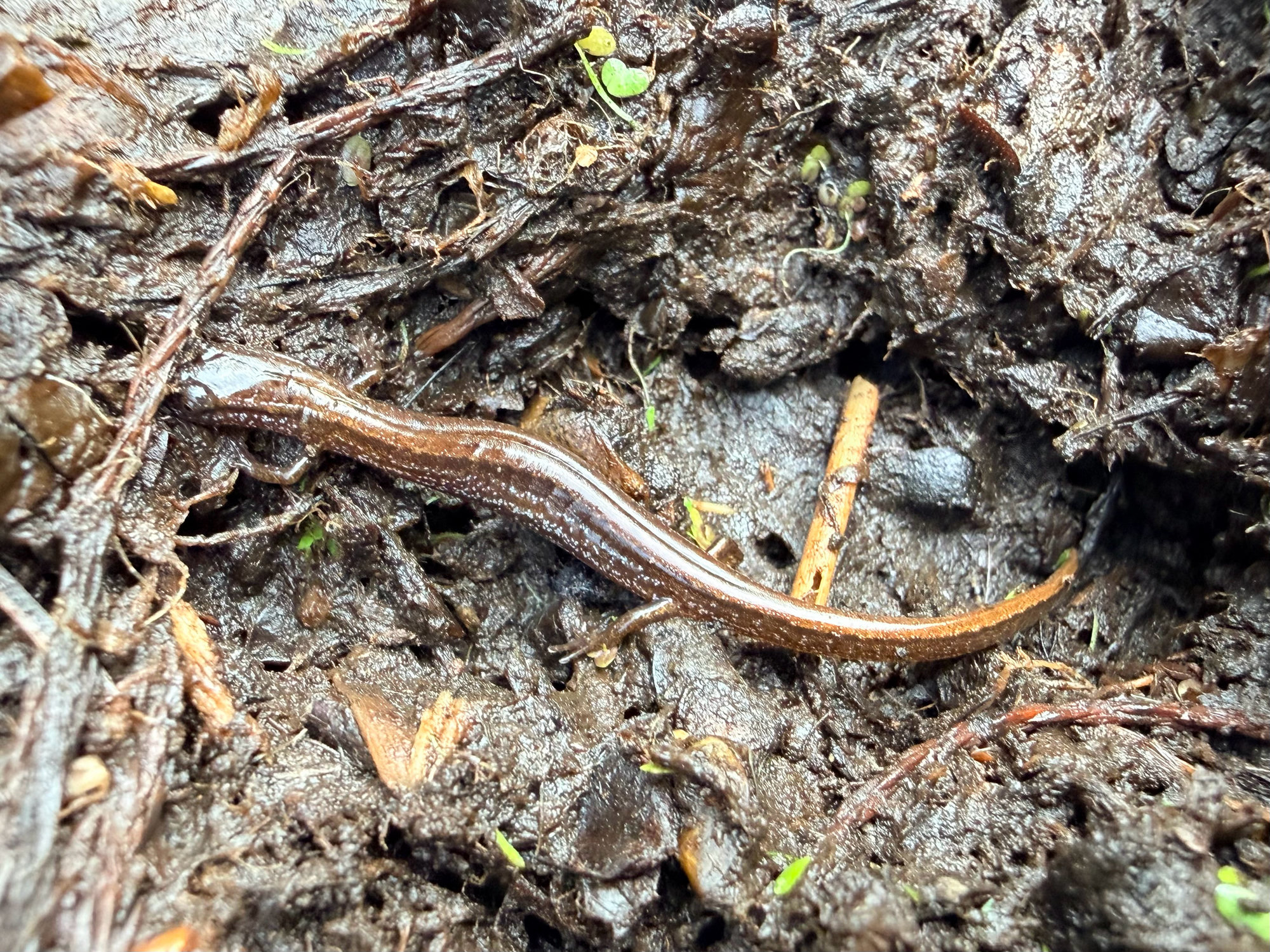
Photo Melissa Meadows (opens in a new tab) / iNaturalist, CC BY 4.0 (opens in a new tab)
At a glance
- Size
- Usually 5 to 9 cm long
- Habitat
- Edges of ponds, swamps and wet pine flatwoods
- Diet
- Tiny insects and crustaceans
- In Georgia
- The eastern Coastal Plain
- Rabies vector
- No
Identification
- Key marks
- Tiny and slim; yellowish-brown with a dark stripe along each side; four toes on each hind foot
- Told apart from
- Two-lined salamanders, which have five toes on the hind feet
- Where to look
- Among wet leaves and moss at pond edges
Behaviour
It lives among wet leaf litter and moss and breeds in winter, when Coastal Plain ponds fill.
Why they matter
It is part of the life of the Coastal Plain's small, seasonal wetlands, which are easily drained.
Reproduction and lifecycle
Eggs — Attached singly to plants and debris in water
Hatching — In several weeks
Larvae — Aquatic for a few months
Maturity — Within a year
Lifespan — A few years
Breathing — Through the skin; no lungs
Living around people
- Small, seasonal wetlands left undrained are what it needs.
Misconceptions
- Tiny salamanders are babies. This one is small as an adult.
Related species
Seasonal activity
When this species is breeding, and when there are nests on the ground. Mowing during the shaded months is how most nests are found.
| Jan | Feb | Mar | Apr | May | Jun | Jul | Aug | Sep | Oct | Nov | Dec | |
|---|---|---|---|---|---|---|---|---|---|---|---|---|
| Breeding | Jan: no | Feb: no | Mar: no | Apr: no | May: no | Jun: no | Jul: no | Aug: no | Sep: no | Oct: no | Nov: no | Dec: no |
| Active nests | Jan: no | Feb: no | Mar: no | Apr: no | May: no | Jun: no | Jul: no | Aug: no | Sep: no | Oct: no | Nov: no | Dec: no |
| Notes | Laying eggs | Laying eggs | Larvae | Larvae | Young leaving water | Active | Active | Active | Active | Active | Moving to breeding sites | Laying eggs |
Where it lives
Recorded in 4 states and provinces. Each one links to the other animals there, and to the rehabilitators licensed for them.
United States
If you found one
Answer a few questions and you will get a specific answer for what you are looking at.
I found an animal