
Species
Eastern kingsnake
Lampropeltis getula
A glossy, chain-patterned constrictor that eats other snakes, including venomous ones.
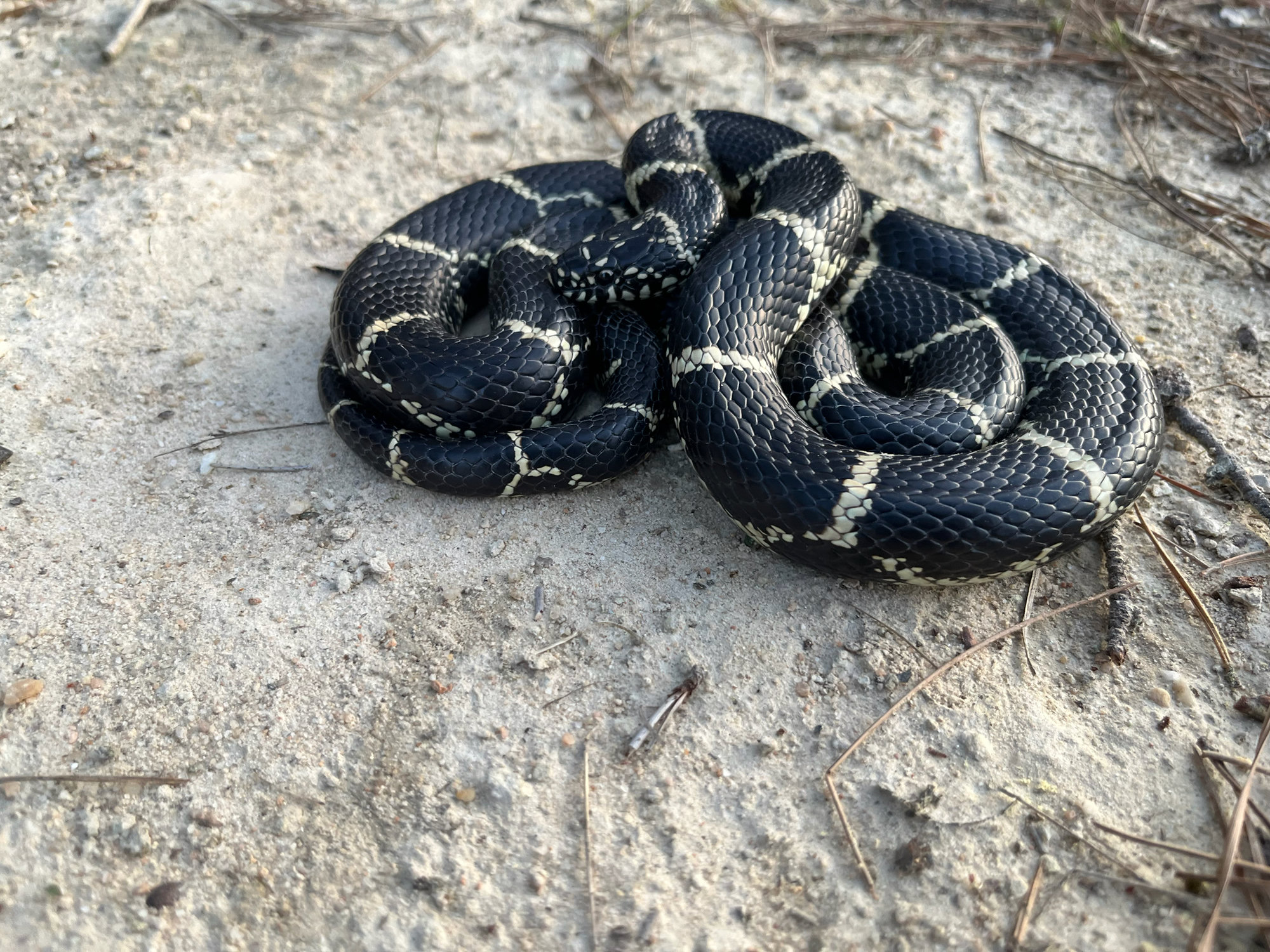
Photo Matthew Lumsden (opens in a new tab) / iNaturalist, CC BY 4.0 (opens in a new tab)
At a glance
- Size
- Usually 90 to 150 cm long
- Habitat
- Pine woods, swamps, stream edges, fields and farmland
- Diet
- Snakes, including copperheads and rattlesnakes, lizards, rodents, turtle eggs
- In Georgia
- The Piedmont and Coastal Plain; the black kingsnake replaces it in the northwest
- Venomous
- No
- Rabies vector
- No
Identification
- Key marks
- Glossy black with narrow white or yellow cross-bands joined along the sides like a chain
- Told apart from
- Black kingsnake, which is almost all black with scattered yellow spots
- Where to look
- Under logs and boards, and crossing roads after rain
Behaviour
Kingsnakes kill by constriction and are largely immune to the venom of pit vipers, so they eat copperheads, cottonmouths and rattlesnakes. They also dig up turtle nests. When handled they may vibrate the tail and release musk.
Why they matter
A kingsnake eats venomous snakes, so killing one is counterproductive. They have declined in parts of the Southeast, and fire ants and habitat loss may be part of the reason.
Reproduction and lifecycle
Eggs — Usually 6 to 20
Nest — In rotting logs or sawdust piles
Incubation — About 60 to 80 days
Hatchlings — Boldly banded
Maturity — At about three years
Lifespan — Over 15 years
Living around people
- A kingsnake near the house is eating rodents and other snakes; it is harmless.
- Leaving it alone is the best protection against venomous snakes it would eat.
Misconceptions
- All black snakes are the same. Kingsnakes, racers and ratsnakes are different, and all are harmless.
Related species
Seasonal activity
When this species is breeding, and when there are nests on the ground. Mowing during the shaded months is how most nests are found.
| Jan | Feb | Mar | Apr | May | Jun | Jul | Aug | Sep | Oct | Nov | Dec | |
|---|---|---|---|---|---|---|---|---|---|---|---|---|
| Breeding | Jan: no | Feb: no | Mar: no | Apr: no | May: no | Jun: no | Jul: no | Aug: no | Sep: no | Oct: no | Nov: no | Dec: no |
| Active nests | Jan: no | Feb: no | Mar: no | Apr: no | May: no | Jun: no | Jul: no | Aug: no | Sep: no | Oct: no | Nov: no | Dec: no |
| Notes | Sheltering | Sheltering | Emerging | Active | Mating | Laying | Active | Hatching | Young active | Active | Sheltering | Sheltering |
Where it lives
Recorded in 9 states and provinces. Each one links to the other animals there, and to the rehabilitators licensed for them.
If you found one
Answer a few questions and you will get a specific answer for what you are looking at.
I found an animal