
Species
Dunlin
Calidris alpina
A small sandpiper with a drooping bill, gathering in huge, wheeling flocks on Georgia's mudflats in winter.
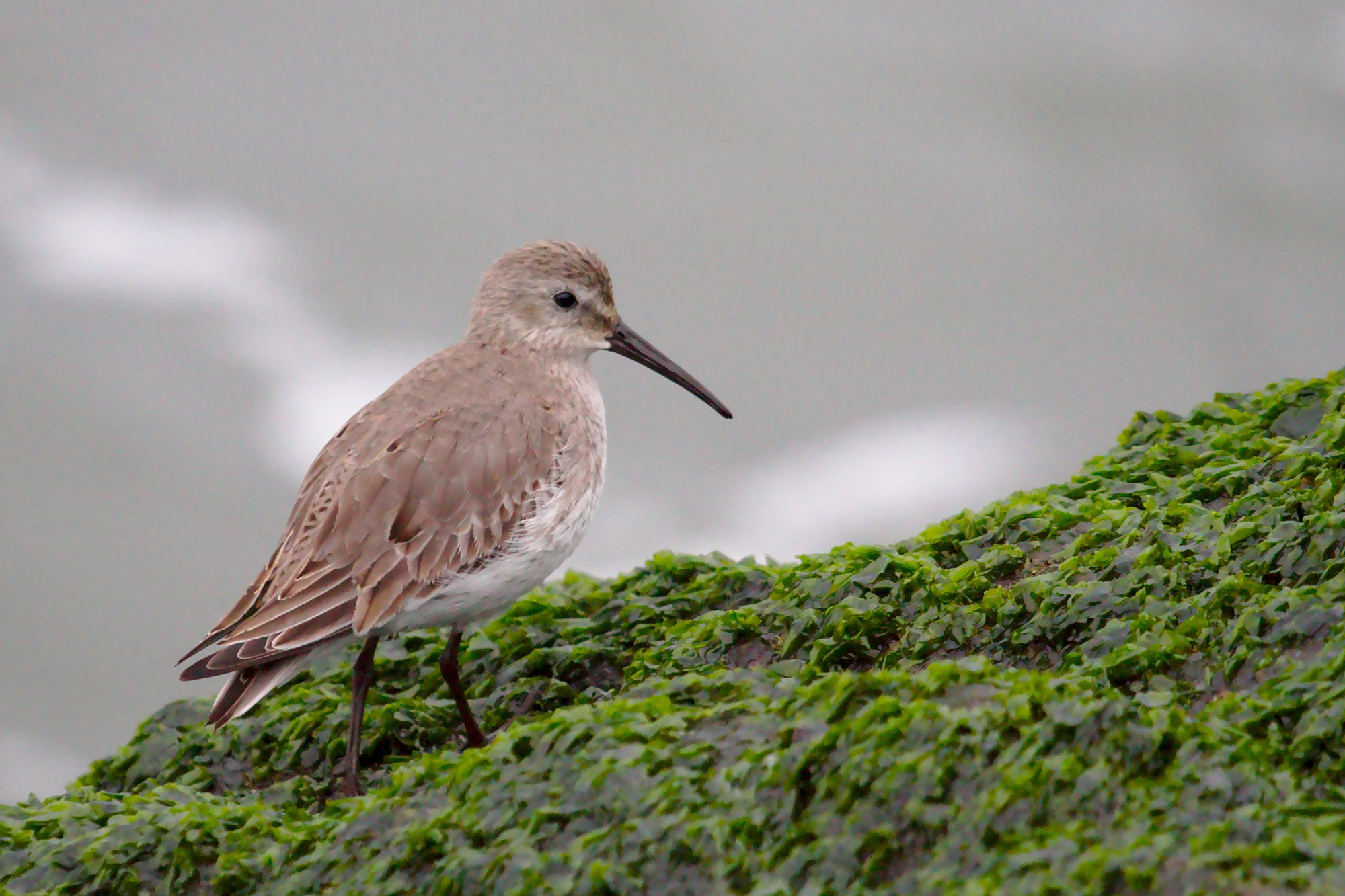
Photo Navin Sasikumar (opens in a new tab) / iNaturalist, CC BY 4.0 (opens in a new tab)
At a glance
- Size
- About 16 to 22 cm long
- Weight
- About 50 to 60 g
- Habitat
- Mudflats, beaches and salt marshes
- Diet
- Marine worms, small clams, insects and crustaceans
- In Georgia
- An abundant winter visitor on the coast
- Voice
- A rough "kree"
- Rabies vector
- No
Identification
- Key marks
- Longish bill drooping at the tip; in winter plain grey-brown above and whitish below; in spring rusty back and black belly patch
- Told apart from
- Western sandpiper, which is smaller with a shorter bill
- Told apart from
- Sanderling, which is much paler and runs along the surf
- Where to look
- Mudflats at low tide; flocks roosting at high tide
Behaviour
Dunlin probe mud rapidly with their bills. Winter flocks can number in thousands, twisting and turning together in flight to confuse falcons.
Why they matter
Dunlin are among the most numerous wintering shorebirds on Georgia's coast, and their flocks feed merlins, peregrines and other predators. Their synchronised flight is one of the finest sights on a winter mudflat.
Reproduction and lifecycle
Nest — A scrape in a grassy tussock on tundra
Eggs — Usually four
Incubation — About 21 to 22 days
Chicks — Leave the nest within a day
Flight — At about 19 to 21 days
Lifespan — Wild birds over twenty years are recorded
Living around people
- Resting flocks at high tide are easily scattered by people, dogs and boats; giving roosts space helps.
Misconceptions
- A flock wheeling in the air is migrating. Often it is evading a falcon.
Related species
Seasonal activity
When this species is breeding, and when there are nests on the ground. Mowing during the shaded months is how most nests are found.
| Jan | Feb | Mar | Apr | May | Jun | Jul | Aug | Sep | Oct | Nov | Dec | |
|---|---|---|---|---|---|---|---|---|---|---|---|---|
| Breeding | Jan: no | Feb: no | Mar: no | Apr: no | May: no | Jun: no | Jul: no | Aug: no | Sep: no | Oct: no | Nov: no | Dec: no |
| Active nests | Jan: no | Feb: no | Mar: no | Apr: no | May: no | Jun: no | Jul: no | Aug: no | Sep: no | Oct: no | Nov: no | Dec: no |
| Notes | Wintering in large flocks | Wintering | Wintering | Moulting into breeding plumage | Migrating north | Nesting in the Arctic | Nesting | Moulting in the north | Migrating south | Arriving | Wintering | Wintering |
Where it lives
Recorded in 61 states and provinces. Each one links to the other animals there, and to the rehabilitators licensed for them.
United States
- Alabamain winter
- Alaska
- Arkansasin winter
- Californiain winter
- Connecticutin winter
- Delawarein winter
- Floridain winter
- Georgiain winter
- Idahoin winter
- Illinoispassing through
- Indianapassing through
- Iowapassing through
- Kansaspassing through
- Kentuckypassing through
- Louisianain winter
- Mainein winter
- Marylandin winter
- Massachusettsin winter
- Michiganpassing through
- Minnesotapassing through
- Mississippiin winter
- Missouripassing through
- Nebraskapassing through
- Nevadain winter
- New Hampshirein winter
- New Jerseyin winter
- New Yorkin winter
- North Carolinain winter
- North Dakotapassing through
- Ohiopassing through
- Oklahomain winter
- Oregonin winter
- Pennsylvaniapassing through
- Rhode Islandin winter
- South Carolinain winter
- South Dakotapassing through
- Tennesseein winter
- Texasin winter
- Vermontpassing through
- Virginiain winter
- Washingtonin winter
- Wisconsinpassing through
Canada
If you found one
Answer a few questions and you will get a specific answer for what you are looking at.
I found an animal