
Species
Common raven
Corvus corax
The largest songbird in the world, a croaking, acrobatic black bird of the north Georgia mountains.
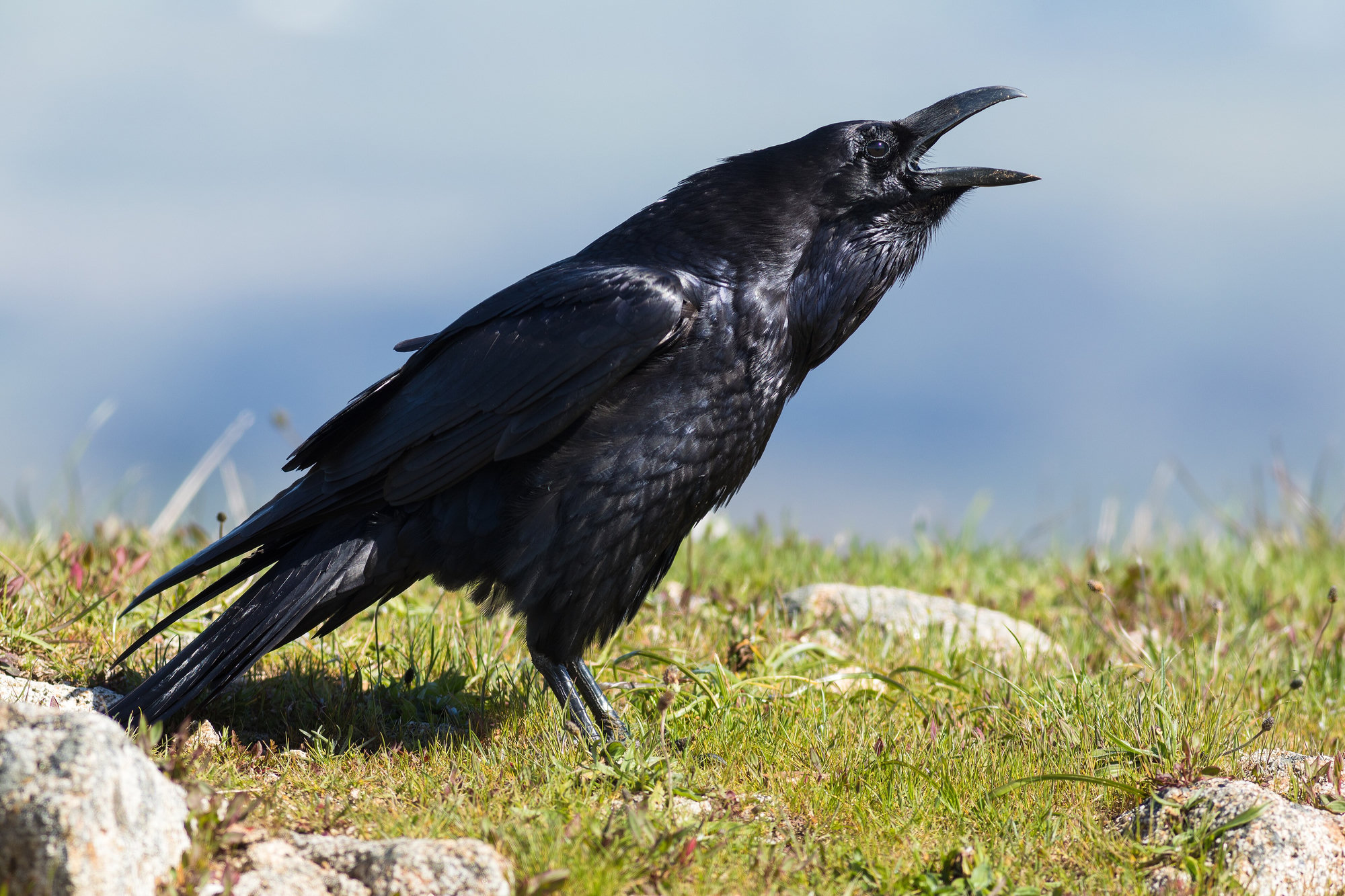
Photo Frank Schulenburg (opens in a new tab) / Wikimedia Commons, CC BY-SA 4.0 (opens in a new tab)
At a glance
- Size
- About 56 to 69 cm long; wingspan about 1.2 m
- Weight
- About 0.7 to 1.6 kg
- Habitat
- Mountain forests, cliffs and ridges
- Diet
- Carrion, small animals, eggs, insects, fruit and scraps
- In Georgia
- An uncommon resident of the Blue Ridge mountains
- Voice
- A deep, croaking "kraaak" and many other calls
- Rabies vector
- No
Identification
- Key marks
- Very large, all black; heavy bill; shaggy throat feathers; long, wedge-shaped tail in flight; often soars
- Told apart from
- American crow, which is smaller with a square tail and "caw" call
- Where to look
- Soaring over mountain ridges and cliffs
Behaviour
Ravens are acrobatic fliers that roll and tumble in the air, apparently for play. They cache food, solve complex problems and communicate with many calls.
Why they matter
Ravens are among the most intelligent animals known, able to plan ahead and understand what other ravens can see. They were nearly eliminated from much of the East and have been returning to the Appalachians.
Reproduction and lifecycle
Nest — A large bowl of sticks on a cliff ledge or tall tree
Eggs — Usually four to six
Incubation — About 20 to 25 days
Chicks — Fed by both parents
Flight — At about five to six weeks
Lifespan — Wild birds over twenty years are recorded
Living around people
- Ravens are wary of people and live mostly in remote mountains in Georgia.
Misconceptions
- Ravens are just big crows. They are a separate species with different voices, shapes and habits.
Related species
Seasonal activity
When this species is breeding, and when there are nests on the ground. Mowing during the shaded months is how most nests are found.
| Jan | Feb | Mar | Apr | May | Jun | Jul | Aug | Sep | Oct | Nov | Dec | |
|---|---|---|---|---|---|---|---|---|---|---|---|---|
| Breeding | Jan: no | Feb: no | Mar: no | Apr: no | May: no | Jun: no | Jul: no | Aug: no | Sep: no | Oct: no | Nov: no | Dec: no |
| Active nests | Jan: no | Feb: no | Mar: no | Apr: no | May: no | Jun: no | Jul: no | Aug: no | Sep: no | Oct: no | Nov: no | Dec: no |
| Notes | Pairs courting | Nest building | Incubating | Chicks | Young fledging | Families | Families | Present | Present | Present | Present | Pairs |
Where it lives
Recorded in 72 states and provinces. Each one links to the other animals there, and to the rehabilitators licensed for them.
United States
- Alaska
- Arizona
- California
- Colorado
- Connecticut
- District of Columbiain winter
- Georgia
- Idaho
- Maine
- Maryland
- Massachusetts
- Michigan
- Minnesota
- Montana
- Nevada
- New Hampshire
- New Jersey
- New Mexico
- New York
- North Carolina
- North Dakota
- Oklahoma
- Oregon
- Pennsylvania
- Rhode Island
- South Carolina
- Tennessee
- Texas
- Utah
- Vermont
- Virginia
- Washington
- West Virginia
- Wisconsin
- Wyoming
Canada
If you found one
Answer a few questions and you will get a specific answer for what you are looking at.
I found an animal