
Species
Coal skink
Plestiodon anthracinus
A rarely seen, dark-sided skink of damp woods and rocky hillsides.
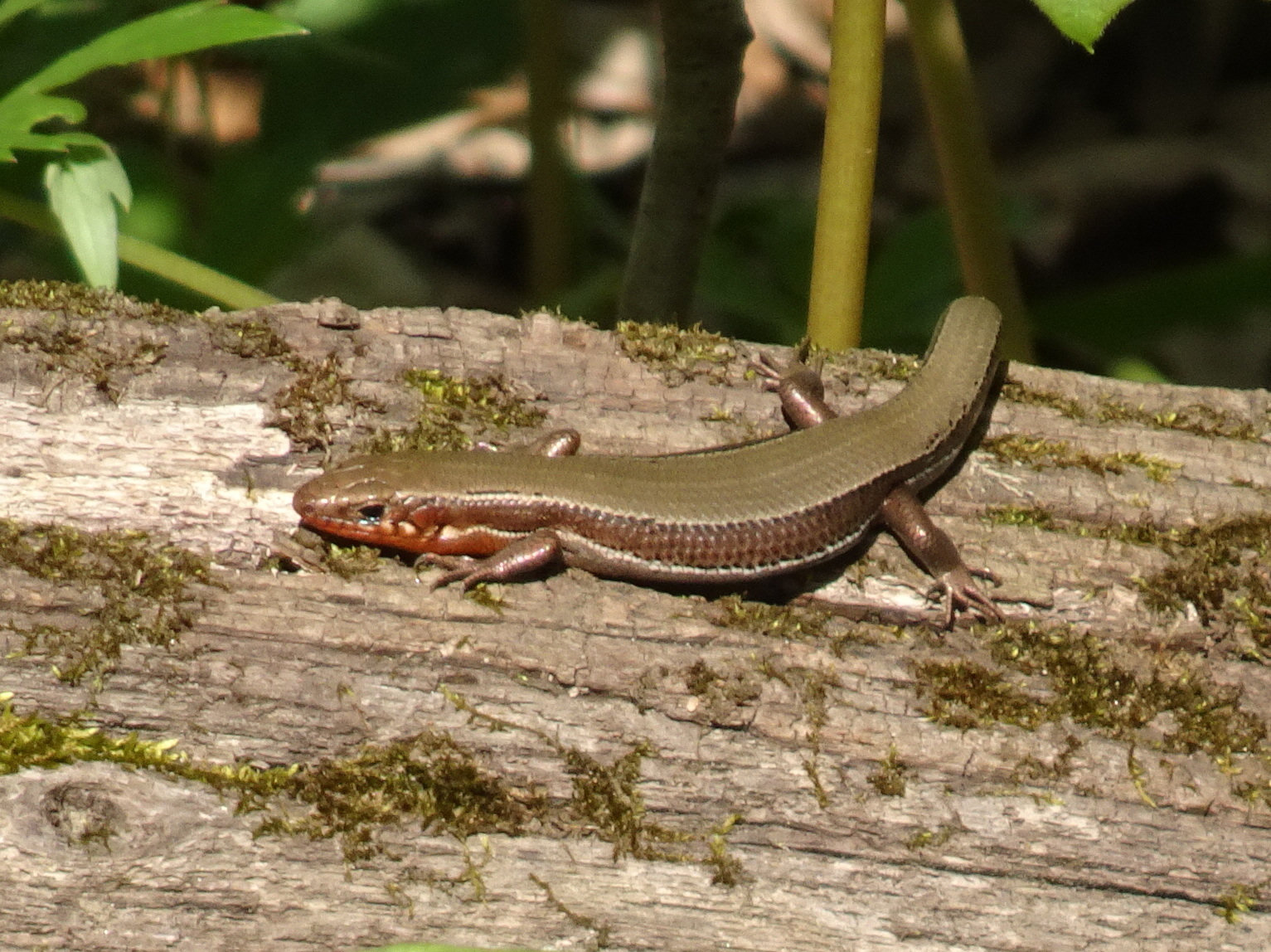
Photo Thomas Koffel (opens in a new tab) / iNaturalist, CC BY 4.0 (opens in a new tab)
At a glance
- Size
- About 13 to 18 cm long including the tail
- Habitat
- Damp woods, rocky hillsides and wet pine flatwoods
- Diet
- Insects, spiders and other small invertebrates
- In Georgia
- Scattered in the north and in parts of the south; seldom seen
- Rabies vector
- No
Identification
- Key marks
- Smooth brown skink with a broad dark band along each side, bordered by light stripes; no stripe down the middle of the back
- Told apart from
- Five-lined skinks, which have a light stripe down the middle of the back
- Where to look
- Under rocks and logs in damp places
Behaviour
Coal skinks are secretive and spend much of their time under cover. They may take to water to escape, diving to hide under debris.
Why they matter
They are one of the less known lizards of the Southeast, and records of them add to what is understood about their range.
Reproduction and lifecycle
Eggs — Usually 4 to 9
Nest — Under cover, guarded by the female
Incubation — About 4 to 5 weeks
Hatchlings — Black, with blue tails
Maturity — In about two years
Lifespan — Several years
Living around people
- It is harmless and rarely met.
Misconceptions
- Every striped skink is the same animal. Georgia has several, told apart by their stripes and scales.
Related species
Seasonal activity
When this species is breeding, and when there are nests on the ground. Mowing during the shaded months is how most nests are found.
| Jan | Feb | Mar | Apr | May | Jun | Jul | Aug | Sep | Oct | Nov | Dec | |
|---|---|---|---|---|---|---|---|---|---|---|---|---|
| Breeding | Jan: no | Feb: no | Mar: no | Apr: no | May: no | Jun: no | Jul: no | Aug: no | Sep: no | Oct: no | Nov: no | Dec: no |
| Active nests | Jan: no | Feb: no | Mar: no | Apr: no | May: no | Jun: no | Jul: no | Aug: no | Sep: no | Oct: no | Nov: no | Dec: no |
| Notes | Sheltering | Sheltering | Emerging | Active | Breeding | Laying | Guarding eggs | Hatching | Active | Active | Sheltering | Sheltering |
Where it lives
Recorded in 12 states and provinces. Each one links to the other animals there, and to the rehabilitators licensed for them.
If you found one
Answer a few questions and you will get a specific answer for what you are looking at.
I found an animal