
Species
Chipping sparrow
Spizella passerina
A slim, rufous-capped sparrow of lawns and yards, with a dry, trilling song.
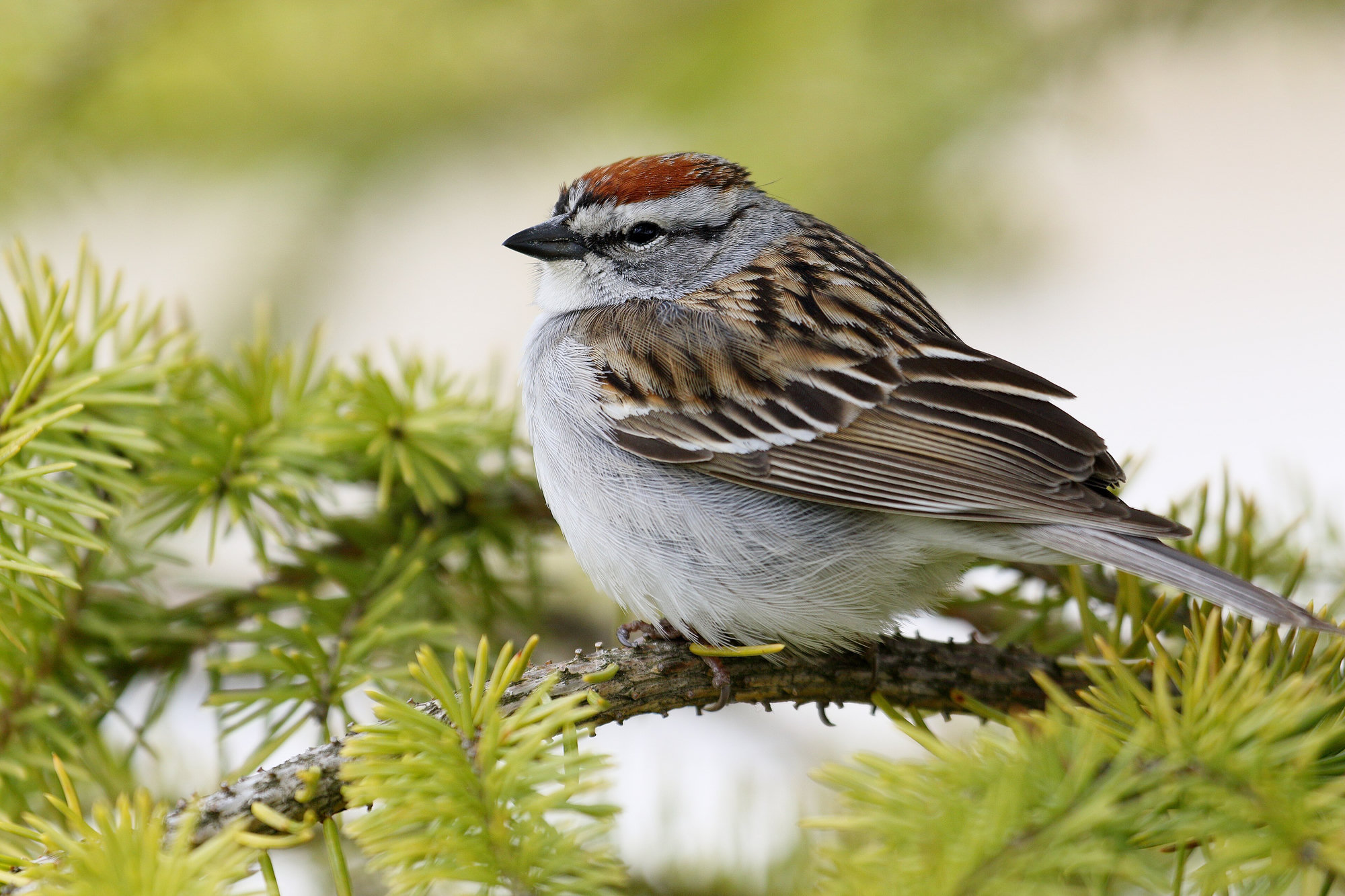
Photo Cephas (opens in a new tab) / Wikimedia Commons, CC BY-SA 4.0 (opens in a new tab)
At a glance
- Size
- About 12 to 15 cm long
- Weight
- About 11 to 16 g
- Habitat
- Open woods, yards, parks and lawns with trees
- Diet
- Seeds and insects
- In Georgia
- Common all year; many more in winter
- Voice
- A dry, even trill
- Rabies vector
- No
Identification
- Key marks
- Rusty cap; black line through the eye; grey breast; streaked back
- Winter
- Browner cap and buff face
- Told apart from
- Field sparrow, which has a pink bill and white eye-ring
- Where to look
- Lawns and open woods, often in flocks in winter
Behaviour
Chipping sparrows feed on the ground in flocks in winter. They used to line nests with horsehair, earning them the name "hair bird".
Why they matter
Chipping sparrows are among the most common sparrows around homes. They eat many weed seeds and insects.
Reproduction and lifecycle
Nest — A thin cup in a shrub or tree, lined with hair
Eggs — Usually three or four
Incubation — About 10 to 15 days
Chicks — Fed by both parents
Flight — At about 9 to 12 days
Lifespan — A few years
Living around people
- Pesticide-free lawns and gardens with seed-bearing plants feed them.
Misconceptions
- All small brown birds are house sparrows. Chipping sparrows are native, with a rusty cap.
Related species
Seasonal activity
When this species is breeding, and when there are nests on the ground. Mowing during the shaded months is how most nests are found.
| Jan | Feb | Mar | Apr | May | Jun | Jul | Aug | Sep | Oct | Nov | Dec | |
|---|---|---|---|---|---|---|---|---|---|---|---|---|
| Breeding | Jan: no | Feb: no | Mar: no | Apr: no | May: no | Jun: no | Jul: no | Aug: no | Sep: no | Oct: no | Nov: no | Dec: no |
| Active nests | Jan: no | Feb: no | Mar: no | Apr: no | May: no | Jun: no | Jul: no | Aug: no | Sep: no | Oct: no | Nov: no | Dec: no |
| Notes | Winter flocks | Flocks | Singing | Nesting | Nesting | Second broods | Young fledging | Present | Present | Winter flocks arriving | Flocks | Flocks |
Where it lives
Recorded in 88 states and provinces. Each one links to the other animals there, and to the rehabilitators licensed for them.
United States
- Alabama
- Alaskabreeding
- Arizona
- Arkansas
- California
- Coloradobreeding
- Connecticutbreeding
- Delawarebreeding
- District of Columbiabreeding
- Floridain winter
- Georgia
- Idahobreeding
- Illinoisbreeding
- Indianabreeding
- Iowabreeding
- Kansasbreeding
- Kentuckybreeding
- Louisianain winter
- Mainebreeding
- Marylandbreeding
- Massachusettsbreeding
- Michiganbreeding
- Minnesotabreeding
- Mississippi
- Missouribreeding
- Montanabreeding
- Nebraskabreeding
- Nevadabreeding
- New Hampshirebreeding
- New Jerseybreeding
- New Mexico
- New Yorkbreeding
- North Carolina
- North Dakotabreeding
- Ohiobreeding
- Oklahoma
- Oregonbreeding
- Pennsylvaniabreeding
- Rhode Islandbreeding
- South Carolina
- South Dakotabreeding
- Tennessee
- Texasin winter
- Utahbreeding
- Vermontbreeding
- Virginiabreeding
- Washingtonbreeding
- West Virginiabreeding
- Wisconsinbreeding
- Wyomingbreeding
Canada
Mexico
- Aguascalientesin winter
- Baja Californiain winter
- Baja California Surin winter
- Chihuahua
- Coahuilain winter
- Colimain winter
- Durangoin winter
- Guanajuatoin winter
- Guerreroin winter
- Hidalgo
- Jalisco
- Mexico City
- Michoacan
- Morelos
- Nayarit
- Nuevo Leonin winter
- Oaxacain winter
- Puebla
- Queretaro
- San Luis Potosiin winter
- Sinaloain winter
- Sonorain winter
- State of Mexico
- Tamaulipasin winter
- Tlaxcala
- Veracruz
- Zacatecasin winter
If you found one
Answer a few questions and you will get a specific answer for what you are looking at.
I found an animal