
Species
Cattle egret
Ardea ibis
A small, stocky white heron that follows cattle and mowers for the insects they disturb.
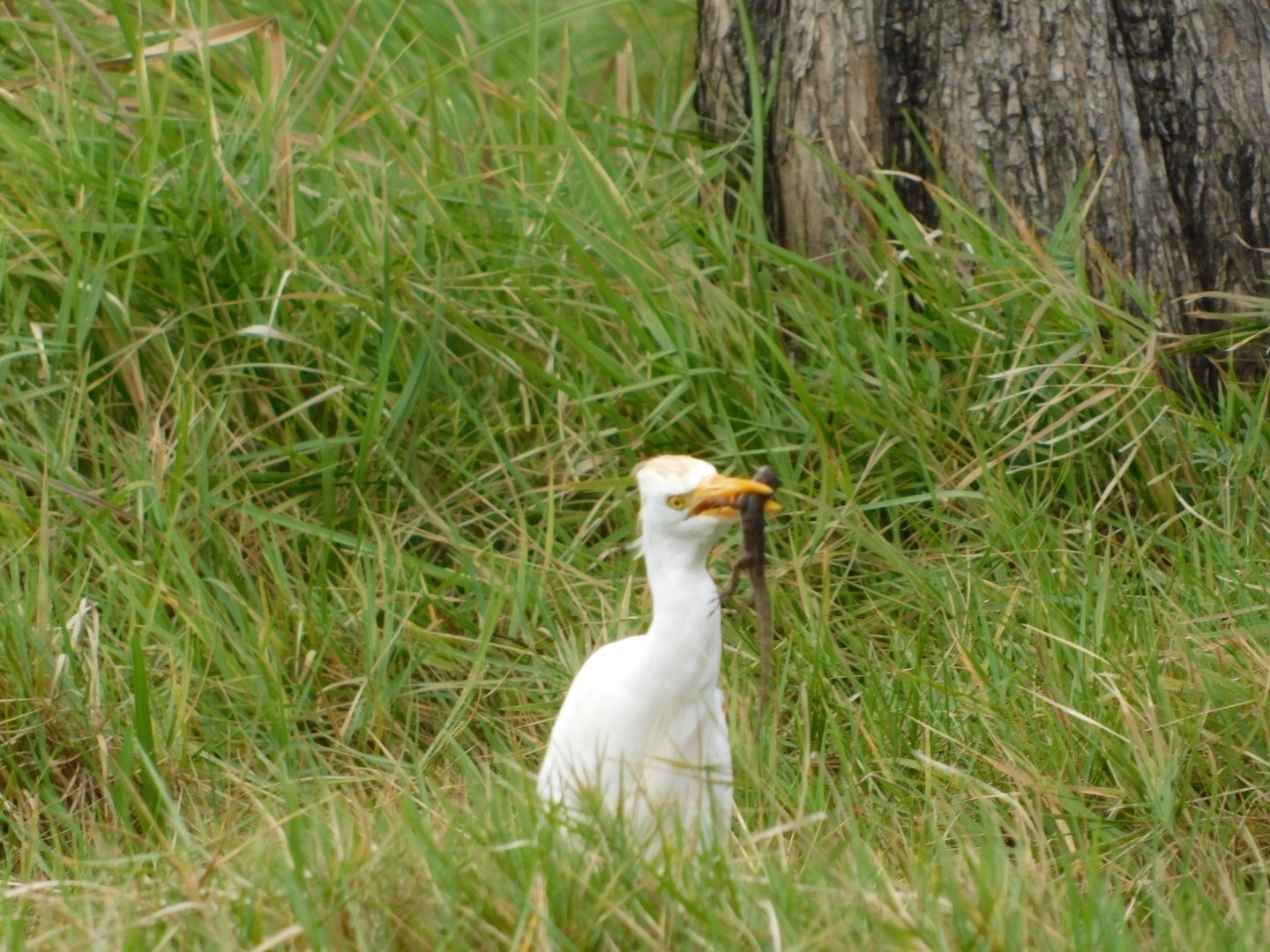
Photo Unknown photographer (opens in a new tab) / iNaturalist, CC0 1.0 (opens in a new tab)
At a glance
- Size
- About 46 to 56 cm long
- Weight
- About 270 to 500 g
- Habitat
- Pastures, fields, roadsides and lawns
- Diet
- Grasshoppers, crickets, flies, frogs and lizards
- In Georgia
- Common in summer statewide; a few in winter on the coast
- Voice
- Croaks at colonies
- Rabies vector
- No
Identification
- Key marks
- Small, stocky, white heron; short yellow bill; short neck; in breeding season buff-orange plumes on the head, back and breast
- Told apart from
- Snowy egret, which has a black bill and is slimmer
- Told apart from
- Great egret, which is much larger
- Where to look
- Pastures near cattle, and behind tractors and mowers
Behaviour
Cattle egrets walk beside grazing cattle and horses, catching insects flushed by their feet. They also follow tractors and mowers.
Why they matter
Cattle egrets crossed the Atlantic on their own from Africa to South America in the late 1800s and reached Florida by the 1940s. Their spread across the Americas is one of the most remarkable natural colonisations ever recorded. They eat many grasshoppers and flies in pastures.
Reproduction and lifecycle
Nest — A platform of sticks in trees or shrubs, in colonies
Eggs — Usually three or four
Incubation — About 22 to 26 days
Chicks — Fed by both parents
Flight — At about six weeks
Lifespan — Wild birds over fifteen years are recorded
Living around people
- Colonies near homes can be noisy for a few months; they are protected and leave after nesting.
Misconceptions
- Cattle egrets were brought here by people. They arrived on their own, crossing the Atlantic from Africa.
Related species
Seasonal activity
When this species is breeding, and when there are nests on the ground. Mowing during the shaded months is how most nests are found.
| Jan | Feb | Mar | Apr | May | Jun | Jul | Aug | Sep | Oct | Nov | Dec | |
|---|---|---|---|---|---|---|---|---|---|---|---|---|
| Breeding | Jan: no | Feb: no | Mar: no | Apr: no | May: no | Jun: no | Jul: no | Aug: no | Sep: no | Oct: no | Nov: no | Dec: no |
| Active nests | Jan: no | Feb: no | Mar: no | Apr: no | May: no | Jun: no | Jul: no | Aug: no | Sep: no | Oct: no | Nov: no | Dec: no |
| Notes | A few on the coast | Few present | Arriving | Colonies forming | Nesting | Chicks | Young fledging | Flocks in pastures | Flocks | Leaving | Few present | Few present |
Where it lives
Recorded in 58 states and provinces. Each one links to the other animals there, and to the rehabilitators licensed for them.
United States
- Alabamabreeding
- Arizona
- Arkansasbreeding
- California
- Delawarebreeding
- Florida
- Georgiabreeding
- Hawaiiintroduced
- Illinoisbreeding
- Kansasbreeding
- Kentuckybreeding
- Louisiana
- Marylandbreeding
- Mississippibreeding
- Missouribreeding
- Nebraskabreeding
- New Mexicobreeding
- North Carolina
- North Dakotabreeding
- Oklahomabreeding
- South Carolinabreeding
- South Dakotabreeding
- Tennesseebreeding
- Texasbreeding
- Utahbreeding
- Virginiabreeding
Mexico
- Aguascalientes
- Baja California
- Baja California Sur
- Campeche
- Chiapas
- Chihuahua
- Coahuilain winter
- Colima
- Durango
- Guanajuato
- Guerrero
- Hidalgoin winter
- Jalisco
- Mexico Cityin winter
- Michoacan
- Morelosin winter
- Nayarit
- Nuevo Leon
- Oaxacain winter
- Pueblain winter
- Queretaro
- Quintana Roo
- San Luis Potosiin winter
- Sinaloa
- Sonora
- State of Mexico
- Tabasco
- Tamaulipas
- Tlaxcalain winter
- Veracruz
- Yucatan
- Zacatecasin winter
If you found one
Answer a few questions and you will get a specific answer for what you are looking at.
I found an animal