
Species
Carolina chickadee
Poecile carolinensis
A tiny, black-capped acrobat whose alarm calls tell every bird in the yard how dangerous a predator is.
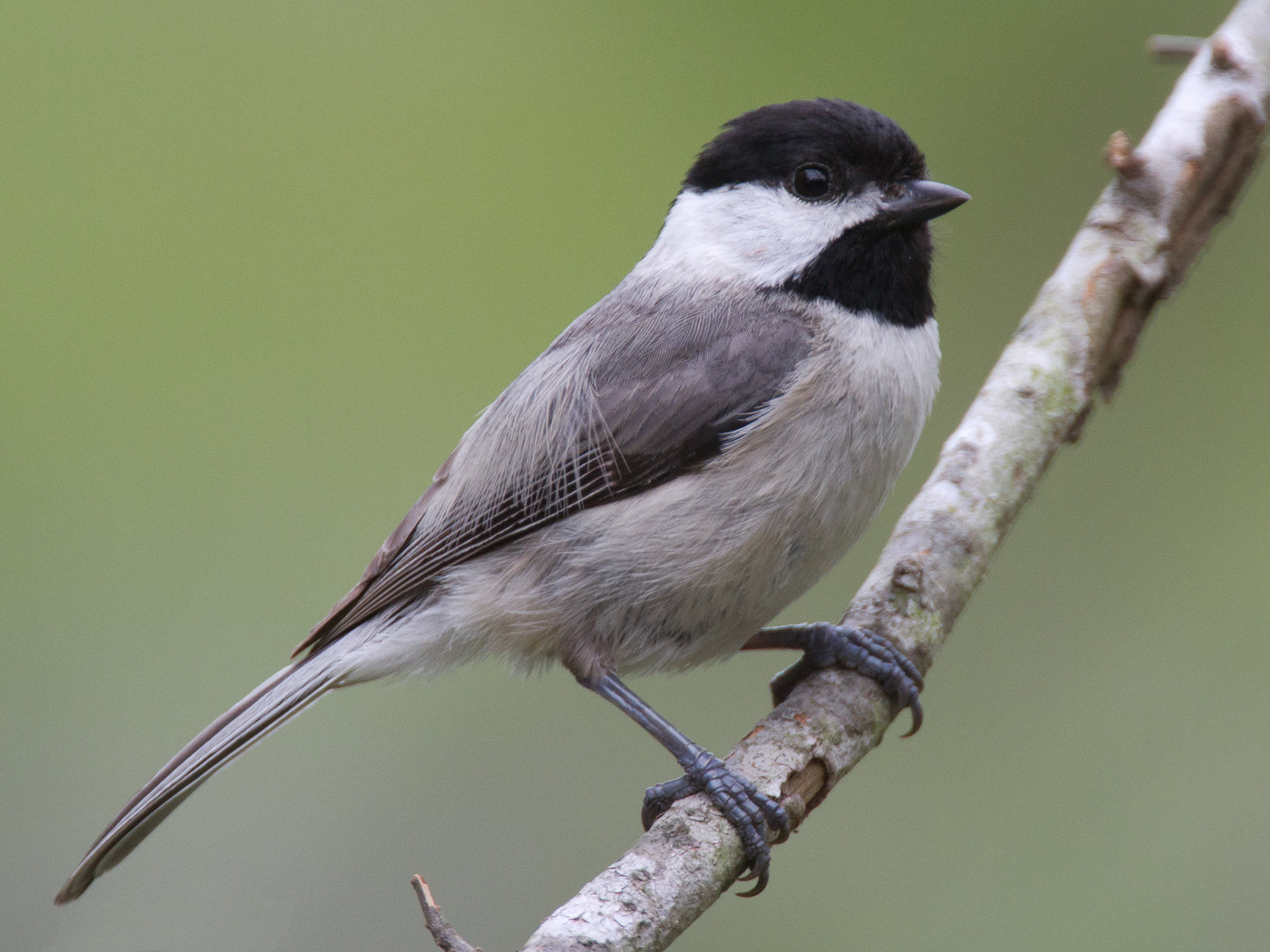
Photo Dan Pancamo (opens in a new tab) / Wikimedia Commons, CC BY-SA 2.0 (opens in a new tab)
At a glance
- Size
- About 10 to 12 cm long
- Weight
- About 8 to 12 g
- Habitat
- Woods, parks, suburbs and yards with trees
- Diet
- Insects, spiders, caterpillars, seeds and berries
- In Georgia
- Common resident statewide
- Voice
- "Chick-a-dee-dee-dee" and a four-note whistled "fee-bee-fee-bay"
- Rabies vector
- No
Identification
- Key marks
- Tiny; black cap and bib; white cheeks; grey back; buff sides
- Told apart from
- Black-capped chickadee, which does not live in Georgia except rarely in the highest mountains
- Told apart from
- Tufted titmouse, which has a crest and no black bib
- Where to look
- Feeders and woodland edges, often in mixed flocks
Behaviour
Carolina chickadees hang upside down to pick insects from twigs and cache seeds for later. Their "chick-a-dee" call carries information: more "dee" notes mean a more dangerous predator, and other birds respond to it.
Why they matter
Chickadees are the core of mixed winter flocks, which other small birds follow for safety. A pair raising a brood may collect thousands of caterpillars, making them important predators of leaf-eating insects.
Reproduction and lifecycle
Nest — A cavity in soft, rotten wood or a nest box, lined with moss and fur
Eggs — Usually five or six
Incubation — About 12 to 15 days
Chicks — Fed by both parents
Flight — At about 16 to 19 days
Lifespan — Usually a few years
Living around people
- Nest boxes with a 3 cm entrance hole are used readily.
- Native trees such as oaks support the caterpillars chickadees feed their young.
- Keeping cats indoors saves many small birds.
Misconceptions
- Chickadees are too small to matter. A single brood may be raised on thousands of caterpillars.
Related species
Seasonal activity
When this species is breeding, and when there are nests on the ground. Mowing during the shaded months is how most nests are found.
| Jan | Feb | Mar | Apr | May | Jun | Jul | Aug | Sep | Oct | Nov | Dec | |
|---|---|---|---|---|---|---|---|---|---|---|---|---|
| Breeding | Jan: no | Feb: no | Mar: no | Apr: no | May: no | Jun: no | Jul: no | Aug: no | Sep: no | Oct: no | Nov: no | Dec: no |
| Active nests | Jan: no | Feb: no | Mar: no | Apr: no | May: no | Jun: no | Jul: no | Aug: no | Sep: no | Oct: no | Nov: no | Dec: no |
| Notes | Mixed flocks | Pairs forming | Excavating nest cavities | Nesting | Chicks | Young fledging | Families | Families | Mixed flocks forming | Caching seeds | Mixed flocks | Mixed flocks |
Where it lives
Recorded in 24 states and provinces. Each one links to the other animals there, and to the rehabilitators licensed for them.
If you found one
Answer a few questions and you will get a specific answer for what you are looking at.
I found an animal