
Species
Brewer's blackbird
Euphagus cyanocephalus
A glossy western blackbird with a yellow eye, a scarce winter visitor to Georgia's fields.
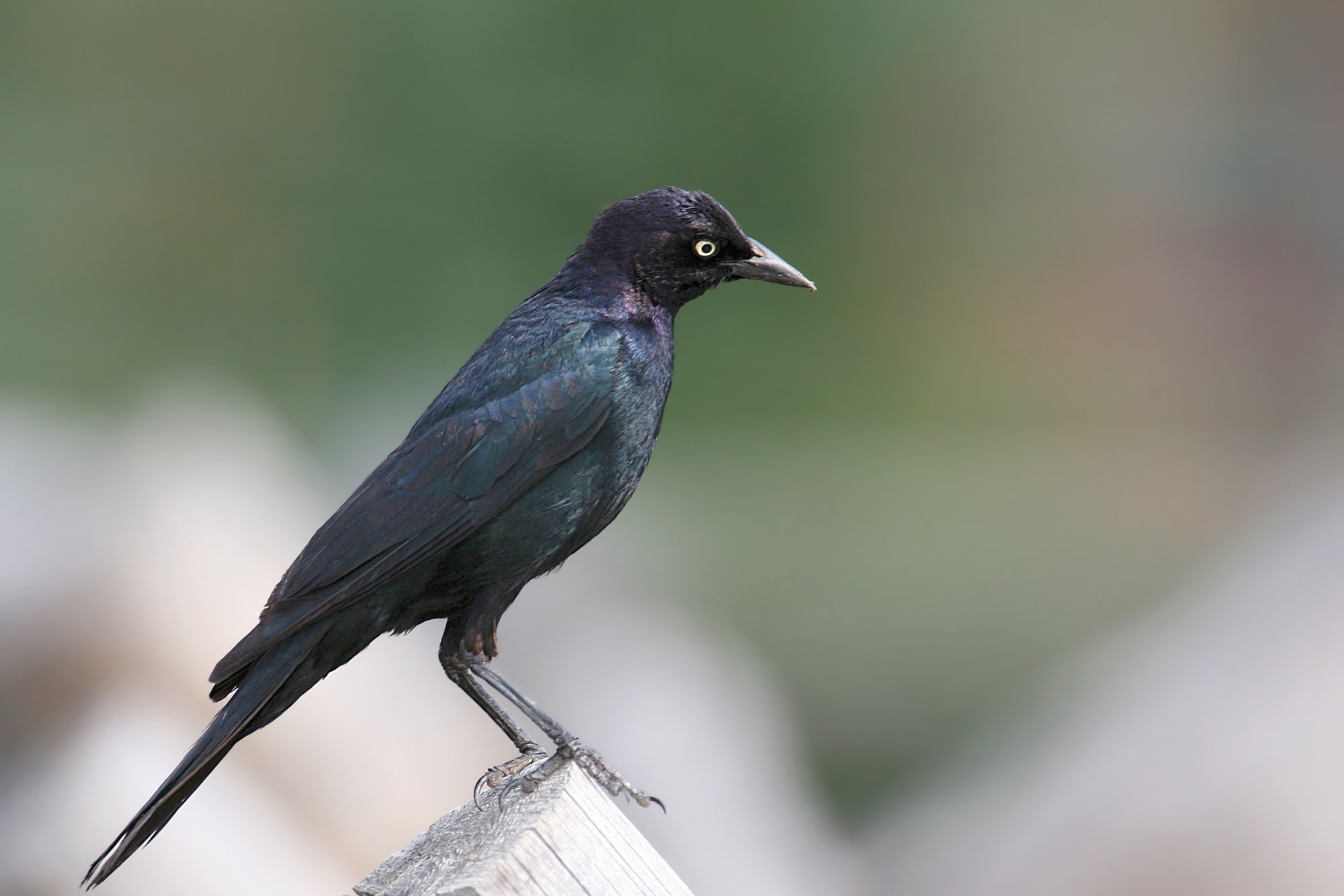
Photo Wolfgang Wander (opens in a new tab) / Wikimedia Commons, CC BY-SA 3.0 (opens in a new tab)
At a glance
- Size
- About 20 to 25 cm long
- Weight
- About 50 to 86 g
- Habitat
- Fields, pastures and farmyards in winter
- Diet
- Seeds, grain and insects
- In Georgia
- An uncommon winter visitor
- Voice
- A harsh "check"
- Rabies vector
- No
Identification
- Key marks
- Male glossy black with a purple-green sheen and yellow eye; female brown with a dark eye
- Told apart from
- Rusty blackbird, which has rusty feather edges in winter
- Told apart from
- Common grackle, which is larger with a long, keel-shaped tail
- Where to look
- Farmyards and feedlots with other blackbirds
Behaviour
Brewer's blackbirds walk on the ground in fields and farmyards, often with other blackbirds.
Why they matter
Brewer's blackbirds are widespread in the West and reach Georgia in small numbers in winter. They eat many insects and weed seeds.
Reproduction and lifecycle
Nest — A cup in a shrub or tree
Eggs — Usually four to six
Incubation — About 12 to 14 days
Chicks — Fed by both parents
Lifespan — Several years
Living around people
- Farmyards and feedlots attract wintering flocks.
Misconceptions
- All blackbirds are the same. Several species visit Georgia's fields.
Related species
Seasonal activity
When this species is breeding, and when there are nests on the ground. Mowing during the shaded months is how most nests are found.
| Jan | Feb | Mar | Apr | May | Jun | Jul | Aug | Sep | Oct | Nov | Dec | |
|---|---|---|---|---|---|---|---|---|---|---|---|---|
| Breeding | Jan: no | Feb: no | Mar: no | Apr: no | May: no | Jun: no | Jul: no | Aug: no | Sep: no | Oct: no | Nov: no | Dec: no |
| Active nests | Jan: no | Feb: no | Mar: no | Apr: no | May: no | Jun: no | Jul: no | Aug: no | Sep: no | Oct: no | Nov: no | Dec: no |
| Notes | Wintering | Wintering | Leaving | Nesting farther west | Nesting | Nesting | Young fledging | Flocks | Migrating | Migrating | Arriving | Wintering |
Where it lives
Recorded in 48 states and provinces. Each one links to the other animals there, and to the rehabilitators licensed for them.
United States
- Alabamain winter
- Arizona
- Arkansasin winter
- California
- Coloradobreeding
- Georgiain winter
- Idahobreeding
- Illinoisbreeding
- Indiana
- Kansasin winter
- Louisianain winter
- Michiganbreeding
- Minnesotabreeding
- Mississippiin winter
- Missouriin winter
- Montanabreeding
- Nebraska
- Nevada
- New Mexico
- North Dakotabreeding
- Oklahomain winter
- Oregon
- South Dakotabreeding
- Texasin winter
- Utah
- Washington
- Wisconsinbreeding
- Wyomingbreeding
Canada
If you found one
Answer a few questions and you will get a specific answer for what you are looking at.
I found an animal