
Species
Brahminy blindsnake
Indotyphlops braminus
A tiny, worm-like snake from Asia, spread around the world in potted plants.
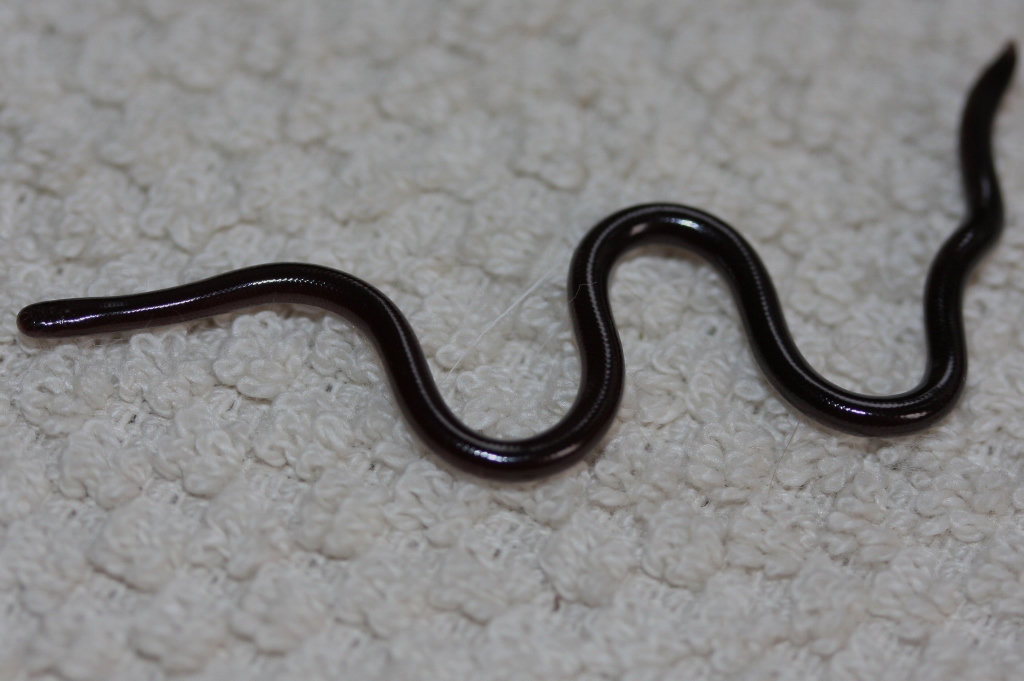
Photo Thomas Brown (opens in a new tab) / Wikimedia Commons, CC BY 2.0 (opens in a new tab)
At a glance
- Size
- Usually 10 to 17 cm long
- Habitat
- Loose soil in gardens, flower beds and potted plants
- Diet
- Ant and termite eggs and larvae
- In Georgia
- Scattered in gardens, mainly in the south; introduced
- Venomous
- No
- Rabies vector
- No
Identification
- Key marks
- Tiny, shiny, dark brown to black, like an earthworm; blunt head with tiny eyes; tiny spine on the tail
- Told apart from
- Earthworms, which are segmented and have no scales
- Where to look
- In potting soil and under stones in gardens
Behaviour
Every Brahminy blindsnake is female: they reproduce without males, so a single snake in a flowerpot can start a population. They burrow and feed on the young of ants and termites.
Why they matter
It has spread worldwide with the plant trade and is now one of the most widespread snakes on Earth. It is harmless and seems to have little effect where it arrives.
Reproduction and lifecycle
Eggs — Usually 1 to 8, from females alone
Nest — In soil
Incubation — About 6 to 8 weeks
Hatchlings — Tiny, worm-like
Maturity — Within a couple of years
Lifespan — A few years
Living around people
- It is harmless and cannot bite people.
Misconceptions
- It is a worm. It is a tiny snake, with scales and eyes.
Related species
Seasonal activity
When this species is breeding, and when there are nests on the ground. Mowing during the shaded months is how most nests are found.
| Jan | Feb | Mar | Apr | May | Jun | Jul | Aug | Sep | Oct | Nov | Dec | |
|---|---|---|---|---|---|---|---|---|---|---|---|---|
| Breeding | Jan: no | Feb: no | Mar: no | Apr: no | May: no | Jun: no | Jul: no | Aug: no | Sep: no | Oct: no | Nov: no | Dec: no |
| Active nests | Jan: no | Feb: no | Mar: no | Apr: no | May: no | Jun: no | Jul: no | Aug: no | Sep: no | Oct: no | Nov: no | Dec: no |
| Notes | Deep in soil | Deep in soil | Active in warm soil | Active | Laying | Active | Active | Hatching | Active | Active | Deep in soil | Deep in soil |
Where it lives
Recorded in 38 states and provinces. Each one links to the other animals there, and to the rehabilitators licensed for them.
United States
Mexico
- Aguascalientesintroduced
- Baja Californiaintroduced
- Baja California Surintroduced
- Campecheintroduced
- Chiapasintroduced
- Chihuahuaintroduced
- Coahuilaintroduced
- Colimaintroduced
- Durangointroduced
- Guanajuatointroduced
- Guerrerointroduced
- Hidalgointroduced
- Jaliscointroduced
- Mexico Cityintroduced
- Michoacanintroduced
- Morelosintroduced
- Nayaritintroduced
- Nuevo Leonintroduced
- Oaxacaintroduced
- Pueblaintroduced
- Queretarointroduced
- Quintana Roointroduced
- San Luis Potosiintroduced
- Sinaloaintroduced
- Sonoraintroduced
- State of Mexicointroduced
- Tabascointroduced
- Tamaulipasintroduced
- Veracruzintroduced
- Yucatanintroduced
If you found one
Answer a few questions and you will get a specific answer for what you are looking at.
I found an animal