
Species
Common wormsnake
Carphophis amoenus
A small, pinkish, burrowing snake that looks like an earthworm and lives under logs and stones.
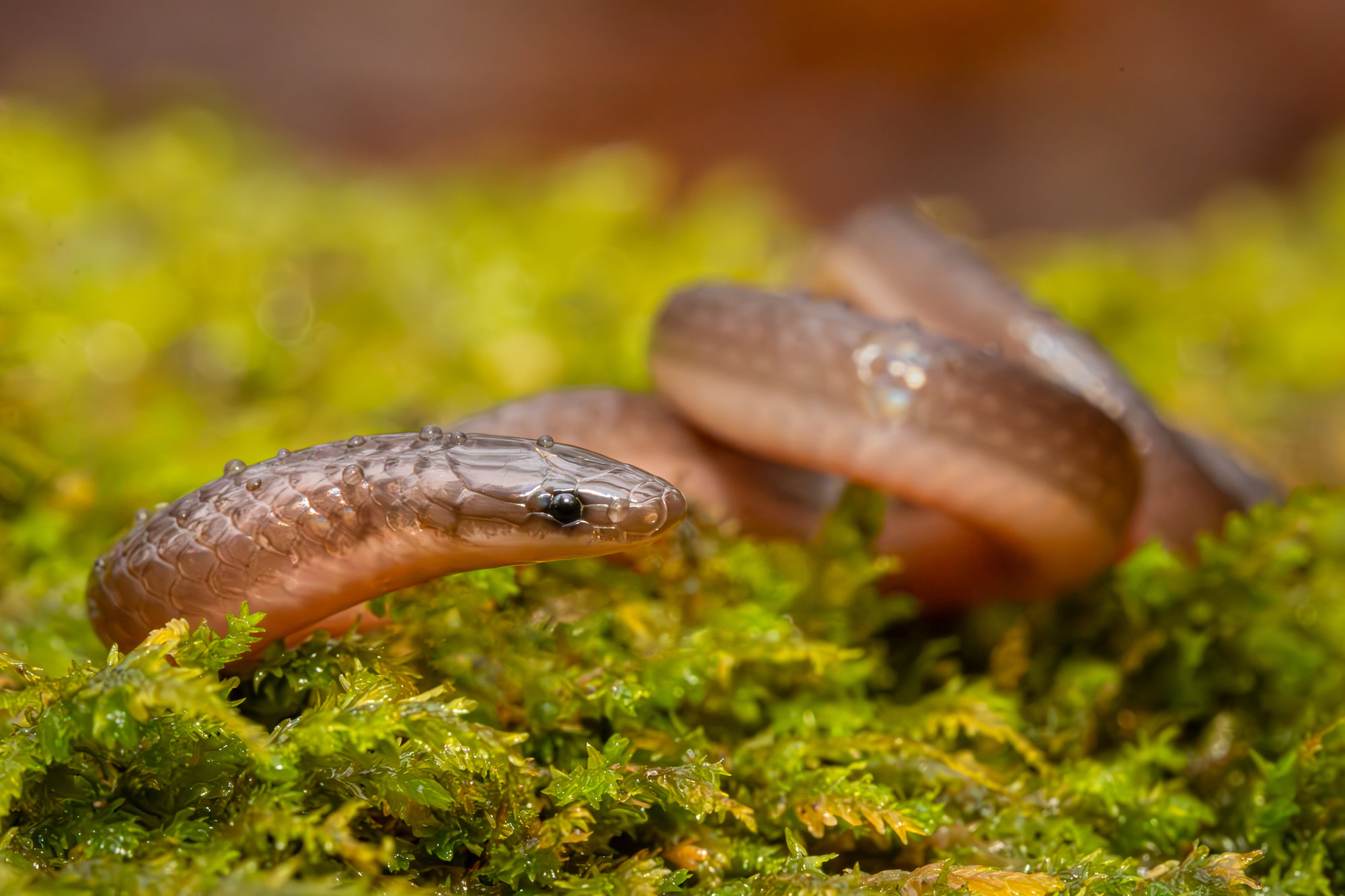
Photo Alex Stach (opens in a new tab) / iNaturalist, CC BY 4.0 (opens in a new tab)
At a glance
- Size
- Usually 18 to 28 cm long
- Habitat
- Moist woods, gardens and hillsides with loose soil
- Diet
- Earthworms and soft-bodied insect larvae
- In Georgia
- Statewide except the far south
- Venomous
- No
- Rabies vector
- No
Identification
- Key marks
- Small and smooth; brown above, pink below; pointed head and a tiny spine at the tail tip
- Told apart from
- Earthworms, which have segments and no eyes or scales
- Where to look
- Under logs, stones and boards in damp soil
Behaviour
Wormsnakes burrow in soil and leaf litter and are seldom seen above ground except under cover. When held they press the tail tip into a hand; it is harmless.
Why they matter
They are among the most common snakes in eastern woods, though few people see them, and they are food for many predators.
Reproduction and lifecycle
Eggs — Usually 1 to 8
Nest — In rotting logs or soil
Incubation — About 7 weeks
Hatchlings — Small and pinkish
Maturity — In a few years
Lifespan — Several years
Living around people
- It is harmless and cannot bite through skin.
Misconceptions
- It is a baby snake of a bigger kind. It is a fully grown adult.
Related species
Seasonal activity
When this species is breeding, and when there are nests on the ground. Mowing during the shaded months is how most nests are found.
| Jan | Feb | Mar | Apr | May | Jun | Jul | Aug | Sep | Oct | Nov | Dec | |
|---|---|---|---|---|---|---|---|---|---|---|---|---|
| Breeding | Jan: no | Feb: no | Mar: no | Apr: no | May: no | Jun: no | Jul: no | Aug: no | Sep: no | Oct: no | Nov: no | Dec: no |
| Active nests | Jan: no | Feb: no | Mar: no | Apr: no | May: no | Jun: no | Jul: no | Aug: no | Sep: no | Oct: no | Nov: no | Dec: no |
| Notes | Deep in soil | Deep in soil | Near the surface | Under cover | Mating | Laying | Active | Hatching | Active | Active | Going deep | Deep in soil |
Where it lives
Recorded in 21 states and provinces. Each one links to the other animals there, and to the rehabilitators licensed for them.
If you found one
Answer a few questions and you will get a specific answer for what you are looking at.
I found an animal