
Species
Boat-tailed grackle
Quiscalus major
A large, noisy grackle of the coast, whose males carry long, boat-shaped tails and display from marsh edges.
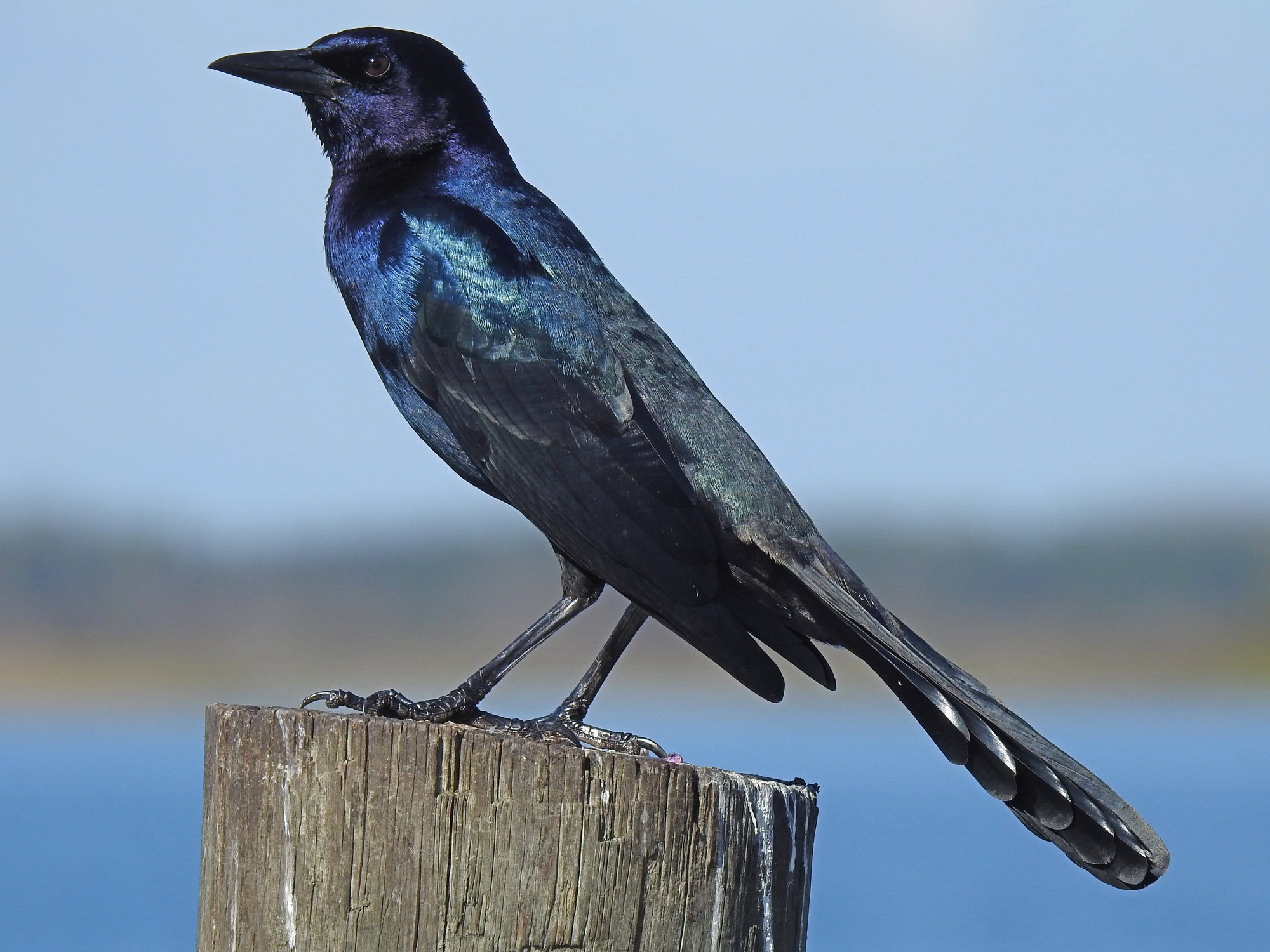
Photo JeffreyGammon (opens in a new tab) / Wikimedia Commons, CC BY 4.0 (opens in a new tab)
At a glance
- Size
- About 26 to 37 cm long
- Weight
- About 90 to 250 g
- Habitat
- Coastal marshes, beaches and towns near the coast
- Diet
- Insects, crabs, fish, seeds and scraps
- In Georgia
- Common resident on the coast
- Voice
- Loud, rattling calls and whistles
- Rabies vector
- No
Identification
- Male
- Large, glossy blue-black; very long, keel-shaped tail; eye brown or yellow
- Female
- Brown with a buff breast
- Told apart from
- Common grackle, which is smaller with a shorter tail
- Where to look
- Coastal towns, marinas and marshes
Behaviour
Male boat-tailed grackles display by fluffing feathers, spreading wings and calling loudly. Females nest in colonies in marsh vegetation.
Why they matter
Boat-tailed grackles are one of the most visible birds of the Georgia coast. They eat crabs, insects and scraps, and they are expanding inland.
Reproduction and lifecycle
Nest — A bulky cup in marsh plants or shrubs, in colonies
Eggs — Usually three
Incubation — About 13 to 15 days
Chicks — Fed by the female
Lifespan — Several years
Living around people
- Grackles in car parks and at restaurants are opportunists; not feeding them keeps them wild.
Misconceptions
- Brown grackles are a different species. Females are brown.
Related species
Seasonal activity
When this species is breeding, and when there are nests on the ground. Mowing during the shaded months is how most nests are found.
| Jan | Feb | Mar | Apr | May | Jun | Jul | Aug | Sep | Oct | Nov | Dec | |
|---|---|---|---|---|---|---|---|---|---|---|---|---|
| Breeding | Jan: no | Feb: no | Mar: no | Apr: no | May: no | Jun: no | Jul: no | Aug: no | Sep: no | Oct: no | Nov: no | Dec: no |
| Active nests | Jan: no | Feb: no | Mar: no | Apr: no | May: no | Jun: no | Jul: no | Aug: no | Sep: no | Oct: no | Nov: no | Dec: no |
| Notes | Flocks | Males displaying | Nesting | Nesting | Chicks | Young fledging | Present | Flocks | Flocks | Flocks | Flocks | Flocks |
Where it lives
Recorded in 14 states and provinces. Each one links to the other animals there, and to the rehabilitators licensed for them.
If you found one
Answer a few questions and you will get a specific answer for what you are looking at.
I found an animal