
Species
Blue jay
Cyanocitta cristata
A bold, crested blue bird that plants oak forests, mimics hawks and warns the whole woods of danger.
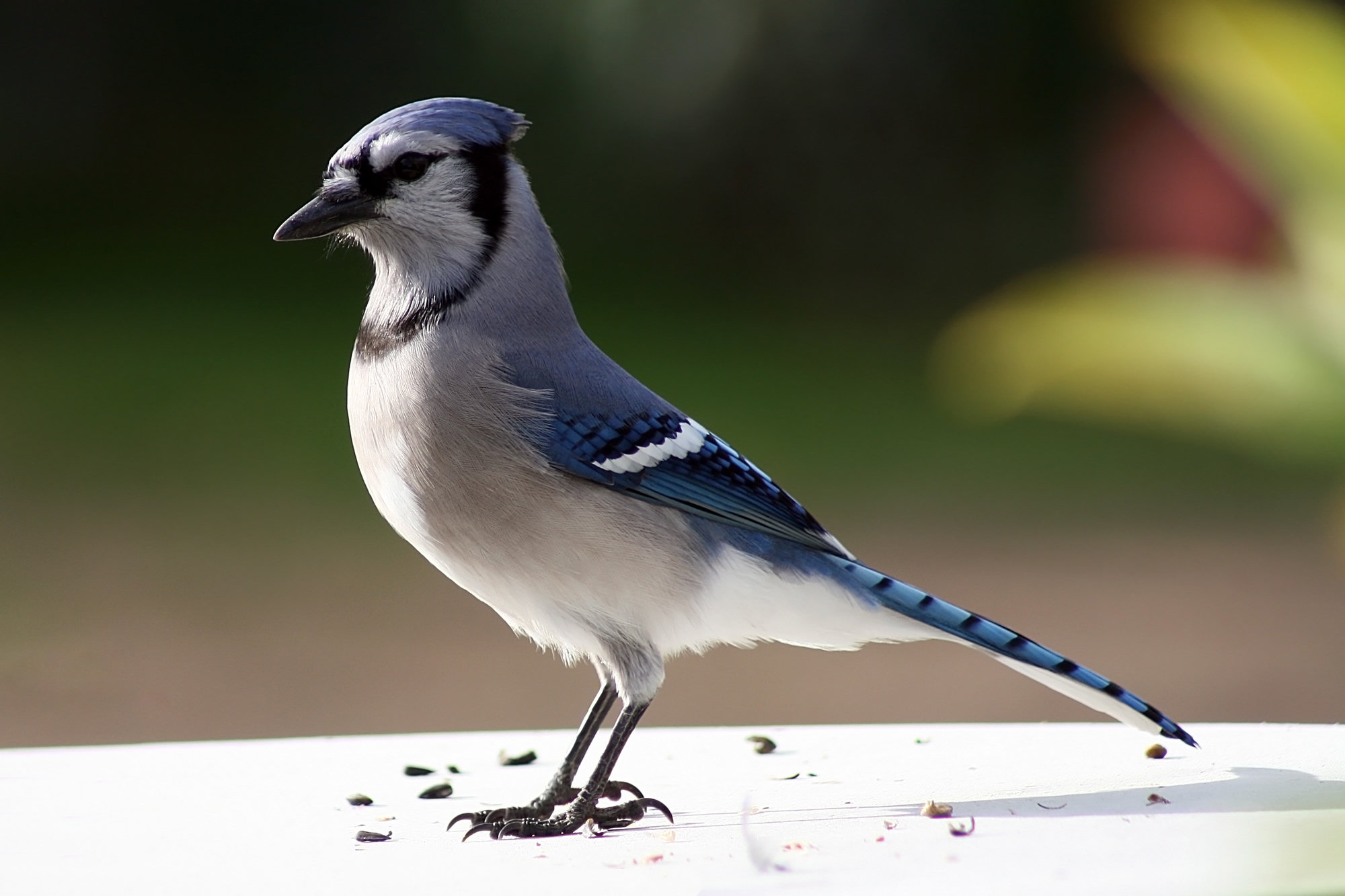
Photo Darren Swim (opens in a new tab) / Wikimedia Commons, CC BY-SA 3.0 (opens in a new tab)
At a glance
- Size
- About 22 to 30 cm long
- Weight
- About 70 to 100 g
- Habitat
- Woods, suburbs and parks, especially with oaks
- Diet
- Acorns, nuts, seeds, insects, fruit and occasionally eggs
- In Georgia
- Common resident statewide; migrants pass through in spring and autumn
- Voice
- A loud "jay-jay", bell-like notes, and imitations of hawks
- Rabies vector
- No
Identification
- Key marks
- Blue crest and back; white face and underparts; black necklace; white patches in the wings and tail
- Told apart from
- Eastern bluebird, which is smaller with no crest and a rusty breast
- Told apart from
- Belted kingfisher, which has a huge bill and shaggy crest
- Where to look
- Oaks, feeders and woodland edges
Behaviour
Blue jays carry acorns in their throats and bury them for later, and many are never recovered. They mob hawks and owls and imitate the calls of red-shouldered and red-tailed hawks.
Why they matter
By burying thousands of acorns each autumn, blue jays are one of the main ways oak forests spread. They are intelligent and social, and their alarm calls warn many other animals of predators.
Reproduction and lifecycle
Nest — A cup of twigs, rootlets and mud in a tree
Eggs — Usually four or five
Incubation — About 16 to 18 days
Chicks — Fed by both parents
Leaving the nest — At about 17 to 21 days, before they fly well
Lifespan — Wild birds over twenty years are recorded
Living around people
- A young jay hopping on the ground is a fledgling; its parents are close by and will defend it loudly.
- Jays may dive at people near their fledglings; keeping away for a week or two ends it.
Misconceptions
- Blue jays are thieves and bullies. They take eggs occasionally, but mostly eat acorns and insects, and they plant a great many oaks.
- Blue jays are blue. Their feathers contain no blue pigment; the colour comes from light scattering in the feather structure.
Related species
Seasonal activity
When this species is breeding, and when there are nests on the ground. Mowing during the shaded months is how most nests are found.
| Jan | Feb | Mar | Apr | May | Jun | Jul | Aug | Sep | Oct | Nov | Dec | |
|---|---|---|---|---|---|---|---|---|---|---|---|---|
| Breeding | Jan: no | Feb: no | Mar: no | Apr: no | May: no | Jun: no | Jul: no | Aug: no | Sep: no | Oct: no | Nov: no | Dec: no |
| Active nests | Jan: no | Feb: no | Mar: no | Apr: no | May: no | Jun: no | Jul: no | Aug: no | Sep: no | Oct: no | Nov: no | Dec: no |
| Notes | Flocks | Pairs forming | Nesting | Nesting | Chicks | Young fledging | Families | Families | Burying acorns; migrants passing | Burying acorns | Flocks | Flocks |
Where it lives
Recorded in 51 states and provinces. Each one links to the other animals there, and to the rehabilitators licensed for them.
United States
- Alabama
- Arkansas
- Colorado
- Connecticut
- Delaware
- District of Columbia
- Florida
- Georgia
- Illinois
- Indiana
- Iowa
- Kansas
- Kentucky
- Louisiana
- Maine
- Maryland
- Massachusetts
- Michigan
- Minnesota
- Mississippi
- Missouri
- Montana
- Nebraska
- New Hampshire
- New Jersey
- New York
- North Carolina
- North Dakota
- Ohio
- Oklahoma
- Pennsylvania
- Rhode Island
- South Carolina
- South Dakota
- Tennessee
- Texas
- Vermont
- Virginia
- West Virginia
- Wisconsin
- Wyoming
If you found one
Answer a few questions and you will get a specific answer for what you are looking at.
I found an animal