
Species
American pipit
Anthus rubescens
A slim, tail-bobbing brown bird of bare winter fields, which breeds on Arctic tundra and mountaintops.
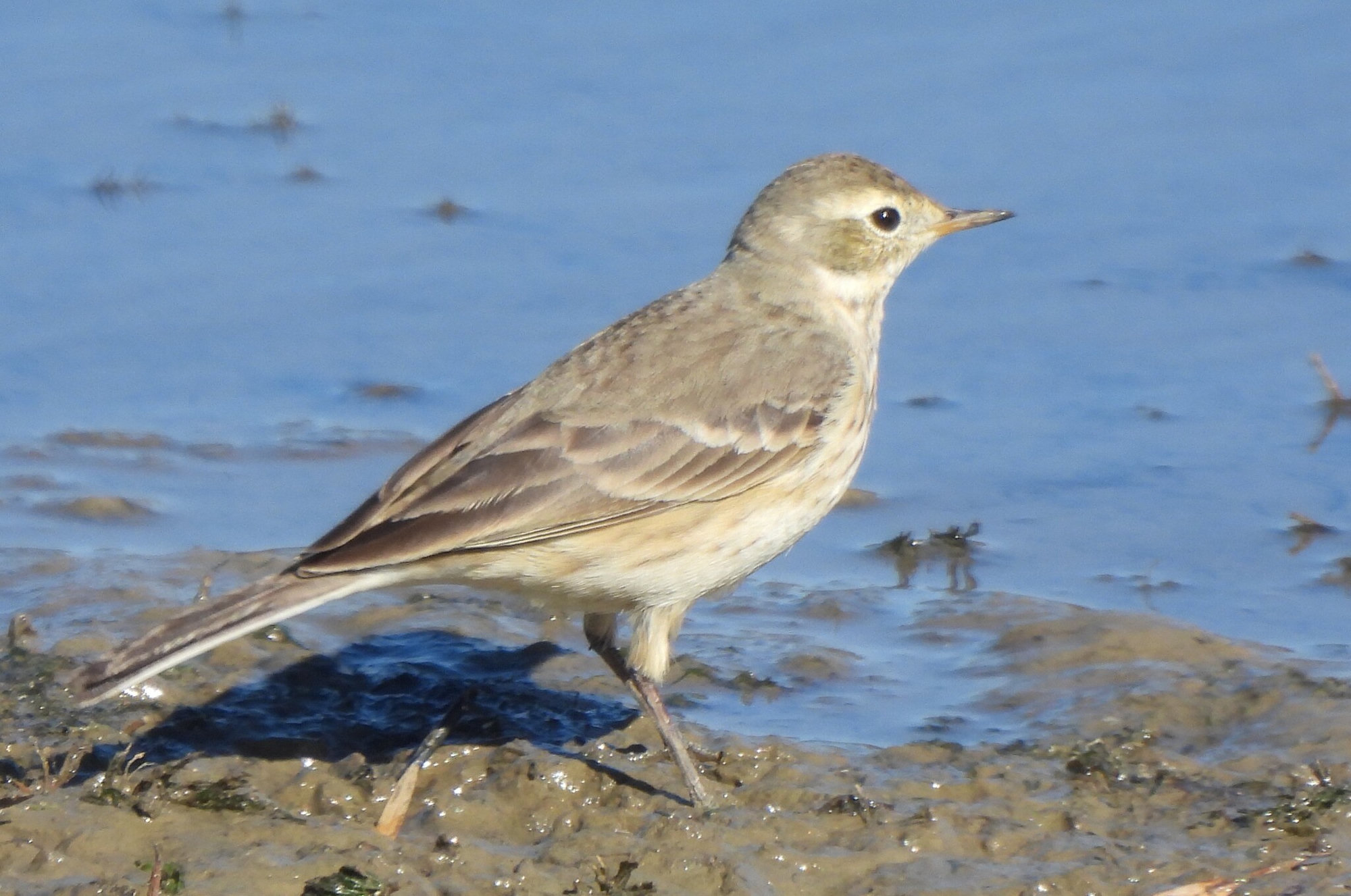
Photo kayler09 (opens in a new tab) / iNaturalist, CC BY 4.0 (opens in a new tab)
At a glance
- Size
- About 15 to 17 cm long
- Weight
- About 18 to 28 g
- Habitat
- Ploughed fields, short grass, mudflats and shores in winter
- Diet
- Insects and seeds
- In Georgia
- A fairly common winter visitor
- Voice
- A thin "pip-it"
- Rabies vector
- No
Identification
- Key marks
- Slim; grey-brown above; buff below with streaks; thin bill; white outer tail feathers; bobs its tail
- Told apart from
- Sparrows, which have thick bills and do not bob their tails
- Told apart from
- Horned lark, which has a black face pattern
- Where to look
- Flocks in ploughed fields and short grass in winter
Behaviour
American pipits walk rather than hop and bob their tails constantly. They form flocks in winter on open ground.
Why they matter
Pipits breed on Arctic tundra and high mountain meadows and winter in open fields across the South, eating many insects in both places.
Reproduction and lifecycle
Nest — A cup on the ground in tundra or alpine meadow
Eggs — Usually four or five
Incubation — About 13 to 16 days
Chicks — Fed by both parents
Lifespan — Several years
Living around people
- Bare fields in winter are their feeding grounds.
Misconceptions
- Brown birds in fields are sparrows. Tail-bobbing brown birds with thin bills are pipits.
Related species
Seasonal activity
When this species is breeding, and when there are nests on the ground. Mowing during the shaded months is how most nests are found.
| Jan | Feb | Mar | Apr | May | Jun | Jul | Aug | Sep | Oct | Nov | Dec | |
|---|---|---|---|---|---|---|---|---|---|---|---|---|
| Breeding | Jan: no | Feb: no | Mar: no | Apr: no | May: no | Jun: no | Jul: no | Aug: no | Sep: no | Oct: no | Nov: no | Dec: no |
| Active nests | Jan: no | Feb: no | Mar: no | Apr: no | May: no | Jun: no | Jul: no | Aug: no | Sep: no | Oct: no | Nov: no | Dec: no |
| Notes | Wintering flocks | Wintering | Wintering | Leaving | Nesting in the far north and high mountains | Nesting | Chicks | Moving south | Migrating | Arriving | Wintering | Wintering |
Where it lives
Recorded in 87 states and provinces. Each one links to the other animals there, and to the rehabilitators licensed for them.
United States
- Alabamain winter
- Alaskabreeding
- Arizonain winter
- Arkansasin winter
- Californiain winter
- Colorado
- Connecticutin winter
- Delawarein winter
- District of Columbiain winter
- Floridain winter
- Georgiain winter
- Idahoin winter
- Illinoisin winter
- Indianain winter
- Iowapassing through
- Kansaspassing through
- Kentuckyin winter
- Louisianain winter
- Mainein winter
- Marylandin winter
- Massachusettsin winter
- Michiganpassing through
- Minnesotapassing through
- Mississippiin winter
- Missouriin winter
- Montanabreeding
- Nebraskapassing through
- Nevadain winter
- New Hampshire
- New Jerseyin winter
- New Mexicoin winter
- New Yorkin winter
- North Carolinain winter
- North Dakotapassing through
- Ohioin winter
- Oklahomain winter
- Oregonin winter
- Pennsylvaniain winter
- Rhode Islandin winter
- South Carolinain winter
- South Dakotapassing through
- Tennesseein winter
- Texasin winter
- Utahin winter
- Vermontpassing through
- Virginiain winter
- Washingtonin winter
- West Virginiain winter
- Wisconsinin winter
- Wyomingbreeding
Canada
Mexico
- Aguascalientesin winter
- Baja Californiain winter
- Baja California Surin winter
- Campechein winter
- Chihuahuain winter
- Coahuilain winter
- Durangoin winter
- Guanajuatoin winter
- Hidalgoin winter
- Jaliscoin winter
- Mexico Cityin winter
- Michoacanin winter
- Morelospassing through
- Nuevo Leonin winter
- Oaxacain winter
- Pueblain winter
- Queretaroin winter
- San Luis Potosiin winter
- Sonorain winter
- State of Mexicoin winter
- Tamaulipasin winter
- Tlaxcalain winter
- Veracruzin winter
- Zacatecasin winter
If you found one
Answer a few questions and you will get a specific answer for what you are looking at.
I found an animal