
Species
American goldfinch
Spinus tristis
A bright yellow finch in summer, olive in winter, which waits to nest until thistles go to seed.
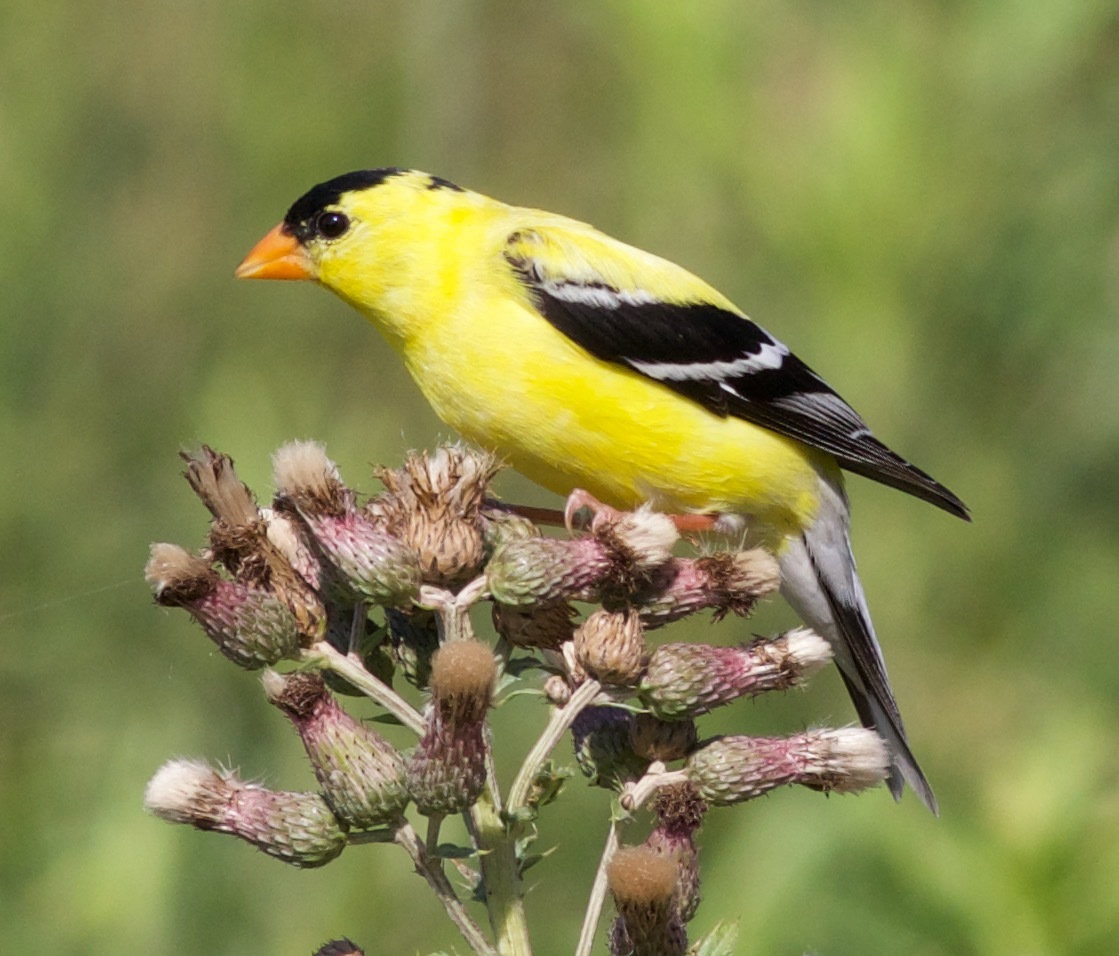
Photo Unknown photographer (opens in a new tab) / iNaturalist, CC0 1.0 (opens in a new tab)
At a glance
- Size
- About 11 to 13 cm long
- Weight
- About 11 to 20 g
- Habitat
- Fields, weedy areas, gardens and feeders
- Diet
- Seeds, especially thistle, sunflower and other composites
- In Georgia
- Common all year; more in winter
- Voice
- A cheerful "po-ta-to-chip" in flight
- Rabies vector
- No
Identification
- Male in summer
- Bright yellow; black cap; black wings with white bars
- Winter
- Olive-brown with black wings and white wing bars
- Told apart from
- Pine siskin, which is streaked
- Where to look
- Feeders and weedy fields
Behaviour
American goldfinches nest late, in July and August, when thistles and other plants provide seeds and down for their nests. They are almost entirely vegetarian.
Why they matter
Goldfinches eat almost only seeds, even feeding them to their young. Brown-headed cowbird chicks raised by goldfinches rarely survive on this diet, which gives goldfinches unusual protection from cowbirds.
Reproduction and lifecycle
Nest — A tight cup of plant down, so dense it can hold water
Eggs — Usually four to six
Incubation — About 12 to 14 days
Chicks — Fed seeds by both parents
Flight — At about 11 to 17 days
Lifespan — Several years
Living around people
- Leaving seed heads of native flowers such as coneflowers and asters standing into autumn feeds them.
Misconceptions
- Goldfinches leave in winter. They stay, but turn olive-brown.
Related species
Seasonal activity
When this species is breeding, and when there are nests on the ground. Mowing during the shaded months is how most nests are found.
| Jan | Feb | Mar | Apr | May | Jun | Jul | Aug | Sep | Oct | Nov | Dec | |
|---|---|---|---|---|---|---|---|---|---|---|---|---|
| Breeding | Jan: no | Feb: no | Mar: no | Apr: no | May: no | Jun: no | Jul: no | Aug: no | Sep: no | Oct: no | Nov: no | Dec: no |
| Active nests | Jan: no | Feb: no | Mar: no | Apr: no | May: no | Jun: no | Jul: no | Aug: no | Sep: no | Oct: no | Nov: no | Dec: no |
| Notes | Winter flocks | Flocks | Males moulting into yellow | Flocks | Pairs forming | Pairs | Nesting | Nesting | Young fledging | Moulting into winter plumage | Flocks | Flocks |
Where it lives
Recorded in 58 states and provinces. Each one links to the other animals there, and to the rehabilitators licensed for them.
United States
- Alabama
- Arkansas
- California
- Colorado
- Connecticut
- Delaware
- District of Columbia
- Floridain winter
- Georgia
- Idaho
- Illinois
- Indiana
- Iowa
- Kansas
- Kentucky
- Louisianain winter
- Maine
- Maryland
- Massachusetts
- Michigan
- Minnesota
- Mississippiin winter
- Missouri
- Montana
- Nebraska
- Nevadain winter
- New Hampshire
- New Jersey
- New Mexicoin winter
- New York
- North Carolina
- North Dakota
- Ohio
- Oklahomain winter
- Oregonbreeding
- Pennsylvania
- Rhode Island
- South Carolina
- South Dakota
- Tennessee
- Texasin winter
- Utah
- Vermont
- Virginia
- Washington
- West Virginia
- Wisconsin
- Wyoming
If you found one
Answer a few questions and you will get a specific answer for what you are looking at.
I found an animal