
Species
American bullfrog
Lithobates catesbeianus
North America's largest frog, whose deep, rumbling call carries across ponds on summer nights.
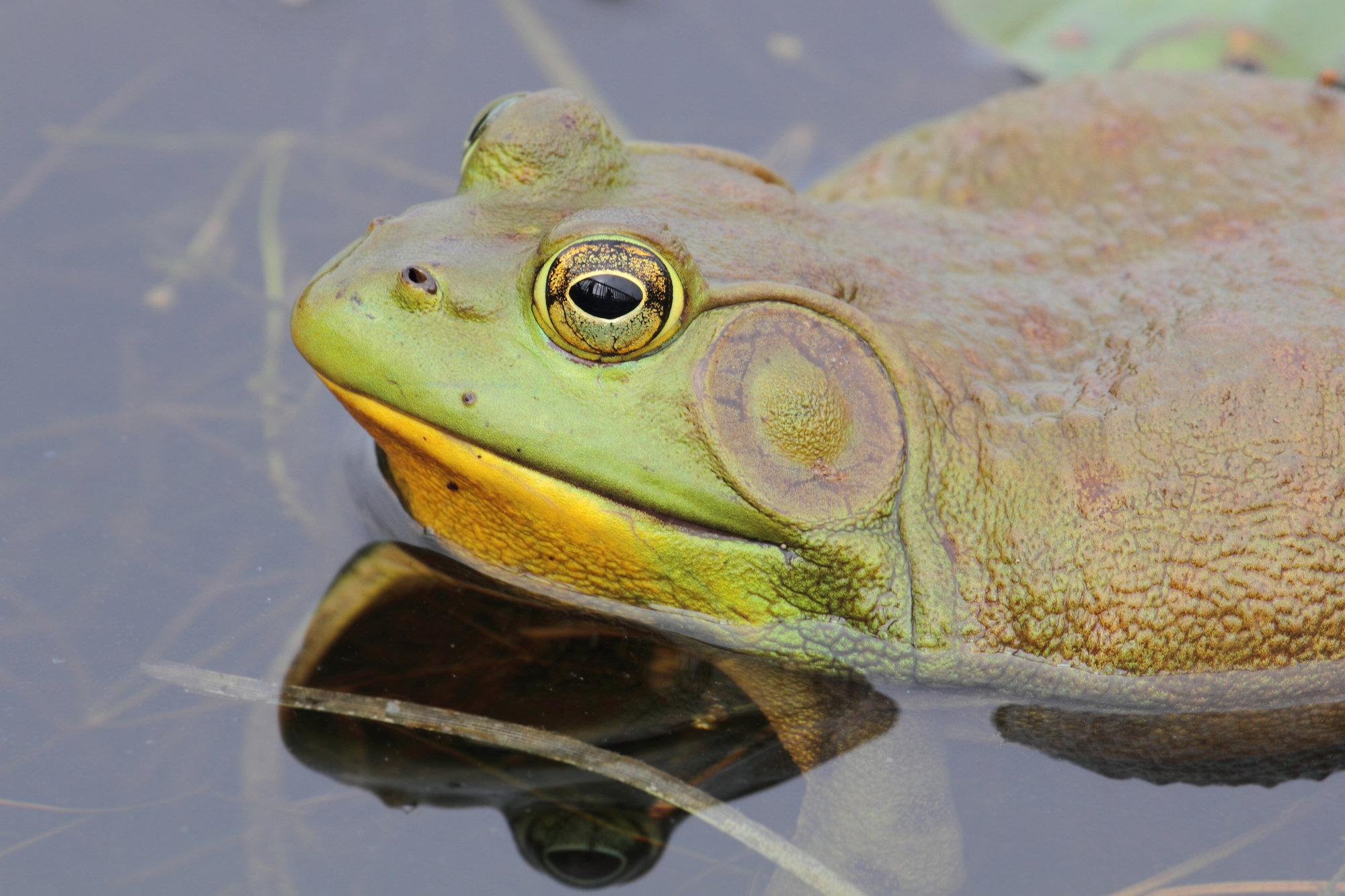
Photo Cephas (opens in a new tab) / Wikimedia Commons, CC BY-SA 3.0 (opens in a new tab)
At a glance
- Size
- About 9 to 15 cm long; up to 20 cm
- Habitat
- Ponds, lakes, slow streams and reservoirs with permanent water
- Diet
- Insects, crayfish, fish, frogs, snakes, small birds and mice
- In Georgia
- Common statewide
- Voice
- A deep "jug-o-rum" rumble
- Rabies vector
- No
Identification
- Key marks
- Large and green to olive; a fold of skin that curves around the eardrum rather than running down the back; males have eardrums larger than their eyes
- Told apart from
- Green frog, which is smaller with ridges running down the back
- Where to look
- At the edges of ponds; shining eyes in torchlight at night
Behaviour
Bullfrogs are sit-and-wait predators that eat almost anything they can swallow. Males defend calling territories in summer. The tadpoles can take two years to become frogs.
Why they matter
In the East bullfrogs are a native top predator of ponds and a food source for herons, snakes and otters. Released in the West, they have become an invasive threat to native frogs.
Reproduction and lifecycle
Eggs — Up to 20,000, in a floating film
Hatching — In a few days
Tadpoles — Large; take one to two years to change
Maturity — In two to four years
Lifespan — Around 8 to 10 years
Calling — On summer nights
Living around people
- Never move bullfrogs or tadpoles to new ponds; in some places they wipe out native frogs.
Misconceptions
- Big tadpoles in winter are stuck. Bullfrog tadpoles normally spend a winter or two as tadpoles.
Related species
Seasonal activity
When this species is breeding, and when there are nests on the ground. Mowing during the shaded months is how most nests are found.
| Jan | Feb | Mar | Apr | May | Jun | Jul | Aug | Sep | Oct | Nov | Dec | |
|---|---|---|---|---|---|---|---|---|---|---|---|---|
| Breeding | Jan: no | Feb: no | Mar: no | Apr: no | May: no | Jun: no | Jul: no | Aug: no | Sep: no | Oct: no | Nov: no | Dec: no |
| Active nests | Jan: no | Feb: no | Mar: no | Apr: no | May: no | Jun: no | Jul: no | Aug: no | Sep: no | Oct: no | Nov: no | Dec: no |
| Notes | Under water | Under water | Emerging | Active | Calling | Breeding | Breeding | Young frogs | Feeding | Active on warm days | Under water | Under water |
Where it lives
Recorded in 69 states and provinces. Each one links to the other animals there, and to the rehabilitators licensed for them.
United States
- Alabama
- Arizonaintroduced
- Arkansas
- Californiaintroduced
- Coloradointroduced
- Connecticut
- Delaware
- District of Columbia
- Florida
- Georgia
- Hawaiiintroduced
- Idahointroduced
- Illinois
- Indiana
- Iowa
- Kansas
- Kentucky
- Louisiana
- Maine
- Maryland
- Massachusetts
- Michigan
- Minnesota
- Mississippi
- Missouri
- Montanaintroduced
- Nebraska
- Nevadaintroduced
- New Hampshire
- New Jersey
- New Mexico
- New York
- North Carolina
- Ohio
- Oklahoma
- Oregonintroduced
- Pennsylvania
- Rhode Island
- South Carolina
- South Dakota
- Tennessee
- Texas
- Utahintroduced
- Vermont
- Virginia
- Washingtonintroduced
- West Virginia
- Wisconsin
- Wyomingintroduced
If you found one
Answer a few questions and you will get a specific answer for what you are looking at.
I found an animal