
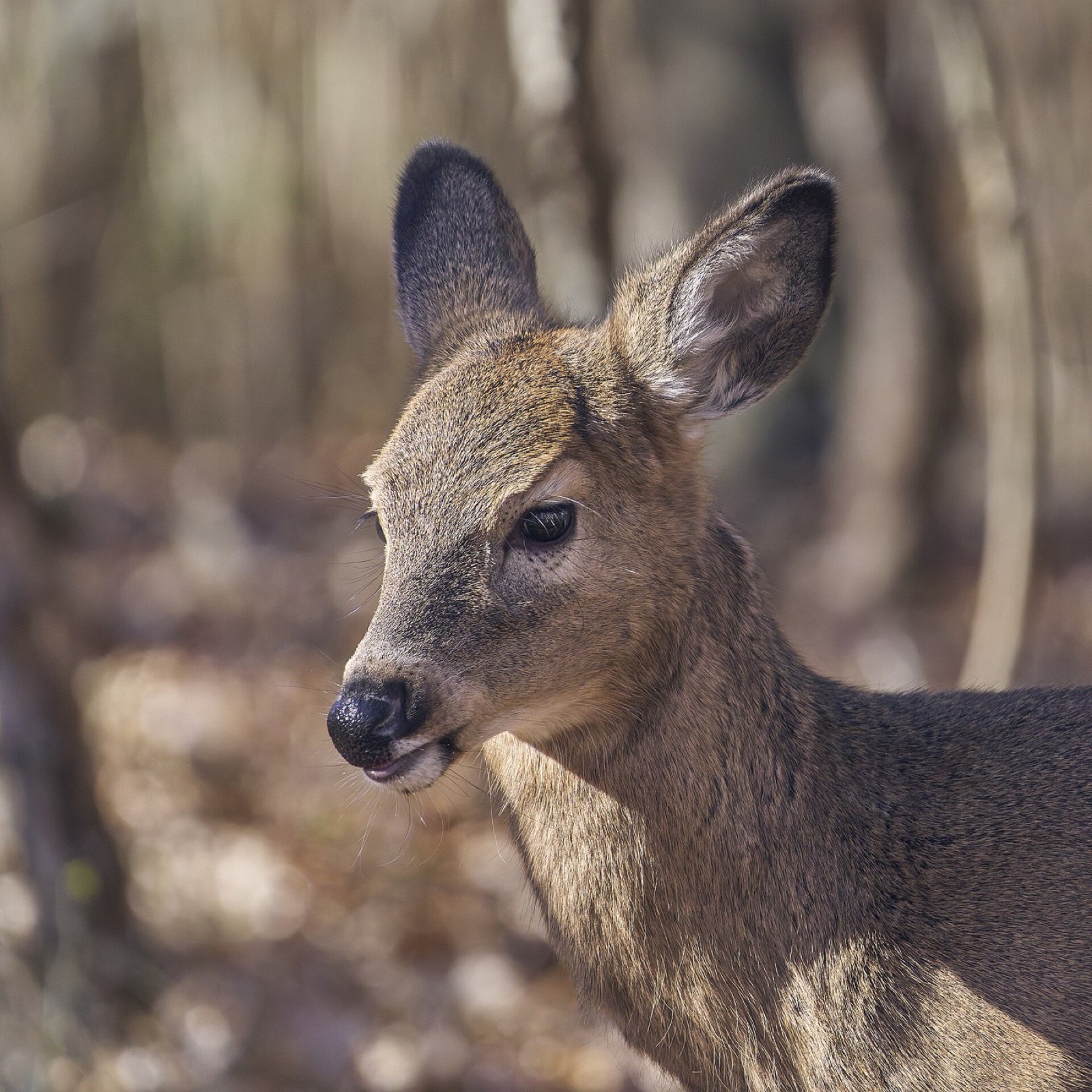
Photo Paul Danese (opens in a new tab), CC BY-SA 4.0 (opens in a new tab)
What deer are doing in neighborhoods
Suburban landscapes can offer browsing plants, cover and relatively fragmented predator pressure. Deer are often most active around dawn and dusk, but movement can occur at any hour. Seasonal changes, mating behavior, food availability and disturbance all influence where they appear.
Watching without managing
Feeding deer may feel compassionate, but supplemental feeding can concentrate animals, increase disease transmission, create traffic hazards and alter natural movement. The best support is habitat and safe driving, not making deer dependent on handouts.
Roads are one of the biggest conflicts
A deer crossing sign is not a guarantee that deer cross only there. Scan road edges, slow down in low light and remember that one deer may be followed by another. Reducing speed protects wildlife and people at the same time.
What to do
- Do not approach or feed deer.
- Keep dogs from chasing them.
- Drive slowly in deer-active areas, especially dawn and dusk.
- Use deer-resistant landscaping rather than lethal conflict responses where practical.
- If a deer appears injured, observe from a distance and seek professional guidance before attempting capture.
Deer do not need to become backyard pets to be appreciated. The most wildlife-friendly relationship is one built on distance, habitat, slower driving and respect for their ability to live as wild animals.