
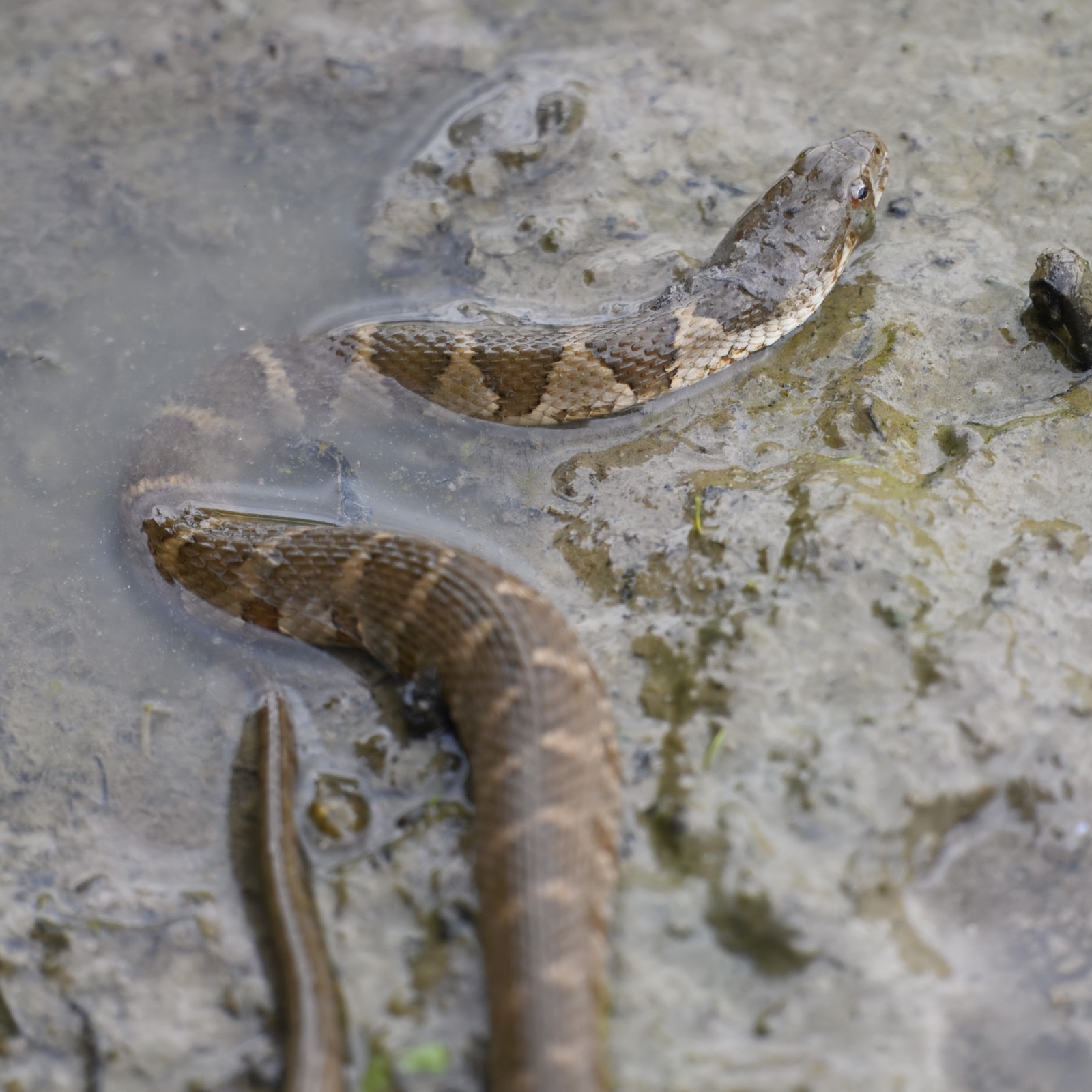
Photo lwolfartist (opens in a new tab), CC BY 2.0 (opens in a new tab)
Range is a powerful clue
Cottonmouth distribution is concentrated in the coastal plain and parts of the Southeast; they are not found everywhere in that range. Northern watersnakes occupy much of the Piedmont and mountains, while other Nerodia species occur in different regions.
Behavior myths are unreliable
Both cottonmouths and watersnakes may swim, bask near water and defend themselves if cornered. Do not use “it swam on top of the water” or “it opened its mouth” as a one-feature test.
Why watersnakes get killed
Watersnakes are often thick-bodied, patterned and defensive when grabbed, which makes them easy to mislabel. The simplest solution is not perfect instant identification—it is leaving wild snakes alone.
What to do
- Use range maps before making a species claim.
- Photograph from a distance and include body pattern.
- Never try to grab a waterside snake for identification.
- Keep dogs from harassing snakes along shorelines.
- If uncertainty remains, give the snake space and ask an experienced identifier.
“Near water” tells you habitat, not species. A little patience with range and pattern can prevent harmless watersnakes from being killed because of a name someone guessed from ten yards away.