
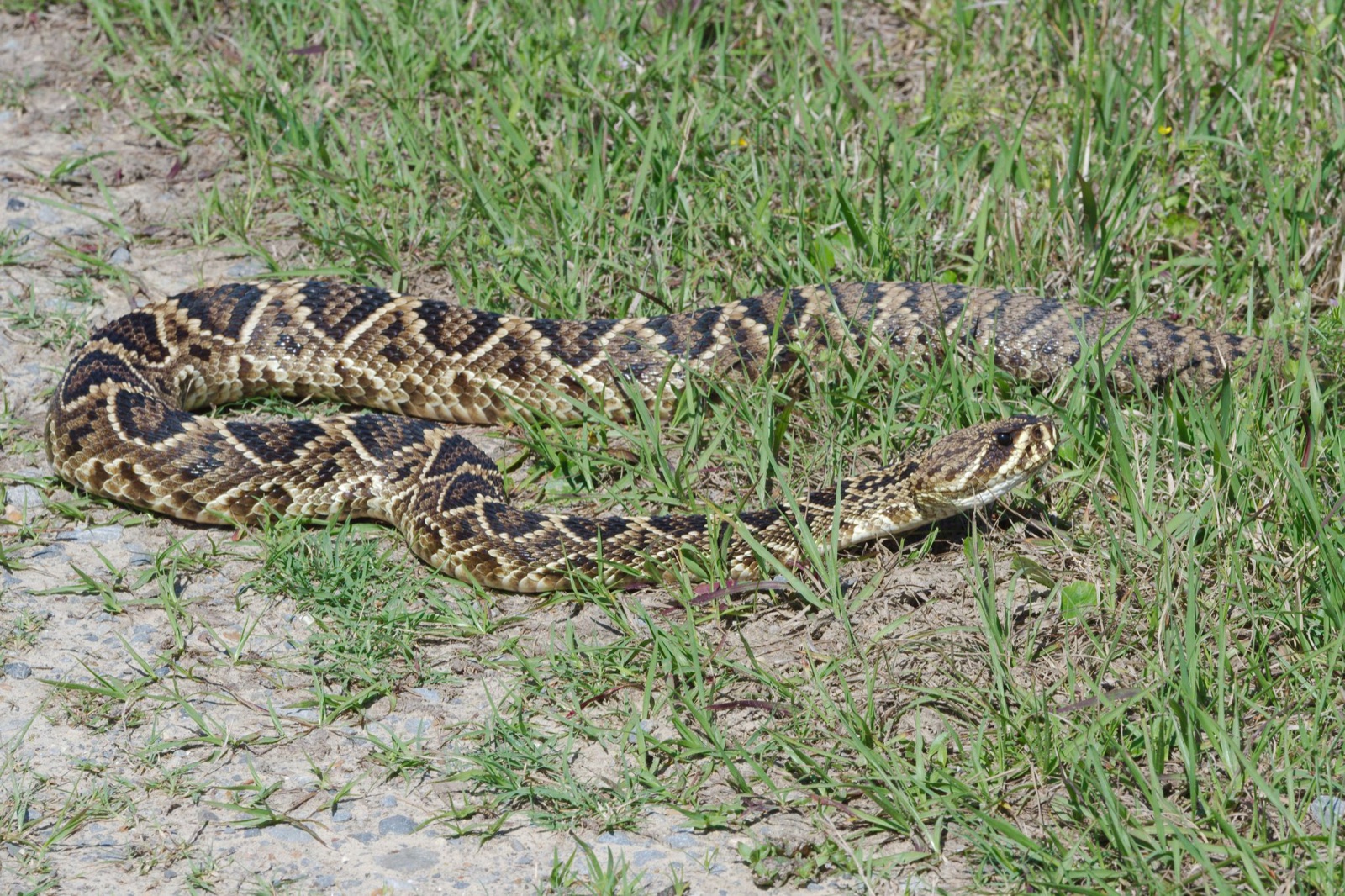
Photo dvollmar (opens in a new tab), CC BY 4.0 (opens in a new tab)
Call for medical help
Get to an emergency room. Do not delay to catch or kill the snake. A safe photograph from a distance can be useful, but treatment should not depend on bringing the animal to the hospital.
What not to do
Do not cut the wound, suck venom, apply ice, use electric shock or place a tourniquet. These methods do not improve outcome and can worsen tissue injury. Do not drink alcohol or take medications unless instructed by medical professionals.
Why symptoms cannot grade the bite
Some venomous bites inject little or no venom; others progress rapidly. Pain, swelling and bruising can change over time. The absence of dramatic early symptoms does not prove the bite is harmless.
What to do
- Move away from the snake.
- Call emergency medical services.
- Keep the bitten person still and calm.
- Remove rings, watches or tight items that may become constricting as swelling develops.
- Note the time of the bite and safely photograph the snake only if that requires no approach.
> Safety note: This is general educational information, not individualized medical advice. A suspected venomous snakebite warrants immediate emergency medical evaluation.
The best snakebite kit is a phone and a fast route to appropriate medical care. Prevention is even better: distance, footwear, lighting and refusing to handle unidentified snakes.
Decision point
Is this happening right now?
Answer a few questions and you will get an answer for the animal in front of you, filtered to rehabilitators who may lawfully take it.
Start the guidance flow