
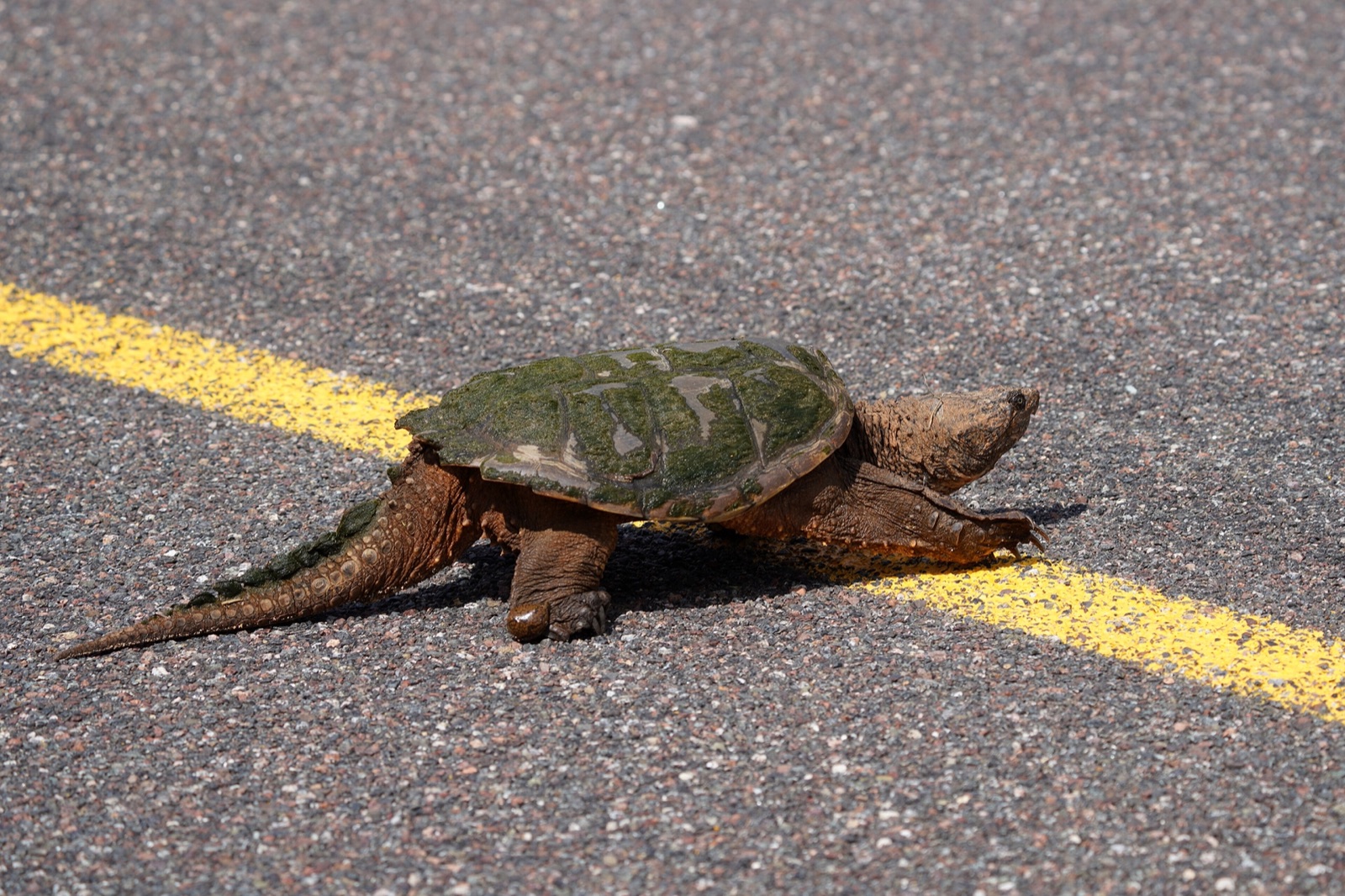
Photo U.S. Fish and Wildlife Service - Midwest Region (opens in a new tab), Public domain (opens in a new tab)
Direction matters
Turning a turtle around may simply cause it to try the crossing again. If you can assist without putting yourself in danger, place the turtle beyond the road edge in the same direction of travel and let it continue under its own power.
Why relocation can be harmful
Many turtles, especially box turtles, maintain familiar home areas and know where resources are located. Moving one miles away may strand it in unfamiliar habitat and trigger persistent attempts to travel back.
Human safety is non-negotiable
Do not stop in a way that creates a vehicle collision hazard. Use hazard lights, pull fully off the road where legal and safe, and never enter fast traffic if the rescue would endanger people.
What to do
- Help only when it can be done safely.
- Move the turtle in the direction it was traveling.
- Carry ordinary turtles by supporting the shell with both hands; never by the tail.
- Do not take a healthy wild turtle home as a pet.
- Contact a reptile rehabilitator for shell fractures, bleeding or other injury.
Think in feet, not miles. The goal is to remove the immediate road hazard while preserving the turtle’s own navigation, territory and life plan.