
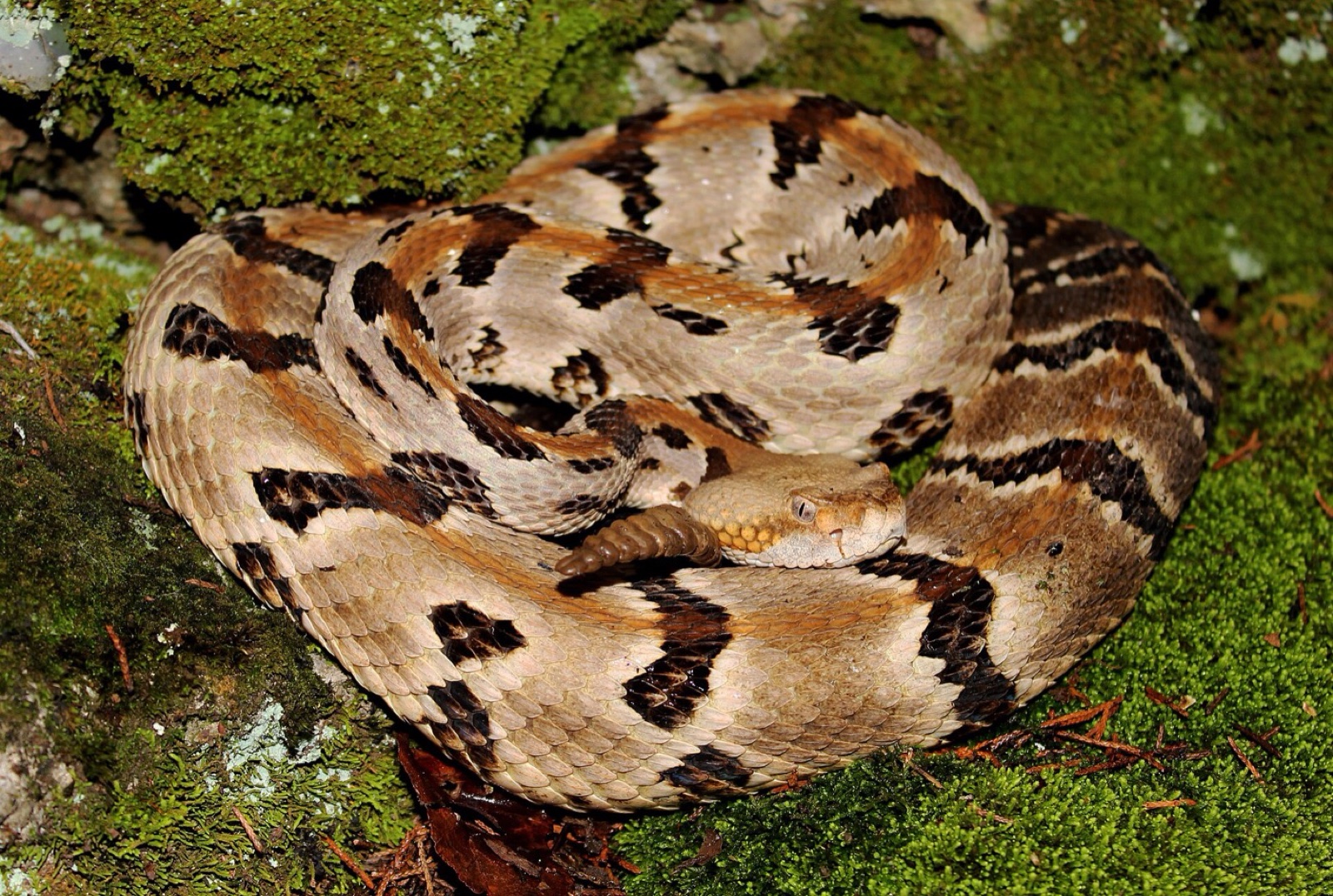
Photo Peter Paplanus (opens in a new tab), CC BY 2.0 (opens in a new tab)
Rattles are warnings, not battle cries
A rattle means the snake wants a threat to know where it is. It is a distance-making signal. A timber rattlesnake may also remain silent, so the absence of rattling should never be treated as permission to approach.
Their ecological role
Timber rattlesnakes consume rodents and other small mammals. That places them among the native predators that influence prey populations and connect different levels of the food web.
Why they need our restraint
Large rattlesnakes are easy targets for road mortality and deliberate killing. Because they are not rapidly reproducing pests, unnecessary adult mortality can have population effects.
What to do
- Watch your step in rocky or wooded habitat.
- Never attempt to move a rattlesnake by hand.
- Give a coiled snake a wide buffer and a route away.
- Use a trained venomous-snake remover when necessary in a residence or other unavoidable conflict location.
- Teach children that hearing a rattle means stop, locate the sound and back away.
Respect is the right emotional setting for timber rattlesnakes—not casual handling and not hatred. They are ancient, specialized predators asking for the same thing most wildlife asks from us: space.