
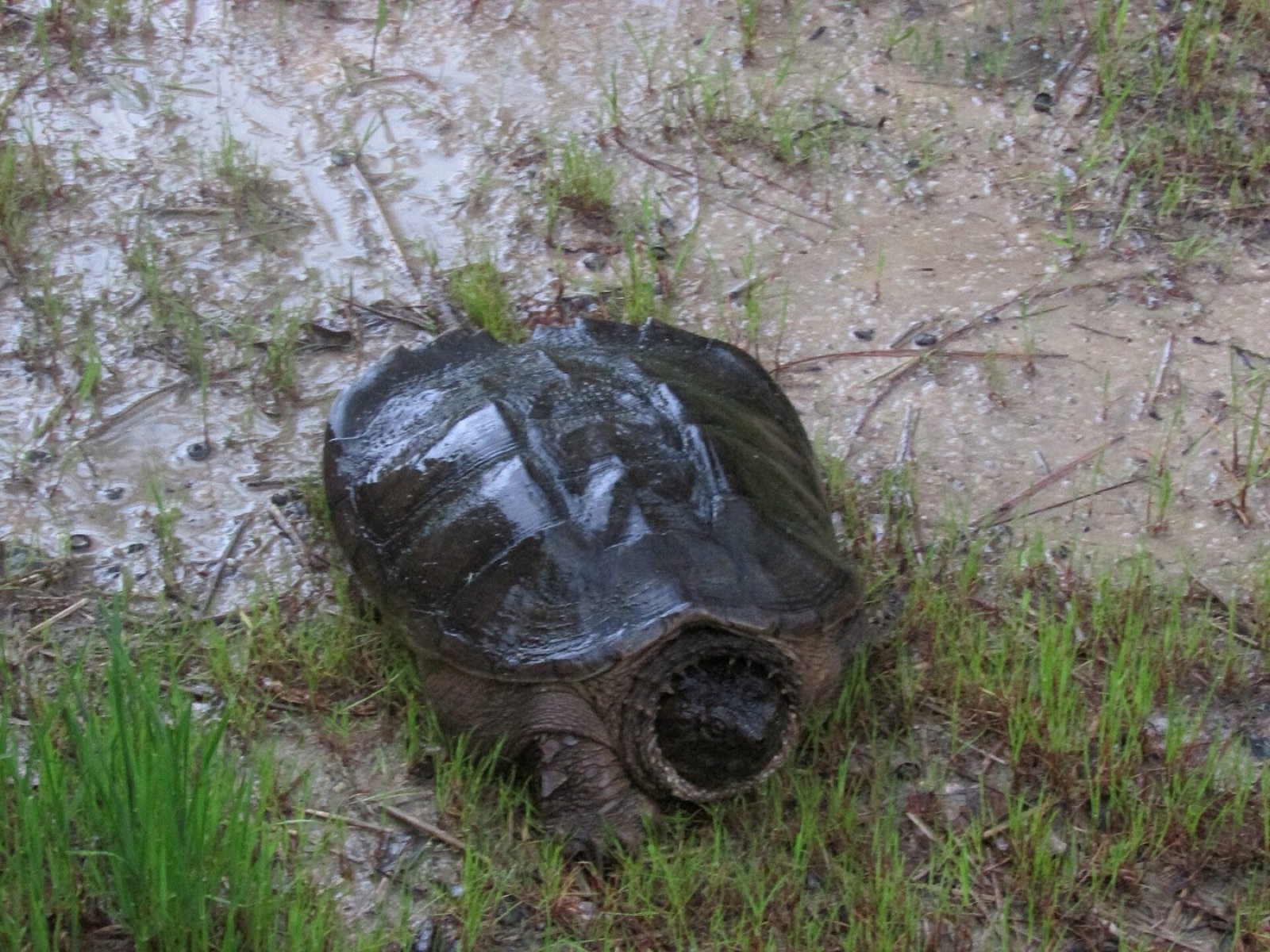
Photo DrStew82 (opens in a new tab), CC BY-SA 4.0 (opens in a new tab)
Why they seem more defensive on land
In water, a snapping turtle usually has an easy escape. On land, especially during nesting movements, it may feel exposed. Approaching the head or trying to pick it up by the tail can injure the turtle or the rescuer.
Road assistance requires technique
If a snapping turtle is in danger from traffic, contact someone experienced if possible. Never lift it by the tail, which can injure the spine. Specialized handling techniques keep hands away from the head while supporting the body.
Relocation is not the goal
As with other turtles, move it only far enough to clear an immediate hazard and in the direction it was already going. A turtle crossing away from a pond may be a female seeking a nesting site, not an animal that needs to be returned to water.
What to do
- Keep children and pets back.
- Do not touch the head or front half of the shell.
- Never pick up a snapping turtle by the tail.
- If traffic makes assistance necessary, use an experienced handler or safe tool-assisted method.
- Leave healthy animals alone once immediate danger has passed.
> Safety note: Snapping turtles can bite with significant force and have a long reach. Untrained handling is not recommended.
A snapping turtle does not need to be conquered. It needs a corridor. Give it room, respect its anatomy and let a very ancient kind of reptile continue on its way.