
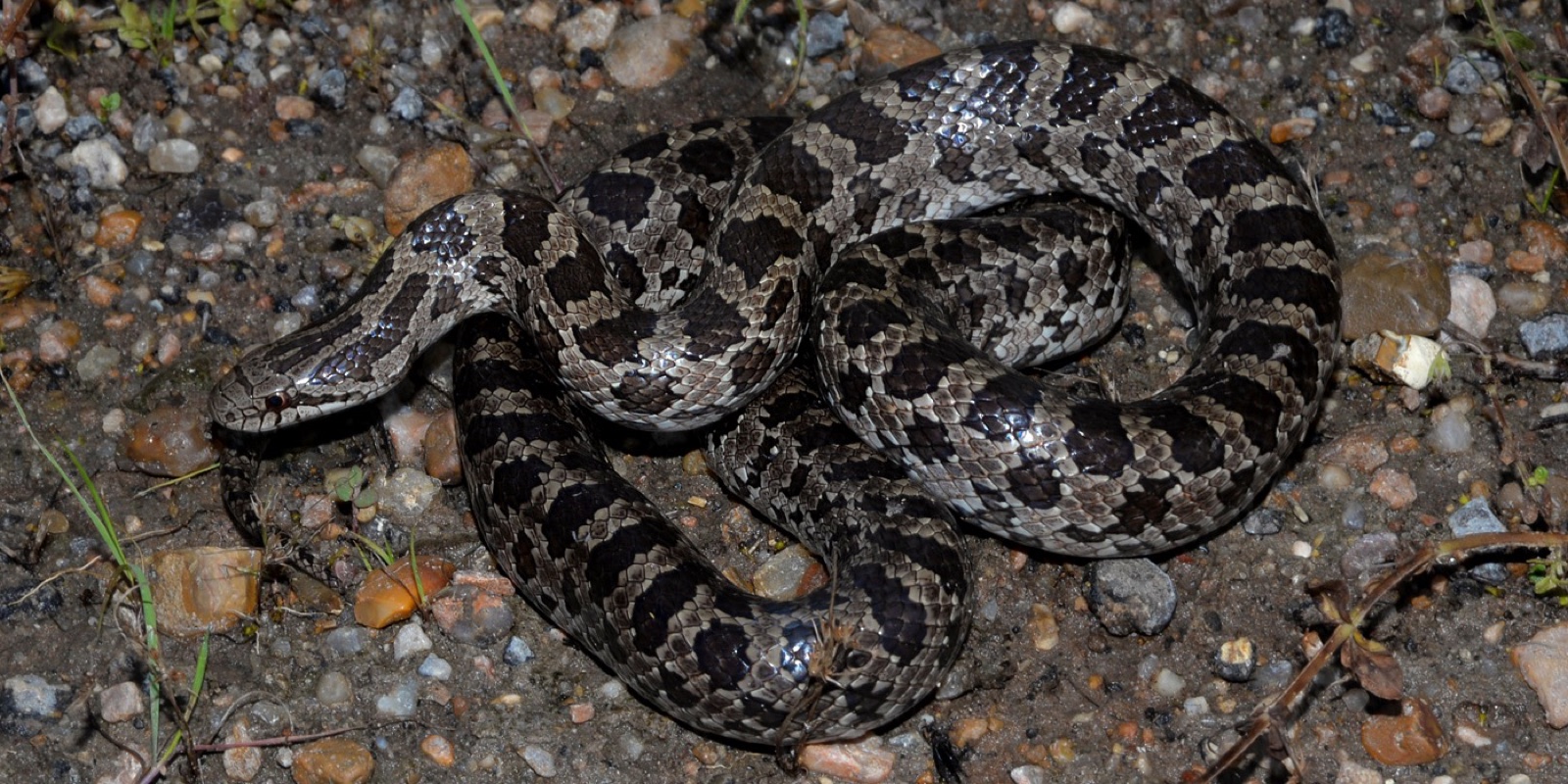
Photo William L. Farr (opens in a new tab), CC BY-SA 4.0 (opens in a new tab)
Snakes are ecological middle managers
Snakes consume rodents, insects, amphibians, fish and other snakes depending on species. In turn, they feed hawks, owls, mammals and larger reptiles. Remove snakes from a food web and you remove both predator and prey.
Defensive is not aggressive
A snake that coils, strikes, musk-sprays or vibrates its tail is responding to a perceived predator. Humans tower over snakes. Giving the animal space turns most encounters into non-events.
Killing increases risk
Many bites occur when people try to capture or kill a snake. The safer strategy is distance. If the snake is not in immediate danger and not trapped inside a human living space, letting it leave is usually the simplest solution.
What to do
- Step carefully and keep hands out of places you cannot see.
- Use a flashlight outdoors at night.
- Keep brush and debris organized around high-use areas.
- Photograph from a distance for identification.
- Never handle an unidentified snake.
- If a venomous snake is in a high-conflict location, use a qualified removal professional.
The path from fear to coexistence begins with one simple fact: most snakes want nothing from us. They need space, habitat and the chance to do their ecological job without being killed for being seen.