
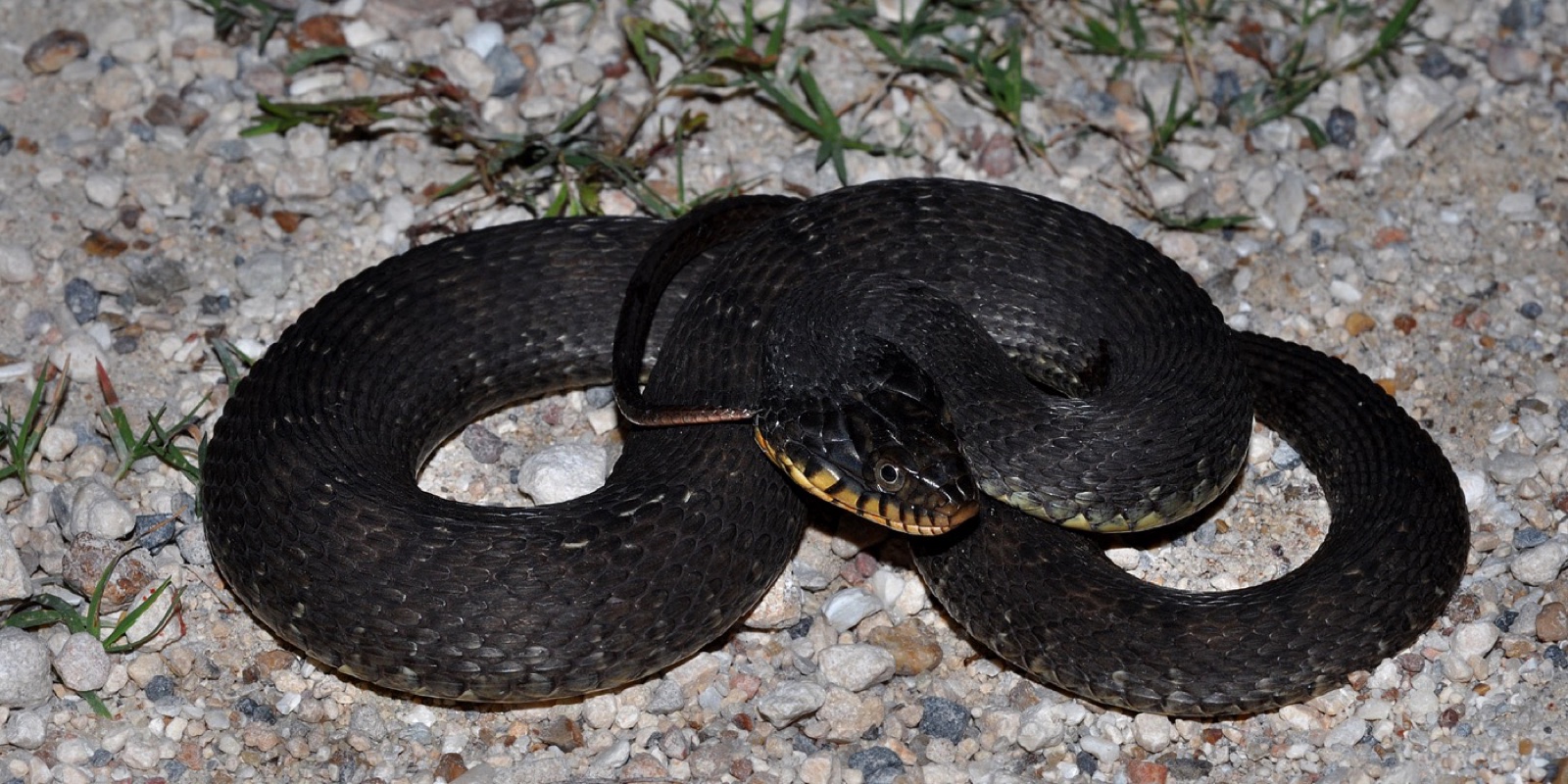
Photo William L. Farr (opens in a new tab), CC BY-SA 4.0 (opens in a new tab)
Head shape is especially unreliable
Many nonvenomous snakes flatten their heads when threatened, creating a triangular outline. Wildlife agencies specifically warn that this can make harmless snakes look like pit vipers. Do not approach a snake to inspect its pupils or facial pits.
Range matters
A species cannot be identified responsibly without considering geography. Cottonmouths, for example, are not uniformly distributed across their range. Knowing county-level range can eliminate possibilities before pattern is even considered.
Pattern changes with age
Juvenile rat snakes are boldly blotched and look very different from many adults. Watersnakes can darken with age. Wet scales can appear more vivid. A good identification uses location, body proportions, pattern, scale texture and multiple clear photos.
What to do
- Photograph from a safe distance.
- Include the whole body and, if possible without approaching, a clear view of head and pattern.
- Note the exact location and habitat.
- Do not rely on AI or a single app as the only authority for a high-stakes ID.
- When in doubt, treat the snake as unidentified and give it space.
Good identification is not about proving bravery by getting closer. It is about collecting enough evidence from a safe distance to replace fear with knowledge.