
Photo Ryan Hodnett (opens in a new tab), CC BY-SA 4.0 (opens in a new tab)
Warning comes before spraying
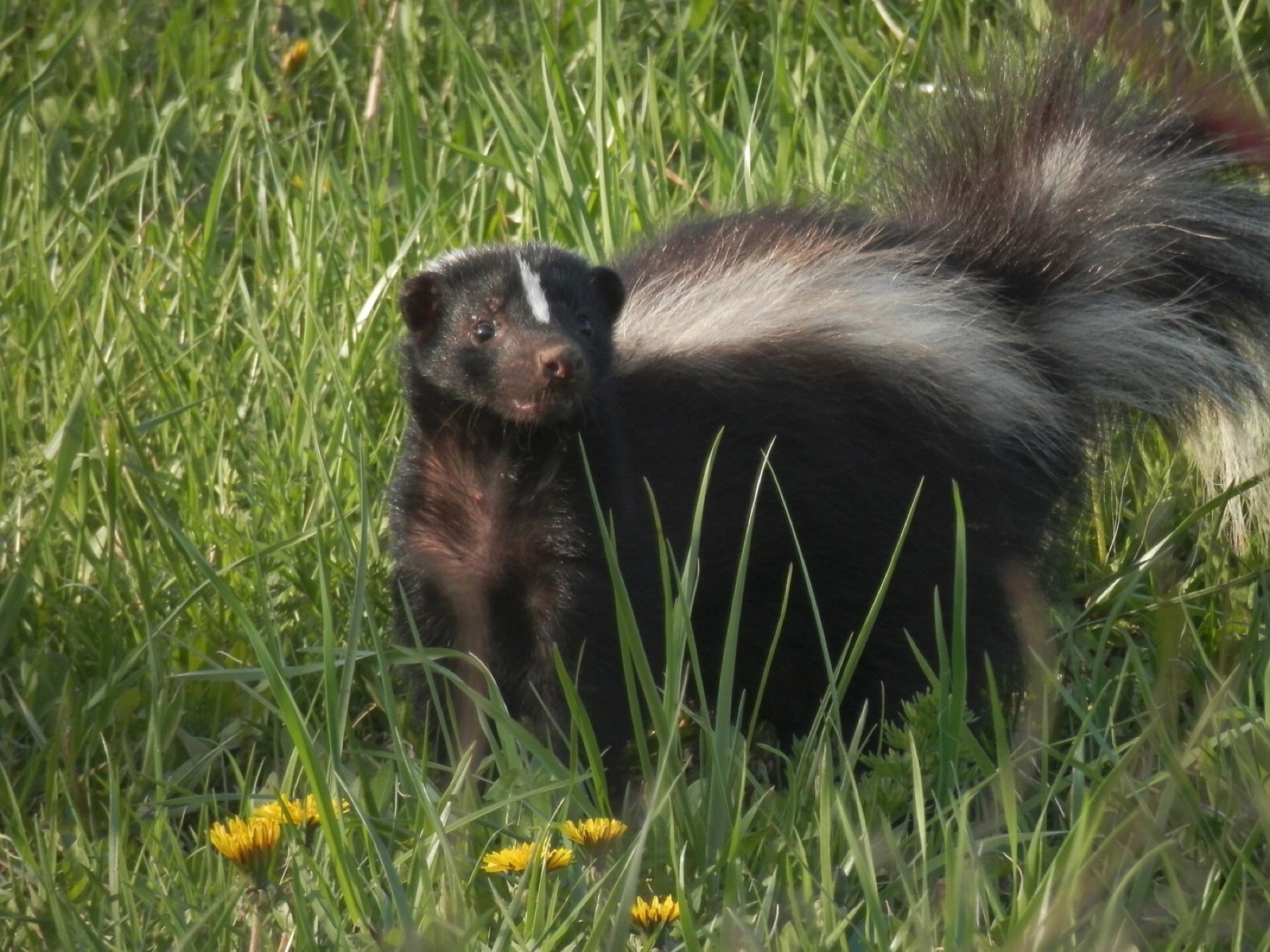
A threatened skunk may stamp its feet, raise its tail or orient its body before spraying. That warning gives people and pets an opportunity to back away. A calm retreat is far more effective than yelling, chasing or trying to “scare it off” at close range.
Why skunks visit yards
Food is the usual answer: grubs in lawns, fallen fruit, pet food, trash or shelter beneath structures. Reducing those resources lowers repeated visits without harming the animal.
Dens deserve the same family awareness as other wildlife
A skunk under a shed or porch may have young. Do not seal an occupied den until you know all animals are out. A humane professional can help plan exclusion when the timing is complicated.
What to do
- Bring pet food indoors at night.
- Secure garbage and compost.
- Give a skunk a wide escape route.
- Keep dogs leashed around an active skunk den.
- Use exclusion after confirming the site is empty rather than poisoning or sealing animals inside.
A skunk does not want to spray you; spraying is costly and unnecessary if escape is available. Give it room, remove attractants and appreciate a small predator with one of nature’s clearest “please back off” signals.