
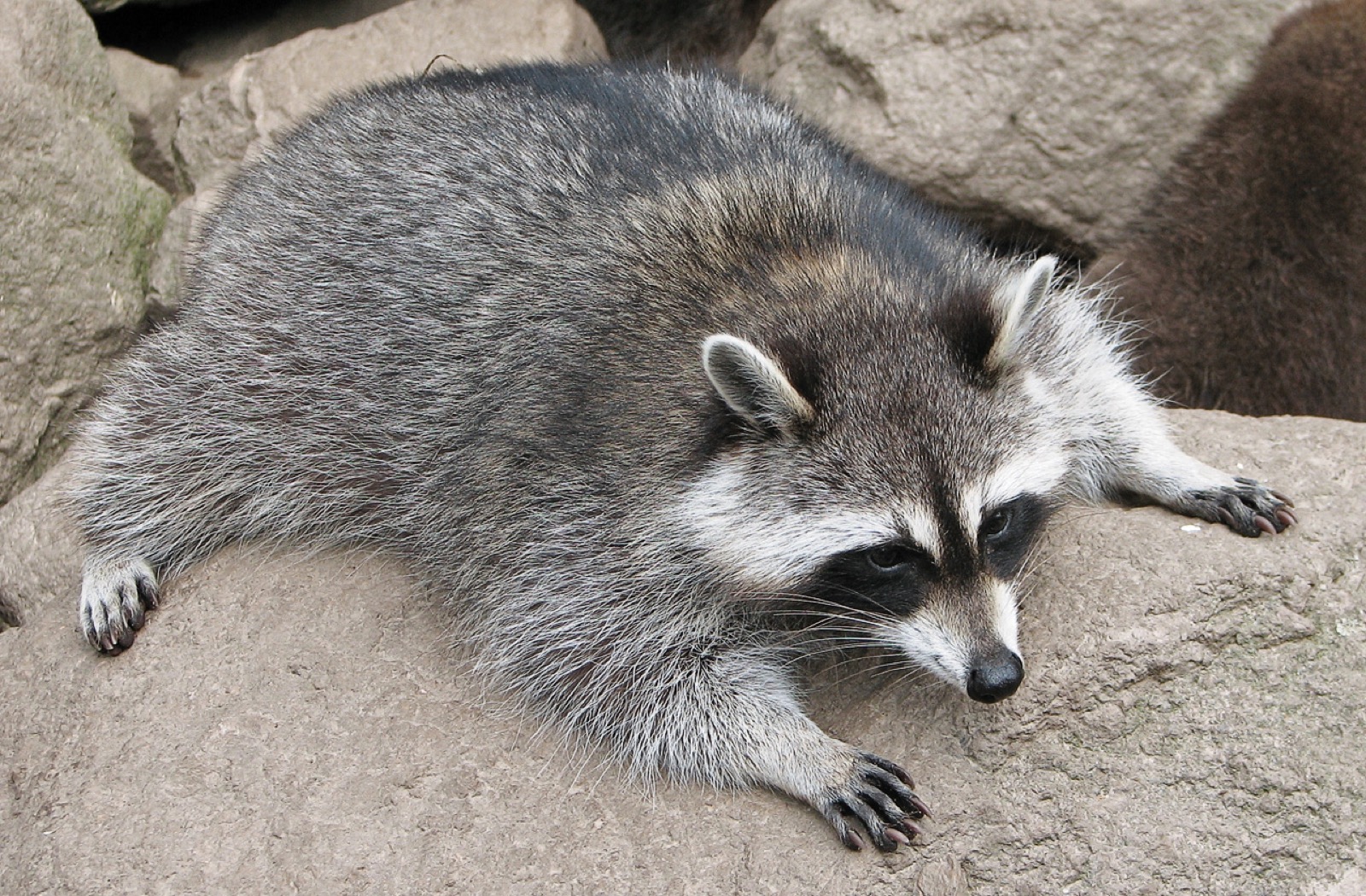
Photo Darkone (talk · contribs) (opens in a new tab), CC BY-SA 2.5 (opens in a new tab)
What raccoons do for the ecosystem
Raccoons eat a wide variety of foods, including insects, fruits, nuts, crayfish and other small animals. They also move seeds through the landscape and participate in food webs as both predator and prey. Their broad diet is one reason they adapt so successfully to suburban areas.
Nocturnal does not mean never daytime
Raccoons are often active at night, but wildlife agencies note that they can forage during the day when conditions allow. A nursing mother may need extra calories. A raccoon may also have been disturbed from a den. Behavior must be evaluated as a whole; the clock is not a rabies test.
The smartest coexistence strategy is not feeding them
Intentional feeding, unsecured trash, outdoor pet food and easy attic access teach raccoons that houses are resource centers. Removing those rewards is more humane and more effective than waiting for a conflict and then blaming the animal.
What to do
- Feed pets indoors and remove bowls after use.
- Secure trash with a tight lid or wildlife-resistant container.
- Cap chimneys and repair roof or soffit openings after confirming no animal is inside.
- Keep pets vaccinated for rabies and distemper-related risks as recommended by a veterinarian.
- Observe raccoons from a distance rather than trying to make them approachable.
Raccoons are not masked criminals. They are problem-solving mammals whose intelligence becomes a conflict only when our homes offer easy rewards. Change the reward structure and many “raccoon problems” disappear.